A story can become more original with help and still end up sounding like everyone else's. In a controlled study, access to several AI-generated ideas improved perceived novelty, but stories based on a single generated idea were 10.7% more similar to one another than unaided stories, according to the research summary on AI-assisted creativity. The practical lesson isn't to avoid assistance. It's to avoid treating the first usable premise as a finished creative brief.
One narrative format can reshape your content. A promising story can fall flat when its structure doesn't fit the runtime, available visuals, or narrator's voice. A sprawling mystery might need to become a confession. A fairy tale might work better through a side character's eyes. A clever sentence might deserve a striking still image rather than an elaborate animation.
The most useful story ideas prompts specify more than what happens. They establish what viewers should wonder, what they'll see, and what changes before the ending.
Production rule: Choose the audience experience first, then write the premise around what you can actually show.
The formats below offer different ways to do that for faceless video. Treat the suggested lengths as creative starting points, not performance guarantees. Each includes an original fictional scenario, a visual approach, and a trade-off worth considering before you generate a script.
1. The Story Spine
A delivery robot brings an unopened letter to a house scheduled for demolition. The resident has moved away, but the robot refuses to mark the delivery complete.
That premise needs cause and effect, not more background. The story spine provides a practical sequence: establish a routine, interrupt it, show the consequences, force a decision, and reveal what changes afterward. It's a useful choice for compact character stories, educational scenarios, and brand narratives where viewers need to understand why each event follows the last.

Turn consequences into scenes
Prompt to adapt: Write a fictional story about a delivery robot whose ordinary assignment becomes personally meaningful. Connect every complication to its previous action. End with a visible change in the robot's behavior, not an explanation of the moral.
For faceless production, assign a concrete image to each beat: a sealed envelope, a demolition notice, an empty doorway, a changed delivery status. Keep the runtime compact enough that the audience remembers the original task when the payoff arrives.
- Visual treatment: Repeat the envelope as the connecting object across changing locations.
- Adaptation method: Replace the robot with a student, shopkeeper, or historical fictional character while preserving the causal chain.
- Likely response: Aim for satisfaction and emotional clarity rather than surprise alone.
The weakness is predictability. If every consequence feels inevitable, introduce a difficult choice instead of another obstacle. These narrative structure examples can help you distinguish a genuine turning point from a scene that merely adds activity.
2. Six-Word Story
“His collar waited beside her suitcase.”
That original fictional line leaves important questions unanswered. Is someone leaving, returning, or remembering a pet? The format works when viewers can infer a meaningful change without receiving a complete explanation.
Use this approach for very brief emotional interludes, recurring visual series, or transitions between longer stories. Don't stretch the sentence across an extended video just because you have more images available. The silence around the words is part of the experience.

Let the image complete the sentence
Prompt to adapt: Create a six-word fictional story about returning home after a long absence. Suggest an image that adds context without explaining the ending. Avoid familiar tragic shorthand and leave room for a hopeful interpretation.
For a faceless version, show the collar beside a suitcase, then reveal a hand reaching toward it. Alternatively, keep the frame still and use a subtle sound cue, such as a door opening, to change how viewers interpret the sentence.
The trade-off is ambiguity versus confusion. If the words and image both conceal everything, viewers have nothing solid to interpret. Give them a recognizable object and a clear emotional contrast.
The audience response to design for is reflection: viewers supplying their own interpretation or sharing a personal association. Don't demand that response with a generic engagement question. A restrained caption that asks whether the scene feels like departure or reunion is more closely connected to the story.
3. 100-Word Flash Fiction
Flash fiction gives you enough space for a character to make a decision, but not enough space to explain an entire fictional world. That makes it useful for a standalone faceless story with a complete ending.
Consider a museum cleaner who notices that a painted window changes with the weather outside. When a storm approaches, she paints the window shut, then hears someone knocking from inside the canvas.
Prompt to adapt: Write roughly 100 words of fictional suspense about a cleaner and a changing painting. Start with the discovery, make her intervention cause the final complication, and finish with a concrete sensory detail.
Edit for spoken clarity
Treat the word limit as a writing exercise, not a runtime guarantee. Narration speed, pauses, pronunciation, and subtitle density all affect the finished video, so read the script aloud before deciding how long it should run.
- Visual treatment: Use a consistent gallery, a recognizable painting, and close-ups of the cleaner's actions.
- Adaptation method: Turn explanation into evidence. Show wet paint on the frame instead of narrating a paragraph about its mysterious history.
- Likely response: Aim for the pleasure of a complete miniature story, with enough unresolved meaning to invite reflection.
The main production risk is overloading the script with scene changes. A concise paragraph can still require an expensive collection of unrelated images.
Use short story video clips as a production reference when deciding how to translate prose into scenes. Cut any sentence that neither changes the situation nor helps viewers understand what they're seeing.
4. Scary Story and Creepypasta Prompts
Start with something ordinary that behaves incorrectly. A hallway light switches on before the narrator reaches it. A baby monitor broadcasts a room that doesn't exist. A voicemail contains tomorrow's weather.
Atmospheric horror is a practical option when your production setup favors still images, controlled camera movement, and a strong voiceover. You don't need to show a monster if the audience understands what makes the scene unsafe.
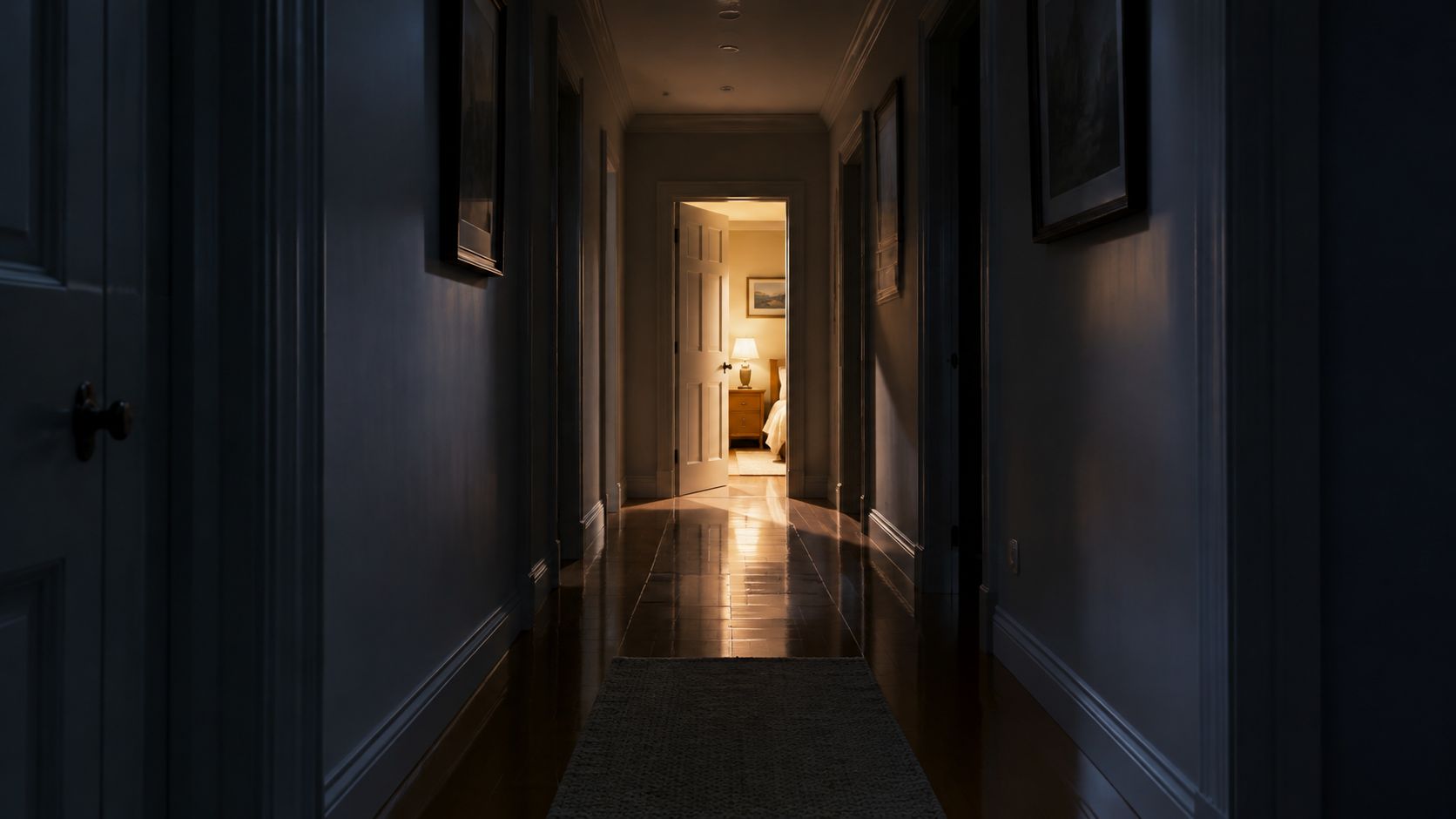
Prompt to adapt: Write a clearly fictional first-person account about a tenant whose hallway grows longer whenever they turn off the lights. Establish a familiar routine, introduce a visible contradiction, and end with evidence that the tenant has misunderstood the building.
Make the threat legible
Use a short runtime, but allow enough breathing room for viewers to recognize the repeated setting. Revisit the same doorway with a changed distance or an unfamiliar object rather than generating a completely different corridor for every scene.
Darkness should conceal the threat, not the information viewers need to follow the story.
The trade-off is patience. Slow narration can build dread, but empty description can feel like a delay before the actual premise. Put the disturbing detail early, then escalate its consequences.
For audience response, design toward apprehension and retrospective recognition: the ending should make an earlier detail feel worse. These horror story prompts offer useful starting points, but add your own setting, rule, and consequence. Label invented accounts as fiction rather than implying that generated footage documents a real event.
5. Bedtime Fairy Tale Remix
A dragon takes a job maintaining the village lighthouse because everyone is afraid of its flame. During a foggy evening, the villagers finally understand why the keeper never needed matches.
For a bedtime-oriented channel, that premise offers wonder without a threatening payoff. The useful reversal isn't just that the dragon is friendly. It's that the quality others fear becomes something the community needs.
Change the viewpoint, preserve the warmth
Prompt to adapt: Write a gentle fictional fairy tale from the perspective of a dragon learning to care for a lighthouse. Give the character a small worry, a practical task, and a reassuring resolution. Keep the language easy to follow aloud and avoid an alarming final reveal.
Choose a more relaxed short-form runtime than you would for a punchline or jump-scare concept. Allow pauses around important images, but don't confuse gentle pacing with a lack of narrative movement.
- Visual treatment: Use a stable palette, soft lighting, and recurring views of the lighthouse.
- Adaptation method: Retell a broad folktale pattern through a misunderstood helper, overlooked sibling, or supposedly frightening guardian.
- Likely response: Aim for comfort, affection, and a sense of resolution.
The trade-off is reduced suspense. Bedtime viewers may not want an unresolved mystery or a harsh reversal, even when those devices would suit another channel.
Keep the remix focused on a central change in perspective. If you borrow from an existing tale, work from material you have permission to adapt and avoid reproducing distinctive wording or designs from a particular modern version.
6. Twilight Zone-Style Twist Ending
The town's weather announcer apologizes every morning for predicting sunshine. Outside, the sky remains gray. At the ending, viewers discover that the announcer works beneath an ocean, describing a surface nobody has seen.
A speculative twist should change the meaning of earlier evidence, not introduce a completely unrelated explanation. That distinction separates a satisfying reveal from a surprise that could have been attached to any story.
Prompt to adapt: Write an original speculative story about a weather announcer who has never seen the sky. Plant visual evidence of the true setting before the reveal. Make the ending explain the announcer's behavior without requiring an additional speech.
Build backward from the reveal
Use a fuller short-form runtime when the audience needs time to form an assumption. Work backward from the ending and identify which objects can support both the apparent explanation and the actual one.
A circular window might initially resemble a studio feature, then become recognizable as a porthole. A low mechanical hum might seem like recording equipment before viewers understand the setting.
Visual consistency matters more than spectacle. Reusing a meaningful object helps viewers recognize the clue when its significance changes. Unrelated surreal images make it harder to distinguish intentional evidence from decorative strangeness.
The likely response to aim for is reappraisal, potentially including a replay to inspect earlier details. That's a creative objective, not a guaranteed result.
Avoid copying a recognizable episode or presenting a famous show's branding as your own. Borrow the structural principle of setup, escalation, and reinterpretation, then build an original premise around it.
7. Unreliable Narrator Confession
“I kept returning her letters because she asked me to leave her alone.”
That invented opening sounds defensible until the images reveal that the narrator never opened the envelopes. Perhaps the letters weren't addressed to the narrator at all.
The unreliable confession suits voice-led faceless storytelling because the narrator's account and the visual evidence can disagree. It works best when viewers can notice the contradiction rather than merely wait for someone to explain it.
Write the truth before the confession
Draft what happened, then decide what the narrator misunderstands, conceals, or rationalizes. Don't use unreliability as permission to change the facts arbitrarily.
Prompt to adapt: Write a fictional confession from a caretaker who claims to be protecting an abandoned house. Show through objects and actions that the caretaker is preventing its rightful resident from returning. Keep the narrator sincere, but make the contradiction understandable by the ending.
- Visual treatment: Pair reassuring narration with unopened mail, a hidden key, and a name removed from a door.
- Adaptation method: Replace a malicious liar with a mistaken witness if your channel needs a less hostile tone.
- Likely response: Invite viewers to reassess motives, not just guess a concealed identity.
Allow enough runtime for the narrator's account to seem plausible before the evidence challenges it. Reveal the central truth within the video instead of withholding the entire resolution for a pinned comment.
The trade-off is emotional trust. Label the piece as fiction, and don't package an invented accusation as a real confession about an identifiable person.
8. Choose-Your-Own-Adventure Branching Story
A traveler reaches a forest gate carrying a letter that must remain sealed. Beyond the gate, a bell rings whenever someone tells the truth.
A branching story turns that premise into a decision: open the letter to understand the danger, or deliver it without reading it. The choice works because either action could cost the traveler something meaningful.
Use a clear visual fork to make the decision immediately understandable.
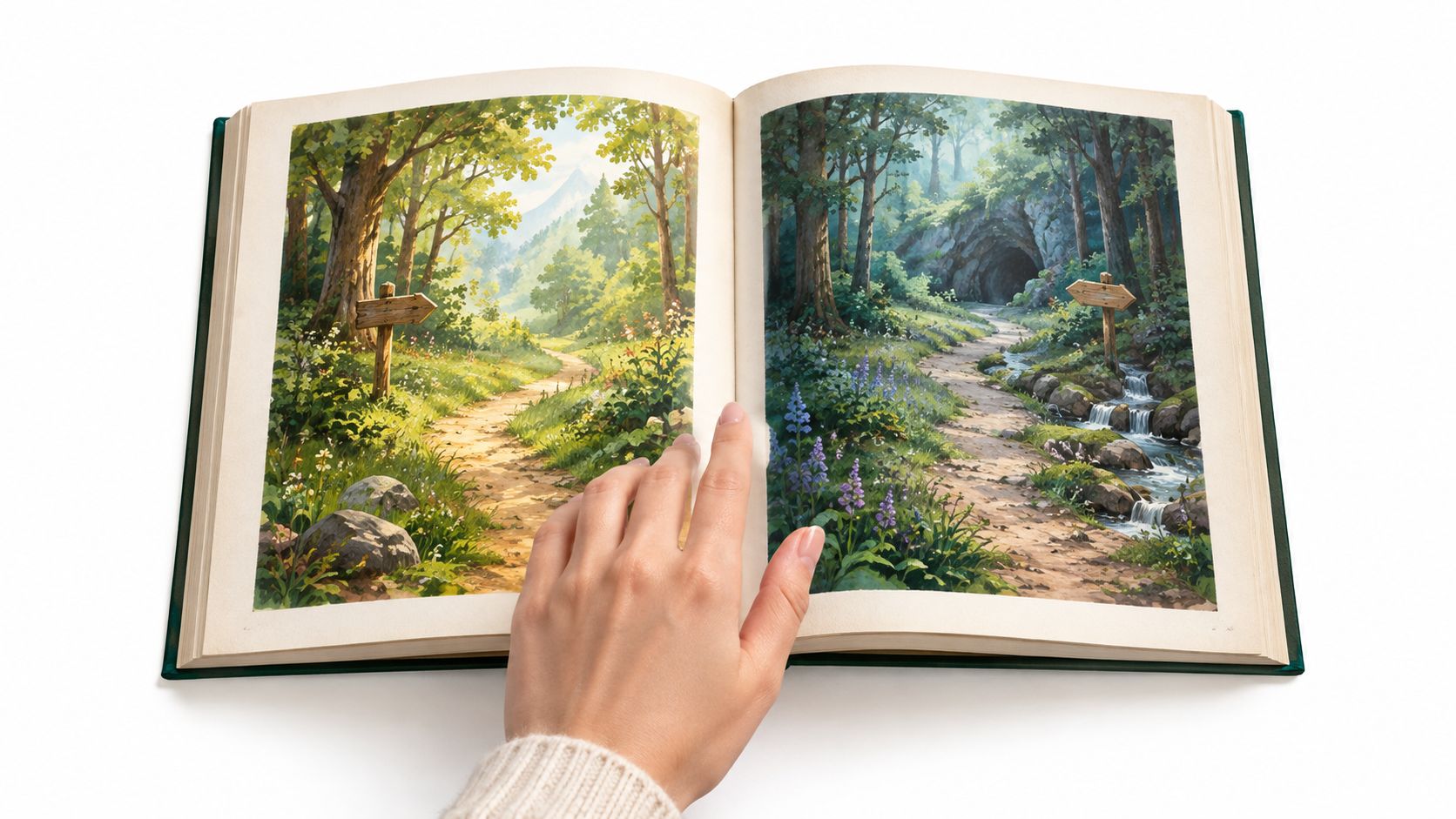
Plan consequences before asking for votes
Prompt to adapt: Write an original interactive fantasy episode that ends with a choice between breaking a promise and entering danger uninformed. Outline plausible consequences for either decision. Make both options consistent with what viewers already know.
Keep the opening episode short enough that the choice remains the focal point. Use on-screen option labels, then publish the selected continuation with a clear connection to the earlier installment.
The embedded video can serve as a separate viewing reference.

The production trade-off is ongoing commitment. Don't ask viewers to influence the story if you haven't planned how to honor the outcome. Avoid maintaining an expanding collection of branches when your schedule can only support a main storyline.
The audience response to design for is participation and ownership. Make the alternatives meaningfully different, not cosmetic choices that lead to an identical scene. If you later reunite the branches, preserve a consequence from the decision so participation still matters.
9. Ticking Clock Suspense
Show the deadline before explaining the backstory. A lighthouse keeper discovers that the backup lamp will fail before a ship clears the rocks, and the replacement mechanism is locked outside.
The audience now understands the task, the danger, and why delay matters. A deadline gives ordinary actions immediate consequences, which makes this format useful for rescue fiction, problem-solving scenarios, and narrative micro-lessons.
Make progress visible
Prompt to adapt: Write a fictional suspense story about a lighthouse keeper restoring a failing beacon before a ship reaches the reef. Show the approaching danger, make each attempted solution change the situation, and resolve the immediate threat within the video.
Use a tight runtime with limited explanation. Establish why the keeper cares through a concrete detail, such as recognizing the ship's signal, rather than interrupting the action with a biography.
- Visual treatment: Alternate between the failing mechanism, the keeper's progress, and the ship's position.
- Adaptation method: Replace physical danger with a consequential deadline, such as preserving a fragile classroom experiment before a demonstration.
- Likely response: Aim for anticipation followed by relief, disappointment, or a clearly earned reversal.
Editing test: If removing an obstacle doesn't change the protagonist's next action, it probably isn't earning its screen time.
The main trade-off is credibility. A visible timer can become distracting if narration, action, and displayed time don't agree. You can show urgency through a shrinking light, rising water, or an approaching vessel instead of maintaining a precise countdown.
10. One-Line Hook Prompts from Writing Communities
“Every object in the lost-property office belongs to someone who hasn't arrived yet.”
A single sentence can provide enough direction to begin, but it doesn't automatically provide an ending. This format is best suited to rapid premise exploration before you commit to a complete production.
The GPT-WritingPrompts dataset paper describes an average of 2.8 stories per prompt, illustrating that a shared starting point can support different narrative outputs. Your practical task is to make those versions meaningfully different rather than changing names and scenery.
Expand the consequence, not the lore
Prompt to adapt: Develop the lost-property premise into contrasting fictional story treatments. Change the protagonist's goal, the cost of interfering, and the ending's emotional tone. Keep each version suitable for a compact faceless video.
A sentimental version might center on an unclaimed wedding ring. A comic version could follow an employee trying to return an umbrella before its owner loses it. A suspense version might begin when the clerk finds their own keys.
Use an object-led visual treatment so the hook is understandable without a talking presenter. Choose the runtime only after deciding whether the concept needs a quick reveal or a character decision.
The trade-off is novelty without depth. An unusual rule can attract curiosity, but viewers still need a reason to care about its consequences.
When adapting a community contribution, check the relevant permissions and credit expectations. Keep a record of the original prompt, and don't assume that publicly visible writing is automatically available for commercial adaptation.
10 Story Prompt Ideas Compared
| Story Format | 🔄 Implementation Complexity & Resources | 📊 Expected Outcome | ⭐ Ideal Use Cases | 💡 Key Advantage |
|---|---|---|---|---|
| The Story Spine | Low; fill in seven beats, with minimal planning | A clear cause-and-effect arc for a 30–90-second story | Short scripts across genres; beginner writers | ⚡ Reliable structure that is easy to follow |
| Six-Word Story | Very low; exactly six words plus supporting visuals | A compact, implied story or emotional hook | Text-overlay videos, quick tests, recurring series | ⚡ Fast to create and easy to post regularly |
| 100-Word Flash Fiction | Moderate; requires concise drafting and editing | A complete micro-story suited to a 45–90-second narration | Short narrated videos with a focused conflict or reveal | 📊 Delivers a full story arc in a brief runtime |
| Scary Story and Creepypasta Prompts | Moderate; needs atmosphere, pacing, and suitable visuals or sound | A suspenseful build toward an unsettling reveal | Faceless horror narration and episodic content | ⭐ Naturally supports mood-driven storytelling |
| Bedtime Fairy Tale Remix | Low to moderate; adapt a familiar tale with one clear twist | A recognizable, often gentle or humorous retelling | Family-friendly and bedtime-themed channels | 💡 Familiar stories are easy for audiences to follow |
| Twilight Zone-Style Twist Ending | Moderate; requires fair clues and a well-planned reveal | A surprising ending that can prompt rewatches and discussion | Short anthology episodes and mystery videos | 📊 The final reveal can reframe the whole story |
| Unreliable Narrator Confession | High; requires consistent clues, voice, and reveal | A confession that changes the audience's interpretation | Mystery, drama, or comedy storytime videos | ⭐ Builds curiosity through conflicting accounts |
| Choose-Your-Own-Adventure Branching Story | High; requires multiple paths, endings, and follow-up planning | Audience-led outcomes and potential multi-part engagement | Polls, comment-driven series, and interactive videos | 📊 Audience choices provide engagement and preference signals |
| Ticking Clock Suspense | Low to moderate; needs a clear deadline and escalating obstacles | Rising tension that holds attention through the resolution | Short thrillers, comedies, or dramas with time-bound goals | ⚡ A visible deadline quickly establishes stakes |
| One-Line Hook Prompts | Low; expand a single premise into a script | A fresh story direction with room for creative development | Content calendars, writing challenges, and rapid ideation | 💡 A steady source of adaptable premises |
Build a Repeatable Story Publishing System
Treat these story ideas prompts as a portfolio, not a template to apply indiscriminately. A confession asks viewers to question a voice. A bedtime remix asks them to feel safe. A ticking-clock story asks them to anticipate a consequence. Switching formats works best when you understand which audience experience you're changing and which elements of the channel should remain recognizable.
Preserve that identity through recurring titles, a consistent narrator, familiar visual motifs, and a recognizable ending rhythm. You can alternate fear, wonder, suspense, and humor without making every upload feel unrelated. Keep the packaging consistent enough that viewers recognize the series while allowing the stories themselves to vary.
Test a manageable batch
Start by comparing the story spine with another format that suits your available visuals. Draft contrasting premises for each, then assess them before generating final assets.
- Script review: Can you identify the central question, the consequential decision, and the payoff?
- Production review: Can the same character, object, and setting remain recognizable across scenes?
- Publishing review: Does the caption accurately identify fiction, adaptation, or factual material?
After publishing, examine retention and completion alongside the comments themselves. A suspense video may hold attention but leave viewers confused. An emotionally quiet story may prompt thoughtful responses without the same viewing pattern. Compare the outcome with the experience you intended rather than treating every interaction as interchangeable evidence of success.
Keep editorial judgment visible
Automation doesn't remove the need to choose a viewpoint, verify factual claims, or reject a misleading visual. Before publication, watch the finished piece without reading the script. Check whether the images support the narration, whether subtitles are legible, and whether the ending still makes sense at the actual delivery speed.
Distinguish fiction from evidence. If you adapt folklore, identify it as folklore; if you dramatize a factual event, separate sourced details from invented dialogue. Any disclosure about human editing or creative direction should describe work you performed.
The most repeatable workflow isn't the one that generates the largest pile of premises. It's the one that helps you choose an appropriate format, produce a coherent story, and learn from the finished result. Save successful prompt structures with notes about visual continuity, narration, and audience interpretation, then vary the characters and consequences rather than just recycling the same reveal.
ClipCreator.ai turns custom story prompts into faceless videos with story-aligned images, voiceovers, and subtitles, with scheduling and automated publishing options. Visit ClipCreator.ai to develop a format from this collection into a finished video, then review the pacing, visual continuity, and payoff before you publish.

Create your first video in under 2 minutes
Pick a niche, and ClipCreator.ai generates and auto-posts faceless videos to your channels every day.
Join ClipCreator.ai