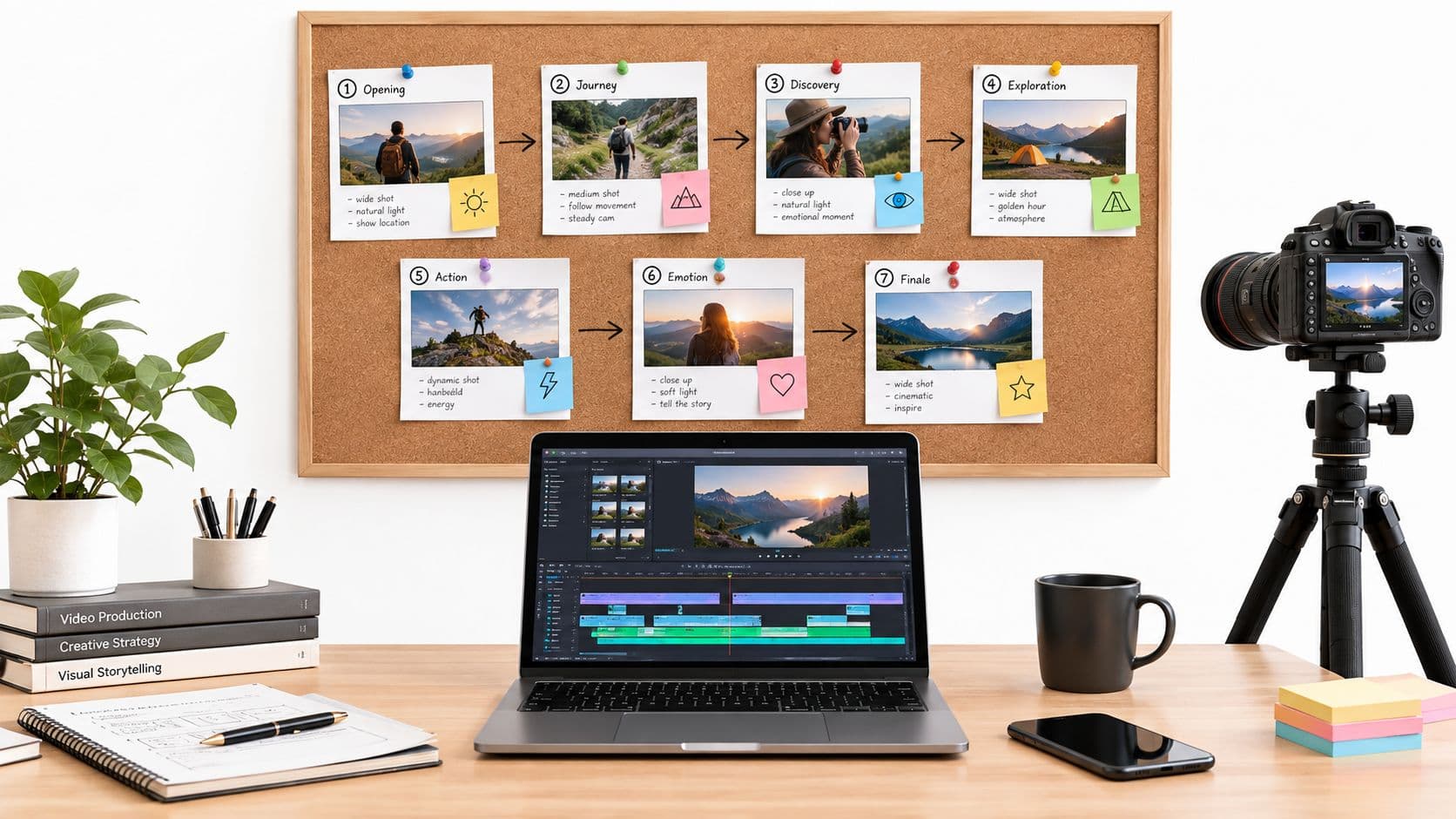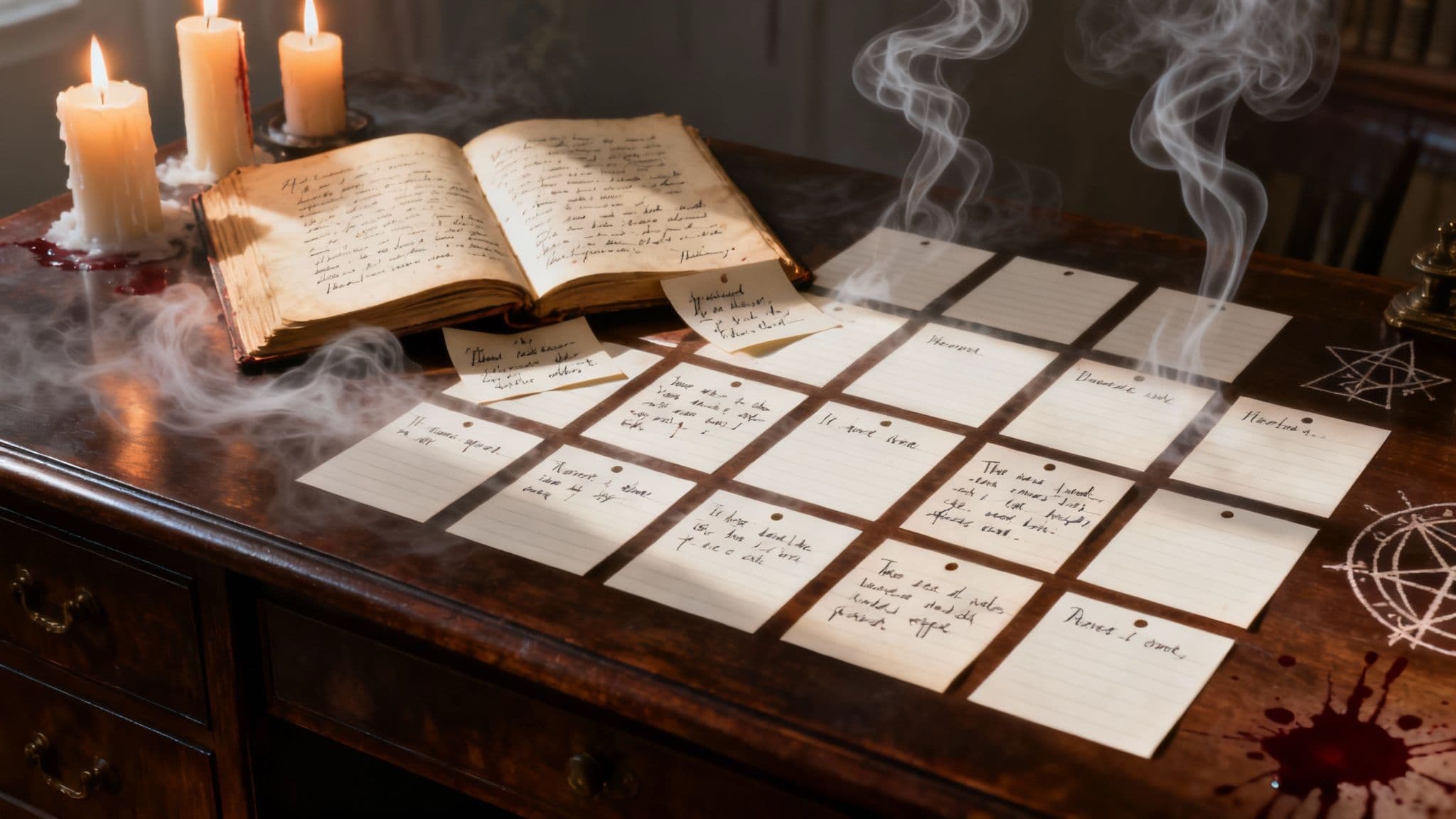
Welcome, creators and horror aficionados. In a world dominated by fleeting attention spans, the power of a perfectly crafted scare has never been more potent, especially in the realm of short-form video. A compelling hook isn't just an advantage; it's a necessity. This guide is your comprehensive toolkit for generating chilling, engaging, and unforgettable narratives that capture viewers in the crucial first few seconds.
We move beyond generic lists by providing a vast collection of horror story prompts, meticulously categorized by subgenre and style. You will learn to transform these sparks of fear into fully realized scripts specifically optimized for platforms like TikTok, YouTube Shorts, and Instagram Reels. We'll explore ten core horror themes, from Cosmic Dread to Body Horror, each packed with unique angles and practical implementation details.
This article provides actionable steps, including:
- Variations for each core prompt to prevent creative stagnation.
- Pacing guides and voiceover hooks tailored for short video formats.
- Examples of how to expand a single prompt into a 60–90 second script.
Whether you're a seasoned writer aiming to refine your craft or a content creator seeking a streamlined workflow, you'll find the inspiration and the strategic advice needed to produce stories that linger long after the screen goes dark. To broaden your creative toolkit with visual ideas that can complement your narratives, you can also explore specialized horror art prompts. We will also demonstrate how to use these prompts to automate the entire creation process, turning a simple concept into a polished, ready-to-post video in minutes.
1. The Unreliable Narrator
The unreliable narrator is a classic psychological horror prompt that builds terror by making the audience question everything they see and hear. The story is told from the perspective of a character whose credibility is compromised, blurring the line between reality and delusion. This forces the audience to become active participants, constantly trying to piece together the truth from a fractured narrative.
This technique is powerful because it creates a deep sense of unease and paranoia. The horror isn't just about a monster in the closet; it's about the monster potentially being in the protagonist's mind. Master storytellers like Shirley Jackson (The Haunting of Hill House) and Stephen King (The Shining) use this to make the internal landscape as terrifying as any external threat.
How to Implement This Prompt
- Subtle Clues: Introduce small, almost unnoticeable inconsistencies early on. Maybe the narrator describes a room's color differently each time, or they recount a conversation with details that don't add up.
- Memory Gaps: Use phrases like "I can't remember how I got here" or "The next few hours are a blur." These gaps create space for the audience's imagination to fill in the horrifying possibilities.
- Contradictory Actions: Show the narrator saying one thing but doing another. Their internal monologue might claim they are calm, while their actions (and the visuals you show) depict frantic, paranoid behavior.
- External Validation (or Lack Thereof): Introduce a secondary character who reacts to the narrator with confusion or disbelief. This grounds the audience and confirms that the narrator's perception is skewed.
This method is perfect for short, faceless videos where you can pair a detached, calm voiceover with chaotic or disturbing visuals to highlight the narrator's disconnect from reality. For a deeper dive into crafting such characters, explore different narrative writing techniques that can enhance your storytelling.
2. The Cosmic Horror/Lovecraftian Dread
Cosmic horror, often called Lovecraftian dread, taps into the existential fear of humanity's insignificance in a vast, uncaring universe. This prompt moves beyond earthly threats like ghosts or slashers, introducing incomprehensible entities and truths that shatter human perception. The terror stems not from a direct threat of harm, but from the horrifying realization that our existence is a fragile, meaningless speck in a cosmos filled with ancient, alien forces we cannot begin to understand.
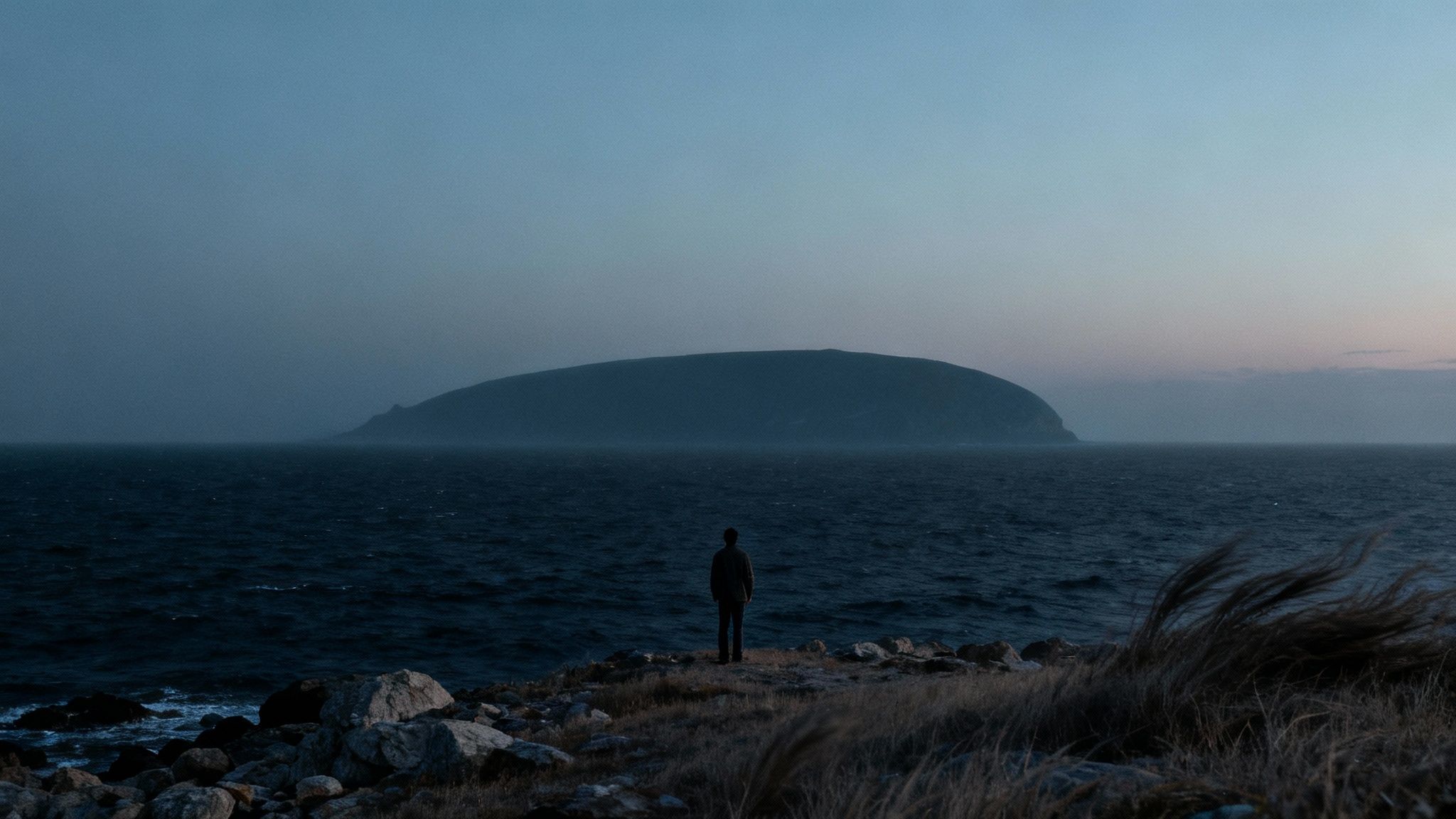
This type of horror is powerful because it preys on our need for order and understanding. The slow-burn reveal of a reality that defies physics, sanity, and logic creates a profound sense of dread. Authors like H.P. Lovecraft (The Call of Cthulhu) and modern masters like Laird Barron excel at this, making the psychological collapse of the protagonist as central as the cosmic entity itself. The true horror is knowledge, not the monster.
How to Implement This Prompt
- Gradual Revelation: Don't show the cosmic entity right away. Instead, reveal its influence through strange phenomena, cryptic ancient texts, or the ramblings of a mad cultist. The horror is in the slow piecing together of a terrifying truth.
- Focus on Psychological Decay: The protagonist shouldn't just be scared; they should be mentally unraveling. As they learn more, their grip on reality falters. Describe their obsession, paranoia, and the loss of their former self as they confront the incomprehensible.
- Use Unreliable Science: Introduce scientific or historical "evidence" that seems plausible at first but slowly spirals into impossible conclusions. This grounds the fear in a semblance of reality before shattering it, making the audience question their own understanding of the world.
- Vast, Indescribable Beings: When describing the entity, use vague yet immense language. Focus on non-Euclidean geometry, senses beyond human perception, and a scale that dwarfs humanity. The less the audience can clearly picture it, the more their imagination will fill in the terrifying blanks.
This prompt is ideal for videos that pair academic-sounding or investigative voiceovers with increasingly surreal and disturbing visuals. Show charts, maps, and scientific diagrams that gradually distort into impossible, terrifying forms, reflecting the narrator’s descent into cosmic madness.
3. Body Horror
Body horror is a visceral and deeply unsettling prompt that focuses on the graphic violation, mutation, or transformation of the human body. This subgenre taps into primal fears about loss of control over one's own physical form, creating revulsion and terror by twisting familiar anatomy into something grotesque and alien. The horror comes from the intimate, inescapable nature of the threat: the monster isn't just in the house, it's inside your own skin.
This type of horror story prompt is incredibly effective because it bypasses intellectual fears and targets a more instinctual, physical response. It explores themes of identity, disease, and the fragility of the human form. Masters of the genre like David Cronenberg (The Fly, Videodrome) and Clive Barker (The Damnation Game) use these graphic transformations to externalize a character's internal decay, making their psychological turmoil terrifyingly tangible.
How to Implement This Prompt
- Start Small and Escalate: Begin with subtle, unnerving changes. A strange rash that forms a pattern, a fingernail that grows unnaturally fast, or a tooth that feels loose. This gradual build-up makes the eventual full-blown transformation more shocking and believable.
- Focus on Sensory Details: Describe the horror from the character’s perspective. Don't just say a limb is changing; describe the wet, cracking sound of bone shifting, the strange new weight of it, or the slick texture of the transformed skin.
- Connect Physical to Emotional: Link the physical changes directly to the protagonist's emotional state. As their body becomes monstrous, show their fear, despair, or even a twisted sense of acceptance. The true horror is the loss of self that accompanies the physical corruption.
- Use It as a Metaphor: Body horror is most powerful when it symbolizes a deeper fear. A transformation can represent puberty, aging, illness, or the loss of one's humanity. This gives the graphic visuals a compelling narrative purpose beyond simple shock value.
This prompt is exceptionally well-suited for short-form video, where you can pair a clinical, detached voiceover with increasingly disturbing visuals. The contrast between a calm narration and the grotesque on-screen transformation creates a profound sense of unease perfect for captivating an audience quickly.
4. Haunted House/Isolated Setting
The haunted house or isolated setting is one of the most foundational horror story prompts, turning the environment into an antagonist. This classic setup traps characters in a confined space, be it a decaying mansion, a remote cabin, or a derelict spaceship, where the location itself becomes a source of terror. The isolation preys on the characters' sanity, amplifying fear by removing any hope of escape or outside help.
This prompt is effective because it physically and psychologically corners its subjects. The horror stems not just from what is in the house, but from the house itself: its history, its architecture, and its malevolent influence. Acclaimed authors like Shirley Jackson (The Haunting of Hill House) and Silvia Moreno-Garcia (Mexican Gothic) have masterfully used settings as active participants that reflect and amplify the characters' internal decay.
How to Implement This Prompt
- Personify the Setting: Give the location human-like qualities. Describe floors that "groan like an old man," walls that "seem to breathe," or shadows that "watch" the characters. This makes the environment feel sentient and predatory.
- Use Sensory Details: Go beyond visuals. Describe the smell of damp soil in the basement, the sound of scratching within the walls, or the unnatural cold spot in the hallway. These details make the setting visceral and inescapable.
- Establish "Rules": Define how the haunting or isolation works. Does the entity only appear at night? Can it only move through doorways? Establishing rules creates a framework for suspense and allows you to cleverly break them later.
- Integrate the History: The horror should be rooted in the location's past. A forgotten tragedy, a dark ritual, or a previous owner's madness can manifest in the present, directly impacting the current inhabitants.
This prompt is perfect for faceless videos that use panning shots of eerie, empty rooms or slow zooms on unsettling details. Pairing these visuals with a narrator recounting the location's dark history or their growing paranoia creates a deeply atmospheric and claustrophobic experience.
5. Found Footage/Documents
The found footage or found documents prompt builds horror through a sense of manufactured reality. The story is presented as a collection of "discovered" materials like video recordings, journal entries, or audio logs, which allows the audience to become investigators piecing together a terrifying event from fragmented evidence. This narrative framework creates an immersive and authentic experience, suggesting the story is real and you are among the first to uncover the truth.
This technique is highly effective because it leverages our natural curiosity and fear of the unknown. The horror isn't just in what is shown or written, but in the gaps between the documents, forcing the audience's imagination to conjure up the worst possibilities. Masterpieces of this genre, like The Blair Witch Project and the Paranormal Activity franchise, use this method to blur the line between fiction and reality, creating a raw and immediate sense of dread.

How to Implement This Prompt
- Create Authentic Artifacts: Ensure your documents or footage feel genuine. Use period-appropriate language, dated fonts, realistic camera shake, or audio static. The more believable the medium, the more believable the horror.
- Use Narrative Gaps: Intentionally leave information out. A missing diary page, a corrupted video file, or an audio recording that cuts out at a crucial moment can be far more terrifying than showing the monster.
- Vary the Media: Combine different types of documents to tell a richer story. A police report, a child's drawing, a frantic voicemail, and a scientist's research notes can all offer unique and chilling perspectives on the same event.
- Foreshadow Through Details: Plant subtle clues in early documents that only become horrifying in hindsight. A seemingly innocent line in a letter might take on a sinister new meaning once the final piece of evidence is revealed.
This format is one of the most powerful horror story prompts for faceless videos, as you can layer a narrator reading a "transcript" over grainy, atmospheric footage. To see how this fits into broader storytelling, you can explore various narrative structure examples that will help you craft a compelling timeline.
6. Creature Feature/Monster Hunting
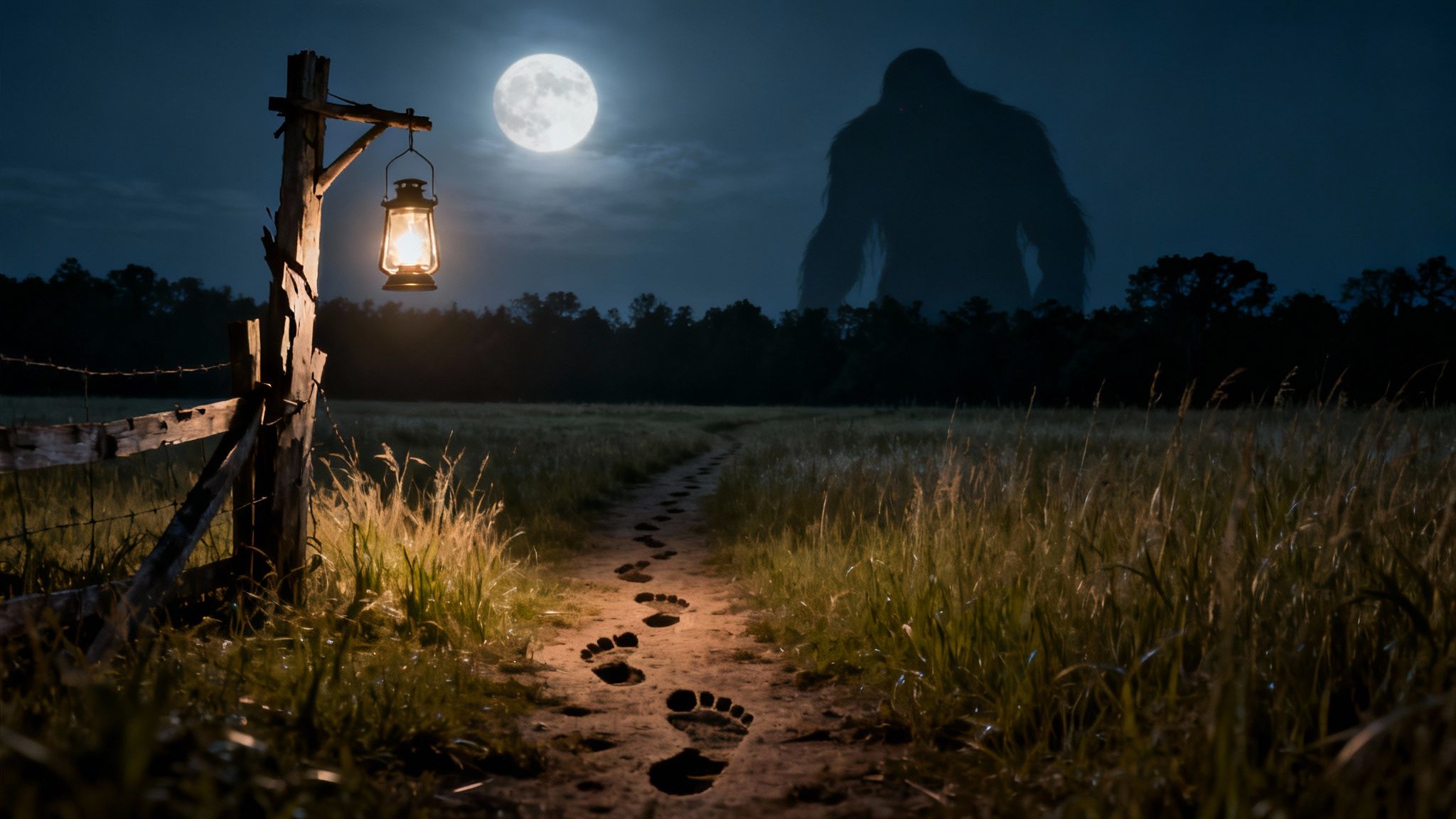
Creature feature and monster hunting horror story prompts are built around a terrifying, non-human antagonist. This classic subgenre creates conflict through a primal cat-and-mouse game, where the focus is either on surviving an attack from a unique monster or actively hunting it down. The horror stems from the unknown abilities, alien motivations, and physical threat of the creature itself.
This approach is a cornerstone of the genre, perfected by masters like John Carpenter (The Thing) and Ridley Scott (Alien). The power of these stories lies in their ability to tap into our fear of the unknown predator. The creature isn't just a physical threat; it's a symbol of the terrifying, incomprehensible forces that exist beyond human understanding, making the resulting chase or siege a potent source of suspense.
How to Implement This Prompt
- Establish Clear Rules: Define what your creature can and cannot do early on. Does it only hunt at night? Is it repelled by a specific sound? These rules create tension by giving the protagonists a fighting chance, even if the odds are slim.
- Gradual Reveal: Don't show the monster in its entirety right away. Use environmental clues like strange tracks, claw marks on walls, or unsettling sounds to build fear before the full reveal. This lets the audience's imagination create something far scarier than what you initially show.
- Give It Motivation: A monster is more terrifying when it isn't just a mindless killing machine. Perhaps it's a territorial parent protecting its nest, a starving creature driven by desperation, or an intelligent being with a purpose. This complexity adds depth to the conflict.
- Design a Distinctive Threat: Make your creature memorable. Focus on a unique sensory aspect, like a specific sound it makes, a strange smell that precedes it, or an unnatural way of moving. This makes its presence felt even when it's off-screen.
This prompt is ideal for creating suspenseful short videos where you can use sound design and quick visual cuts to hint at the creature's presence before a final, shocking reveal. To build a truly terrifying antagonist, explore these tips on how to write scary stories and make your monster unforgettable.
7. Supernatural Curse/Curse Breaking
The supernatural curse is a compelling horror story prompt that blends mystery with escalating dread. This narrative revolves around a character, family, or object afflicted by a malevolent force, forcing the protagonists into a desperate race against time to understand and break the curse before it consumes them. The horror stems not just from the curse's effects, but from the terrifying process of discovery and the high stakes of failure.
This prompt is effective because it creates a clear, ticking clock and a tangible goal, providing inherent structure and suspense. The audience becomes invested in the puzzle, piecing together clues alongside the characters. Masterworks like Koji Suzuki's Ring and Takashi Shimizu's The Grudge demonstrate how a simple set of rules can generate unbearable tension, turning mundane objects like a videotape or a house into conduits of inescapable doom.
How to Implement This Prompt
- Establish Clear Rules: Define the curse's parameters early on. For example, "Anyone who watches the video dies in seven days," or "The ghost haunts whoever enters the house." These rules give the audience a framework to understand the threat.
- Escalate the Consequences: The curse’s manifestations should start small and grow more intense. A strange noise might escalate to a fleeting glimpse of a figure, then a physical attack, and finally, a fatal confrontation. This builds suspense and shows the stakes are real.
- Make the Solution a Mystery: Breaking the curse shouldn't be easy. Require genuine investigation, ancient texts, or forgotten rituals. Introduce false leads and red herrings to make the protagonist’s journey more perilous and the final discovery more rewarding.
- The Price of Freedom: The solution should come at a significant cost. Perhaps breaking the curse requires a great sacrifice, or maybe it doesn't destroy the evil entirely but merely transfers it to someone else, leading to a tragic, cyclical conclusion.
This prompt is ideal for multi-part short video series, where each installment can reveal a new clue or a more terrifying manifestation of the curse, keeping viewers hooked.
8. Psychological/Gaslighting Horror
Psychological/gaslighting horror prompts generate fear by attacking the victim's (and the audience's) sense of reality. The terror isn't from a supernatural entity but from the deliberate, systematic manipulation of a character's perception. This slow-burn horror makes the audience feel the protagonist's paranoia and doubt as their world is methodically dismantled by another character.
This approach is profoundly unsettling because it grounds the horror in a relatable, real-world fear: the loss of one's own mind. The threat is insidious, often coming from someone the protagonist trusts. Masterful examples like Daphne du Maurier’s Rebecca or modern thrillers like You show how a manipulator can turn a victim's own thoughts against them, creating a prison of self-doubt that is more terrifying than any physical cage.
How to Implement This Prompt
- Subtle Inconsistencies: The manipulator should start small. They might move an object and deny it, or subtly rephrase a past conversation to make the protagonist question their memory. These small cracks in reality grow over time.
- Isolate the Victim: Show the manipulator driving a wedge between the victim and their support system. Friends and family are portrayed as unreliable or part of the "problem," leaving the victim with only the manipulator to trust.
- Shift the Blame: The manipulator consistently frames the victim's valid emotional reactions as overreactions or signs of instability. Phrases like "You're being too sensitive" or "I never said that, you must be imagining things" are classic tools.
- External Anchors for the Audience: While the protagonist is lost in confusion, give the audience small, undeniable moments of truth. Let the viewer see the manipulator move the keys, so when they later deny it, the audience knows who is lying, which builds tension and empathy for the victim.
This prompt is exceptionally effective for short video storytelling. A calm, persuasive voiceover from the manipulator can be paired with visuals showing the victim's increasing distress and confusion, highlighting the devastating psychological toll of being gaslit.
9. Body Snatching/Possession/Loss of Self
Body snatching or possession is a deeply personal horror prompt that plays on our fundamental fear of losing control over our own bodies and minds. The terror comes from the violation of the self, where a character's identity is overwritten or suppressed by an alien, demon, parasite, or other hostile consciousness. This creates a terrifying internal conflict, where the protagonist becomes a passenger in their own body, forced to watch helplessly as their hands commit unspeakable acts.
This concept is profoundly effective because it merges psychological horror with body horror. It’s not just about what is happening to the character physically; it’s about the erasure of who they are. Classic films like Invasion of the Body Snatchers and John Carpenter's The Thing masterfully use this to breed paranoia and mistrust, as anyone could be an imposter. The horror is about the enemy hiding in plain sight, wearing the face of a friend or loved one.
How to Implement This Prompt
- Establish Clear Rules: Early on, define how the possession or takeover works. Is it a parasite that needs a host? A demon that requires a ritual? Clear rules make the threat feel more concrete and the stakes higher.
- Subtle Behavioral Changes: The initial signs of a takeover should be small and easily dismissed. A character might develop a strange new habit, use an odd turn of phrase, or have a momentary blank stare. These subtle clues build suspicion slowly.
- Show the Internal Struggle: If possible, give the audience a glimpse into the host's mind. A voiceover could feature the original consciousness, trapped and terrified, commenting on the invader's actions. This contrast between the internal and external self is a powerful source of horror.
- Introduce Paranoia: The core of these horror story prompts is social distrust. Create a closed environment where characters begin to suspect one another. Show them testing each other, looking for the subtle signs that someone is no longer who they appear to be.
This prompt is ideal for creating suspenseful short videos. You can use a character’s internal monologue as a voiceover while showing visuals of them acting strangely, creating a chilling disconnect that leaves the audience questioning who is truly in control.
10. Folk Horror/Isolated Community
Folk horror taps into the primal fear of the outsider, placing a protagonist within an isolated community governed by ancient, unsettling customs. This prompt creates terror not from a single monster but from an entire society whose traditions, rituals, and beliefs are deeply sinister to an outsider. The horror stems from the clash between modern sensibilities and a worldview that operates on a different, often brutal, logic.
This subgenre is potent because it explores how isolation and tradition can birth genuinely terrifying practices that are considered normal by their practitioners. The terror is psychological and social; the protagonist's struggle is against a collective, making escape seem impossible. Masterworks like The Wicker Man and modern interpretations like Midsommar demonstrate how a beautiful, pastoral setting can hide horrifying secrets, turning idyllic landscapes into claustrophobic traps.
How to Implement This Prompt
- Establish the Isolation: Use the environment to emphasize the community's seclusion. Describe winding, unmarked roads, dense forests, or treacherous mountains that cut them off from the outside world. This physical isolation mirrors their cultural separation.
- Show, Don't Just Tell the Customs: Instead of explaining a strange ritual, show it in progress. Describe a seemingly innocent festival that has a dark undercurrent, or a bizarre piece of art that appears in every home. The audience uncovers the horror alongside the protagonist.
- Create Internal Logic: The community's beliefs shouldn't be random; they need a coherent, if twisted, logic. Perhaps their brutal sacrifices are tied to ensuring a good harvest or protecting them from an ancient evil. This makes their actions more chilling because they are purposeful.
- The Welcoming Facade: Make the community initially appear friendly and welcoming. This "slow burn" approach disarms the protagonist and the audience, making the eventual reveal of their true nature far more shocking and effective.
This type of prompt is perfect for building atmospheric dread in a short video. Juxtaposing beautiful, scenic shots of a remote village with an increasingly unnerving voiceover about its "traditions" can create a powerful sense of unease. For more ideas on building worlds with unique rules, consider exploring different cosmic horror prompts that challenge conventional reality.
10 Horror Prompt Types Compared
| Title | 🔄 Implementation Complexity | ⚡ Resource Requirements | 📊 Expected Outcomes | 💡 Ideal Use Cases | ⭐ Key Advantages |
|---|---|---|---|---|---|
| The Unreliable Narrator | Medium–High — requires subtle clueing and voice control | Low–Medium — writing/editing focus, minimal effects | Deep psychological unease; interpretive engagement | First-person literary horror; intimate psychological tales | Ambiguity enhances reread value and introspection |
| Cosmic Horror / Lovecraftian Dread | High — large-scale worldbuilding and gradual revelation | Medium–High — concept design, atmosphere, possible effects | Existential dread and awe; philosophical terror | Epic settings, sci‑fi crossovers, existential themes | Vast imaginative scope and philosophical depth |
| Body Horror | Medium — vivid, controlled descriptive escalation | Low–Medium (writing); High for film — prosthetics/effects | Immediate visceral revulsion; unforgettable imagery | Films or prose exploring bodily anxiety and transformation | Powerful visceral impact and memorable scenes |
| Haunted House / Isolated Setting | Medium — coherent setting rules and atmosphere | Medium — detailed location design or set staging | Sustained claustrophobic tension and slow-burn dread | Single-location stories, gothic or psychological horror | Strong atmospheric potential; familiar, adaptable trope |
| Found Footage / Documents | Medium — careful structural planning and authenticity | Low–Medium — props, varied formats, editing | Sense of immediacy and puzzle-driven engagement | Epistolary formats, low‑budget films, immersive ARGs | Authenticity and audience participation in piecing truth |
| Creature Feature / Monster Hunting | Medium — creature rules, pacing, and reveal control | Medium–High — creature design, effects, choreography | Clear external threat, escalating tension and action | Blockbusters, games, visual-heavy horror narratives | Visual spectacle with clear stakes and momentum |
| Supernatural Curse / Curse Breaking | Medium — establish consistent mechanics and escalation | Medium — lore research, investigative beats | Urgent, goal-oriented tension with mystery elements | Folklore-based horror, investigative thrillers | Blends mystery and horror with a clear narrative objective |
| Psychological / Gaslighting Horror | High — nuanced manipulation and ethical sensitivity | Low–Medium — strong character work, careful plotting | Intimate paranoia and emotional resonance | Social commentary, intimate thrillers, character studies | Contemporary relevance and sustained psychological tension |
| Body Snatching / Possession / Loss of Self | Medium — clear takeover mechanics and ambiguity balance | Medium — acting, effects, dual portrayals | Identity dread and interpersonal paranoia; contagion risk | Contagion narratives, paranoia-driven ensembles | Explores identity/autonomy with high emotional stakes |
| Folk Horror / Isolated Community | High — respectful cultural research and coherent worldview | Medium — location, research, culturally sensitive design | Slow-burn atmosphere rooted in tradition; unsettling rituals | Community-focused stories, ritualistic and landscape-driven horror | Thematic depth and uniquely atmospheric, place-based terror |
From Prompt to Production: Your Automated Horror Factory
We've journeyed through the darkest corners of imagination, exploring a comprehensive collection of horror story prompts designed to terrify, unsettle, and captivate. From the creeping dread of cosmic horror to the intimate violation of body snatchers, each category offers a unique key to unlock audience fear. You now possess a toolkit filled with everything from two-sentence terrors and chilling first lines to twist endings and micro-horror concepts optimized for the fast-paced world of short-form video.
The true takeaway, however, isn't just the list of ideas. It's the understanding that a great prompt is a seed, and the real magic lies in its cultivation. We've deconstructed how to expand these seeds into 60-second scripts, how to craft voiceover hooks that stop the scroll, and how to structure a narrative for maximum impact within the tight constraints of platforms like TikTok and YouTube Shorts. You've learned to think not just as a writer, but as a producer.
Mastering the Art of Automated Terror
The value of these horror story prompts is directly tied to your ability to execute them consistently. In today's content landscape, volume and quality are paramount. This is where the barrier between idea and finished product often becomes a daunting obstacle, consuming hours of scripting, visual sourcing, and editing.
This is precisely the challenge that automation solves. By integrating these prompts into a streamlined production workflow, you transition from a sporadic creator to a prolific horror auteur. The goal is to build a content engine, a system where your creative energy is focused on the core idea, while technology handles the heavy lifting of production. This approach empowers you to maintain a relentless posting schedule without creative burnout, building a loyal audience that eagerly awaits your next nightmare. For those looking to quickly turn their written horror ideas into visual content, exploring an AI video generator from text can provide a powerful starting point for this automated process.
Your Next Steps to Viral Fear
Don't let this collection of horror story prompts become a forgotten bookmark. Your path forward is clear and actionable.
- Select Your Niche: Choose one or two horror subgenres from this list that genuinely excite you. Focusing your content creates a recognizable brand and attracts a dedicated fanbase. Are you the master of folk horror or the queen of psychological thrillers?
- Batch Your Ideation: Dedicate a single session to adapting 10-15 prompts into short scripts. Use the provided examples and voiceover hooks as your template. This focused effort is far more efficient than trying to create from scratch every day.
- Embrace Automation: Feed your finished scripts into a tool designed for rapid video creation. Instead of spending an entire day producing one video, aim to generate a week's worth of content in a single afternoon. This is how you scale.
Ultimately, the power of a great horror story prompt lies in its potential. It’s a spark in the darkness. By combining these sparks with a strategic, automated production system, you’re not just telling scary stories; you’re building a horror media machine. You have the ideas, the templates, and the strategy. Now, go bring your nightmares to life.
Ready to turn these prompts into a library of chilling videos in minutes? Stop wrestling with complicated editing software and let ClipCreator.ai be your personal horror production studio. Paste your script, choose your style, and generate high-quality, ready-to-post videos, complete with visuals, voiceover, and captions. Visit ClipCreator.ai and start building your horror empire today.

Create your first video in under 2 minutes
Pick a niche, and ClipCreator.ai generates and auto-posts faceless videos to your channels every day.
Join ClipCreator.ai