
Your child pulls the same book from the shelf again. You've read it five nights in a row, you know where every pause belongs, and you were hoping to try something new. But your child wants the familiar ending, delivered exactly as it was yesterday.
That request tells you something useful about bedtime storytelling. The plot doesn't have to surprise anyone. A dependable rhythm, recognizable language, and an ending that doesn't invite another adventure can matter more than an ingenious twist.
Good bedtime story ideas give listeners something interesting to enter, then gradually ask less of them. A missing blanket can provide enough curiosity. A repeated goodnight can carry the middle. By the final scene, nobody should need to solve a mystery or remember a new character.
For parents, that means you don't need to invent a miniature epic while you're tired. For creators, it means a strong opening doesn't have to involve danger, loud music, or frantic editing.
These formats offer different ways to manage that transition. Some suit a child who wants predictable participation; others give an older listener a little adventure before returning home. Choose for tonight's mood, then judge the story by how quickly it engages, how deliberately it slows, and how completely it ends.
1. Repetitive Rhyming Goodnight Routine
Start with something the child can see: a pillow, a curtain, or a familiar bear. Move through the room, saying goodnight in a repeated pattern, until the narrator reaches the child's bed.
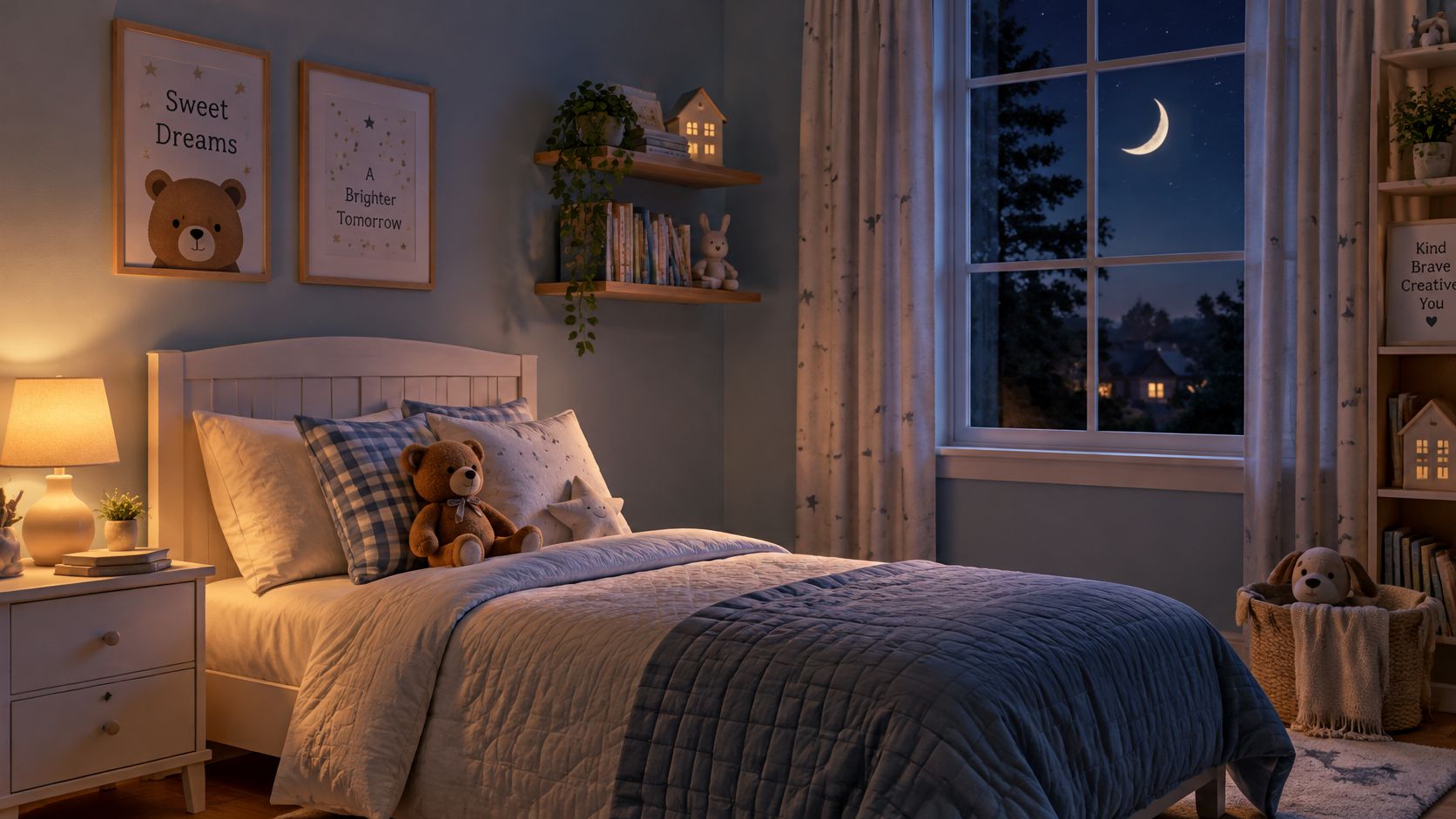
Goodnight Moon offers a recognizable reference for this room-by-room attention. For an original version, let a small bear check that the slippers, bookshelf, and bedside lamp are all ready for the night.
The opening works through recognition rather than suspense. The listener knows these objects and can anticipate the next goodnight. As you approach the ending, shorten descriptions and leave more space between lines.
Let the pattern do the work
- Opening: Name a familiar object immediately, without explaining the room's history.
- Wind-down: Repeat the same sentence shape while moving from distant objects toward the bed.
- Ending: Finish with a fixed goodnight line, not a question about tomorrow.
Language-based bedtime routines were associated with longer nighttime sleep and stronger verbal performance in a longitudinal study of 4,274 U.S. children, although the observational findings don't establish that a particular story causes better sleep.
The trade-off is that forced rhyme can make language awkward. Choose a natural refrain over a clever rhyme if you can't have both.
Short-form video note: Pair each verse with a still or gently moving image. Keep the closing image and spoken sign-off consistent across episodes, and don't accelerate the delivery just to fit another verse.
2. Animal Going-to-Sleep Journey
The fox has found a snug sleeping hollow, but its tail keeps slipping out from under the blanket. This small comic snag hooks the listener without introducing danger. Let the fox try tucking its tail beside its paws, then discover that curling around it makes a comfortable nest.

Animal characters make familiar bedtime behavior feel imaginative. The Going-to-Bed Book and Good Night, Gorilla offer useful references for playful preparations and visual mischief, but give an original character its own habits and setting.
Resolve the tail problem before the final passage. Then slow the pace with details of the fox's settled body, warm blanket, and quiet hollow. The trade-off is that a comic opening can keep listeners alert if the jokes continue too long. Put the funniest action early, then let each sentence grow calmer.
Keep the animal recognizable
For a recurring series, keep the animal's markings, proportions, blanket, and sleeping place consistent. Changing those visual details from scene to scene can distract from the gradual wind-down.
A bedtime-story video guide can help shape the spoken scene into a visual sequence. For a reading corner, you can also browse animal plushies.
Short-form video note: Reduce movement as the fox settles. A slow blink and resting tail support the quieter ending; another comic tumble would restart the energy. Keep the narrator's voice comfortable and clear, rather than using an exaggerated whisper that makes words harder to understand.
3. Guided Imagery Sleep Story
Begin inside the peaceful place. Describe warm sand beneath bare feet or a moonlit path beside soft grass, rather than asking the listener to wait through an introduction.

This format suits listeners who don't want a problem to solve. A child might follow a garden path to a familiar bench; an adult might prefer a quiet harbor or an empty evening library.
Use sensory details selectively. Describe the smooth bench, the warmth of a coat, and a distant sound, rather than filling every sentence with smells, colors, textures, and movement.
Offer comfort without giving commands
Second-person narration can feel immediate, but don't insist that the listener must close their eyes, breathe a certain way, or feel relaxed. Give them permission to remain still and listen in whatever way feels comfortable.
- Hook: Establish a pleasant place and a clear point of view.
- Slowdown: Reduce new details as the listener reaches a resting spot.
- Finish: Stay at that destination instead of revealing another path.
The trade-off is limited plot momentum. A listener who wants characters and dialogue may find a scenic description dull, so keep a gentle purpose, such as carrying a blanket to the garden bench.
Short-form video note: Favor an unhurried visual sequence and steady narration. The audio-format ideas in our podcast guide are useful when developing a version that makes sense without the screen.
Don't describe a story as a sleep treatment. It can offer a calm listening experience without promising that every listener will fall asleep.
4. Gentle Adventure with Calm Resolution
A little boat needs to bring a forgotten scarf across a pond before returning to its own dock. There's a destination, a reason to travel, and room for a mild obstacle, but nobody's safety depends on the outcome.
This is the useful middle ground between a static description and a full adventure. Give the character something to accomplish, not something terrifying to escape.
Where the Wild Things Are provides a familiar example of returning from imaginative excitement to home comforts. For an original bedtime tale, make the challenge smaller: a branch blocks the boat's usual route, so it follows the reeds around a sheltered bend.
Resolve the problem before the closing scene
Don't end immediately after the scarf reaches its owner. Let the boat return, loosen its sail, and rest against the dock, so the listener experiences the transition out of activity.
A useful structure is:
- Establish the wish: The boat wants to return the scarf.
- Make a manageable attempt: It finds a quiet route around the branch.
- Show the return: The delivery is complete, and the boat goes home.
The trade-off is individual sensitivity. A friendly monster can still unsettle a child who dislikes monsters, and a harmless storm can feel intense when paired with dramatic sound.
The ending should answer the story's emotional question, not merely stop the action.
Short-form video note: Show that the obstacle is manageable before increasing music or movement. Avoid cliffhangers, sudden threats, and an ominous final frame, even if those devices might encourage another view. A bedtime episode should feel complete when playback ends.
5. Daily Routine Character Story
When a child objects to bedtime preparations, a familiar character can carry the routine without turning the parent into a narrator of instructions. A rabbit might put away its crayons, wash, find its pajamas, and choose a book.
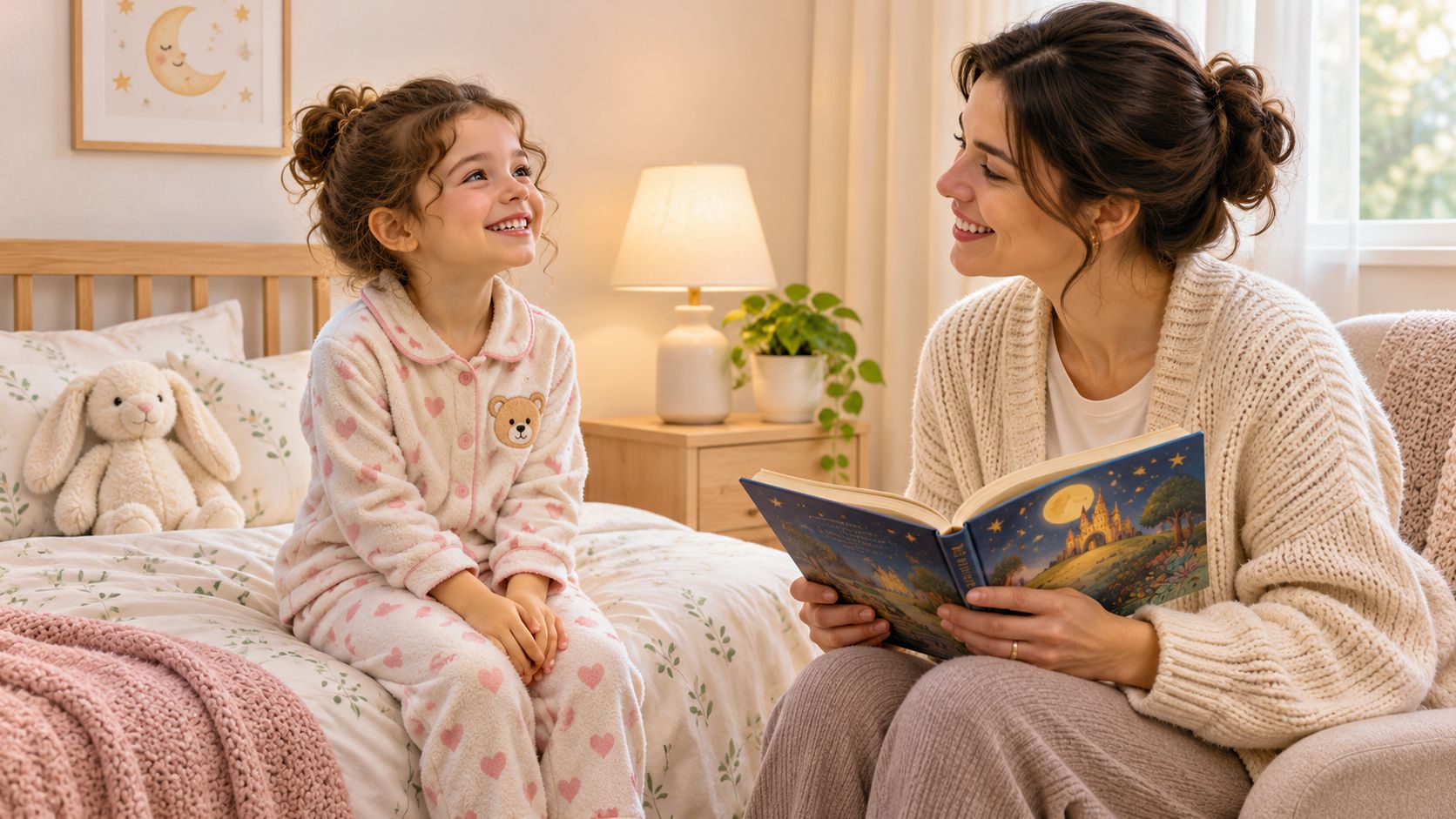
Give the rabbit a small preference, such as wanting the pajamas with the enormous pocket. That detail makes it a character rather than a demonstration model.
Show the routine through action. The rabbit places its crayons in their box because it has finished drawing, not because the narrator pauses to explain why tidy rabbits are good.
Familiar doesn't have to mean rigid
Keep the household setting recognizable, but adapt the actions to the listener's actual life. A story that assumes every child has the same room, caregiver, or sensory preferences can feel less comforting than intended.
The emotional reassurance in Llama Llama Red Pajama is a useful reference point. Don't copy its conflict mechanically, though, especially when separation itself is the listener's worry.
The trade-off is preachiness. If every episode corrects a behavior, children may recognize the lesson before they care about the character.
Short-form video note: Use recurring views of the same room and belongings. Let the character complete each action clearly rather than cutting through a rapid montage, and finish with connection or rest rather than a congratulatory badge.
For an overtired listener, skip the complication entirely. The rabbit can find its favorite pajamas straight away and move through a familiar evening without another task to overcome.
6. Cumulative Counting Lullaby
Counting works best at bedtime when the listener can follow without being tested. Instead of asking for the next number, describe lanterns going dark around a harbor as the boats settle.
Each repeated passage should change something small while preserving the sentence pattern. The listener gets a recognizable sequence, and the narrator has a clear route toward an empty, quiet scene.
Traditional rhymes such as Ten in the Bed offer a familiar counting structure. For a gentler original variation, let animals find their own nests rather than repeatedly tumble out of a crowded bed.
Count toward less activity
Adding characters can accidentally make the story busier. If you introduce another animal on every page, you may also introduce another voice, joke, and movement.
Try subtraction instead:
- Begin with a complete scene: The harbor lamps glow while the boats return.
- Repeat a settling action: A lamp goes out after its boat is safely tied.
- End with rest: The final light belongs to the keeper's quiet room.
The trade-off is that some listeners turn any sequence into a game. If they become excited about correcting the count, remove the questions and keep the numbers within the narration.
Read-aloud adjustment: You don't need to praise each correct response. Acknowledge participation softly and continue the rhythm.
Short-form video note: Keep on-screen numerals unobtrusive and synchronized with the voice. Avoid celebratory effects, bouncing digits, or a sudden sound for every change.
A counting lullaby can introduce number language, but bedtime doesn't need to become a lesson assessment. If the sequence becomes frustrating, replace the count with a repeated phrase about the harbor growing quiet.
7. Dream Travel Story
A night train leaves a familiar platform, passes quiet fields, and arrives at a warm sleeping carriage. Unlike an adventure, the journey doesn't need an obstacle: the movement itself supplies the structure.
Start with an invitation the listener can understand immediately, such as taking the window seat with a favorite blanket. Establish where the journey ends before describing unfamiliar places, especially for a child who dislikes uncertainty.
Make each stop quieter
Begin with the most visually interesting scene, perhaps a town of softly lit windows. Continue past fields, then arrive beside a still lake, reducing the amount of activity and description along the way.
A dream vehicle should feel dependable. Avoid a runaway train, a balloon losing height, or a boat drifting beyond anyone's control.
For visual reference, consider how a journey can be presented as a continuous sequence:

The trade-off is novelty. Too many remarkable destinations can keep listeners waiting for the next reveal instead of settling into the ride.
Short-form video note: Maintain a consistent vehicle design and quiet background sound. Keep transitions gentle, and stop the vehicle at the destination rather than ending mid-flight.
When using an AI bedtime-story generator, specify the route, the gradual reduction in activity, and the final resting place. Ask for a complete arrival, with no sequel teaser.
A useful closing scene shows the train parked, the conductor finished for the night, and the blanket already in place. Nothing remains to be done.
8. Gentle Alphabet or Nature Lesson Tale
A mouse looking for something soft can introduce a word more naturally than a narrator announcing a vocabulary lesson. The mouse touches a smooth stone, passes a rough twig, and finally finds a soft cushion in its own home.
Choose a concept that belongs inside the action. Color, texture, and familiar words are easier to weave into a calm scene than a chain of unrelated facts.
An analysis summarized in Sukun Kids' review of bedtime-story benefits estimated that reading a picture book daily exposes a child to approximately 78,000 words over a year. That estimate supports consistent, language-rich reading, not a promise that an individual video will deliver a measurable vocabulary gain.
Keep the lesson inside the story
Let the listener hear the chosen word in meaningful settings. The mouse can discover that a cushion is soft without being asked to define softness or identify the correct object.
- Hook: Give the character a concrete wish, such as finding a comfortable resting place.
- Slowdown: Repeat the concept while reducing the character's movement.
- Ending: Return to the concept in the final resting scene.
Papa, Please Get the Moon for Me is a useful creative reference for combining a child's wish with wonder about the natural world. Keep factual explanation separate from fantasy when inventing your own tale, so listeners aren't expected to treat imaginative events as science.
Short-form video note: Display the relevant word when it's spoken, but make the narration understandable without text. Avoid turning the final frame into a quiz.
The trade-off is cognitive effort. When a child is tired or frustrated, familiar language may suit the evening better than introducing something new.
How the Eight Bedtime Story Formats Compare
| Format | Best For | Ideal Runtime | Main Limitation |
|---|---|---|---|
| Repetitive Rhyming Goodnight Routine | Toddlers and preschoolers; repeatable bedtime series | 30–60 seconds | Limited plot can feel monotonous |
| Animal Going-to-Sleep Journey | Young children; recurring mascot-led stories | 30–60 seconds, with humor early and a calm ending | Character visuals can be difficult to keep consistent |
| Guided Imagery Sleep Story | Adults and children seeking relaxation | 60–90 seconds | A low narrative hook may reduce early watch time |
| Gentle Adventure with Calm Resolution | Children who enjoy mild excitement and reassuring endings | 60–90 seconds, with a concise three-act arc | Requires careful handling of conflict and more scripting |
| Daily Routine Character Story | Families, educators, and habit-building content | 60–90 seconds, with 3–5 routine steps | Can feel didactic if the lesson is too explicit |
| Cumulative Counting Lullaby | Early learners and educational channels | 30–60 seconds for counts of ten or fewer | Limited emotional arc may reduce engagement |
| Dream Travel Story | Themed bedtime series with scenic visuals | 60–90 seconds, with 3–5 distinct stops | Can feel repetitive without visual variety |
| Gentle Alphabet or Nature Lesson Tale | Early learners, parents, and teachers | 60–90 seconds, focused on one concept | Narrow appeal beyond early childhood; facts need checking |
The strongest format for bedtime is the one that moves from an easy opening hook to slower pacing, then closes with reassurance. The trade-off is attention versus calm: humor or mild conflict can draw listeners in, but too much activity late in the story works against a settled ending.
Short-form video note: Keep the story's central action clear in the opening, then reduce scene changes and narration intensity as the ending approaches. A video can run up to 90 seconds, so choose a runtime that leaves room for a clear resolution rather than stretching a simple premise.
Choosing and Building Your Next Bedtime Story
Choose the format by the listener's age, preferences, and mood tonight, not by how impressive the premise sounds. A repetitive goodnight routine offers predictability; an animal story allows early humor; a gentle adventure gives a listener something to follow before returning to comfort.
For an anxious evening, I'd choose a familiar setting and reveal the safe destination early. For a child who wants to participate, use an optional refrain rather than a sequence of questions.
Make participation optional
Audio deserves attention beyond its role as a video soundtrack. In a National Literacy Trust survey of parents and carers of children aged 0–5, 40.0% said audio stories helped their children learn new words, a parent-reported finding rather than a measured vocabulary improvement.
That makes an audio-only review worthwhile. Listen without watching and check whether the narrator identifies speakers, explains important actions, and brings the story to a clear close.
Keep the same refrain, closing line, and approximate runtime across a nightly series. Familiarity shouldn't mean ignoring the listener, though: shorten descriptions, reduce sensory detail, or remove participation when the evening calls for less effort.
Edit the ending before adding more scenes
Read the final passage aloud before polishing the opening. If it introduces a new destination, a fresh problem, or a promise of excitement tomorrow, revise it until the character has finished moving and the emotional question is settled.
Then check the opening. Engagement doesn't require alarm: a fox's oversized blanket or a train waiting beside a moonlit platform can provide immediate interest without a startling interruption.
For creators building a recurring series, our Bedtime story type at ClipCreator.ai provides a starting template, while custom prompts let you direct original scripts toward a particular character, tone, and ending. Finished videos can be scheduled for automatic posting, but review the narration and images before scheduling so unexpected details don't undermine the calm.
Don't treat completion rate as the only measure of suitability. Notice whether the story remains comfortable to hear again, whether the ending feels final, and whether the listener welcomes the format without needing more excitement.
Pick one format this week and test it for five nights, keeping the refrain and ending familiar while observing what fits your bedtime routine.
Our Bedtime story type and custom prompts help you turn a recurring character or calming premise into narrated videos with story-aligned images. Visit ClipCreator.ai to build your chosen format into a nightly series and schedule finished episodes for automatic posting.

Create your first video in under 2 minutes
Pick a niche, and ClipCreator.ai generates and auto-posts faceless videos to your channels every day.
Join ClipCreator.ai