You're in the familiar spot where one channel is doing the heavy lifting, but you can't shake the feeling that putting all your short-form video into one app is a fragile plan. TikTok may still be a powerhouse, but the category has clearly widened into a broader ecosystem, with YouTube Shorts, Instagram Reels, and other vertical-video feeds pulling serious attention of their own, as reflected in the current ecosystem summarized by IONOS and Business of Apps. If you're trying to protect reach, diversify revenue, or build a workflow that doesn't collapse when one platform shifts its rules, the best move is to choose apps that are like TikTok based on strategy, not just resemblance.
1. YouTube Shorts
YouTube Shorts is the closest thing to a long-term distribution engine in the short-video world. It lives inside the biggest video library most creators already use, so a strong Short can become a discovery point for your channel rather than a one-off clip. YouTube also gives creators a path from vertical video into subscriptions, long-form watch time, and a broader content funnel, which is why many teams treat Shorts as the top-of-funnel layer instead of the whole strategy.
The practical advantage is not just reach, it's reuse. If you already publish tutorials, commentary, product explainers, or faceless educational clips, Shorts can pull from the same source material without forcing you to invent a separate creative system for every post. YouTube's own Shorts page lays out the format and creation surface, and ClipCreator.ai's guide on how to create a YouTube Short is useful if you're building a repeatable workflow around vertical video.
Best use case: Post serialized clips, then point viewers toward a longer video, a playlist, or a channel subscription.
There are trade-offs. The feed is crowded, the competition is relentless, and your hook has to work fast. Music usage also needs more care than many creators expect, because rights and availability can differ by region and content type. If you want a platform where short-form content can turn into a larger owned audience over time, though, YouTube Shorts is usually the first app to test.
2. Instagram Reels
Instagram Reels makes sense when your audience already lives inside Meta's ecosystem. Reels sits inside an app people open for personal updates, creator content, and shopping inspiration, which gives it a different feel from a pure entertainment feed. That matters if you sell products, build a personal brand, or rely on visual trust to convert viewers into followers and customers.
Reels is especially strong for creators who can repurpose work across Instagram and Facebook without rewriting the concept each time. Meta's editing tools, remix options, audio features, and product tagging make it easier to turn one video idea into a social commerce asset. If you're comparing it directly with TikTok, ClipCreator.ai's breakdown of Instagram Reels vs TikTok is a helpful companion read for workflow planning.
The biggest strategic advantage is embedded audience. You're not starting from zero if your Instagram profile already has traction, and that reduces the pressure on every post to go viral on day one. That said, reach can feel volatile because algorithm shifts can change how a Reel performs without warning, and boosted Reels come with format constraints that don't always fit every creative concept.
Practical rule: Use Reels when the video is meant to support a product, a brand story, or a creator relationship, not just pure entertainment.
For teams running faceless video, Reels works well with educational snippets, quote-led clips, and product demos. It's less forgiving than some creators want, but the combination of audience depth and commerce features makes it one of the strongest apps that are like TikTok for brands.
3. Facebook Reels
Facebook Reels is the quieter option, but it's often the practical one. If your audience skews older or your business already uses Facebook Pages, Groups, or Meta's ad stack, Reels gives you a vertical-video format without forcing a separate publishing strategy. It also benefits from easy cross-sharing from Instagram, which saves time when you're trying to keep output consistent across more than one Meta surface.
The strongest reason to include Facebook Reels in your mix is distribution depth. You may not get the same entertainment-first energy you'd find elsewhere, but you do get a broad audience and a straightforward way to extend the life of Instagram content. That is especially useful for local businesses, service brands, community pages, and creators who care more about dependable reach than trend chasing.
Where Facebook Reels fits best
- Multi-platform Meta publishing: Cross-posting from Instagram keeps the workflow simple.
- Community-led brands: Pages, groups, and local audiences still matter here.
- Straightforward repurposing: Most short videos that work on Instagram can be adapted quickly.
There are limitations. Facebook Reels tends to feel slower than the entertainment-first apps, and the maximum length is shorter than some other short-video surfaces. Still, that slower pace can be an advantage if your content needs context, clarity, or a more mature audience.
If you're choosing between Reels surfaces, Facebook is usually the “make the content work harder” option. Instagram often gets the creative polish, while Facebook extends the shelf life. Together, they give you more than a single app ever will.
4. Snapchat Spotlight
Snapchat Spotlight is the best fit for creators who understand fast trend cycles and native mobile creativity. It's built for quick swipes, lightweight production, and the kind of content that feels casual without looking careless. The app's camera-first design also makes it easier to lean into AR, lenses, and spontaneous formats that don't depend on heavy post-production.
Spotlight works best when the creative idea is simple and visual. That can be especially useful for creators who want reach beyond a direct follower graph, because Spotlight lives alongside Stories, Discover, Snap Map, and public profiles. If your content thrives on reactions, visual quirks, or playful edits, Snapchat's native tools can give you a cleaner production loop than trying to force the same idea into a more polished feed.
For workflow help, ClipCreator.ai's guide on how to crop video on Snapchat is useful if you're repurposing the same source clip across platforms and need the framing to survive the move.
Use Spotlight when: You want quick turnaround, visual novelty, and content that feels native to a camera-first app.
The downside is transparency. Monetization rules and eligibility can change, and not every creator finds the platform equally predictable. You also need to adapt to Snap's creative norms, which can be less forgiving if your videos look too recycled or too polished.
Snapchat Spotlight isn't the broadest alternative, but it's one of the most tactically interesting. For creators who can move quickly and think visually, it's a real distribution channel rather than a backup plan.
5. X Vertical Video
X's vertical video experience makes sense for creators whose content lives near news, commentary, sports, or real-time reaction. The platform is still defined by conversation, and that changes what video is good at there. A clip that would entertain on another app can become a hook for replies, quote posts, and debate on X.
That real-time layer is the point. If your clips are tied to a live event, a breaking story, a public debate, or a rapidly moving niche, X can make the video feel current in a way that more entertainment-driven feeds often can't. The platform also gives Premium subscribers longer upload options, so creators who want to test longer vertical assets have room to experiment.
Why X is different
- Conversation first: Video works best when it starts a discussion.
- Event-driven reach: Sports, news, and live commentary fit naturally.
- Creator utility: Media Studio and subtitles help with asset management.
The drawback is maturity. Best practices for short vertical video on X are still evolving, so you can't rely on a stable playbook the way you can on more established short-form channels. Some of the better upload perks also sit behind a paid tier, which adds another decision point.
Use X when the value of the video isn't just the view, it's the reaction. If the content can live inside an ongoing conversation, X can be surprisingly effective. If the clip needs to stand alone without social context, another platform will usually be easier to scale.
6. Pinterest Video Pins
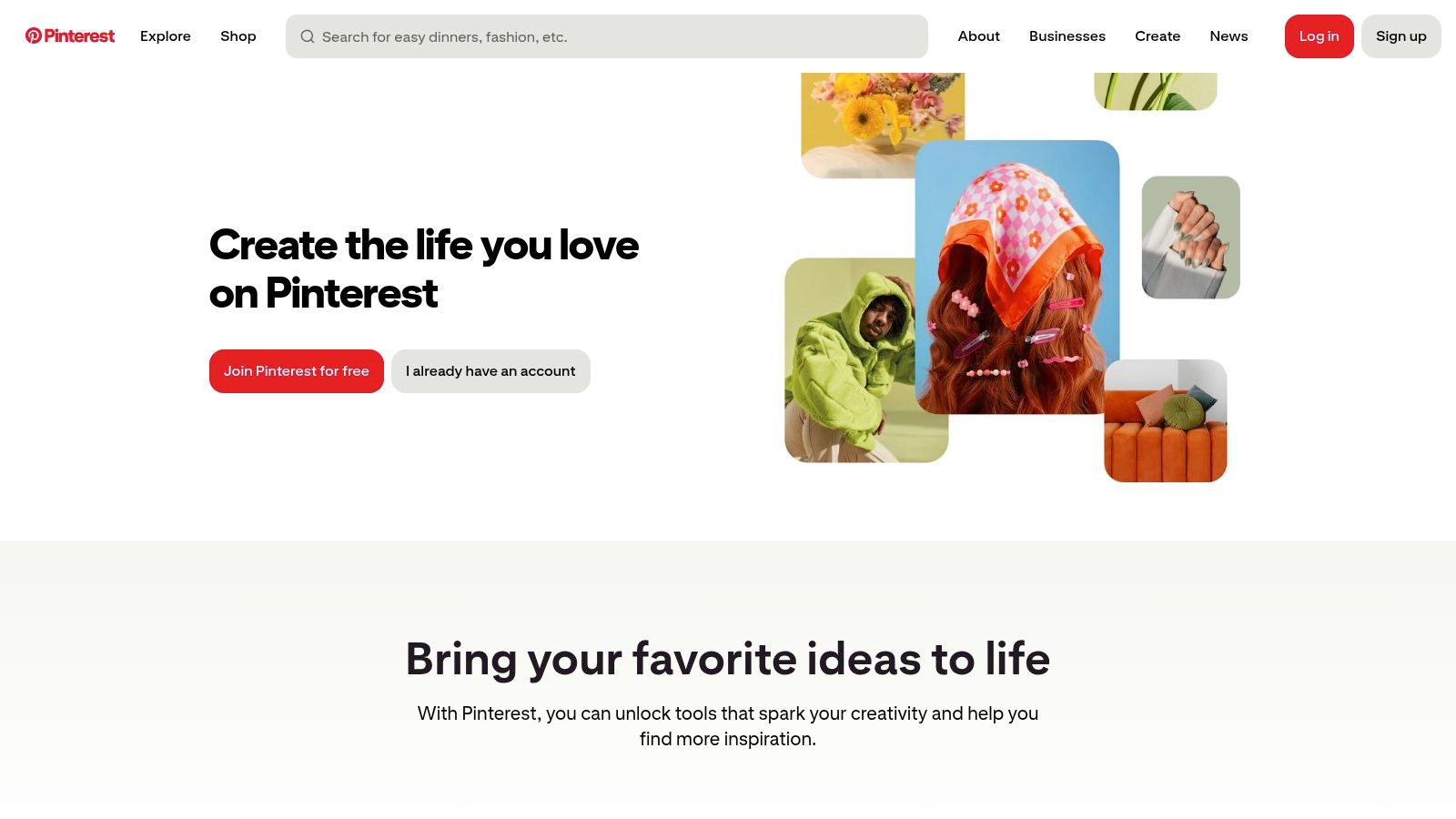
Pinterest is not a TikTok clone, and that's exactly why it belongs here. Video Pins are much better for discovery tied to intent, especially when the viewer is looking for ideas, tutorials, product inspiration, or a solution to a problem. That makes Pinterest a strong choice for educators, DIY creators, ecommerce brands, and anyone who wants traffic that's easier to direct off-platform.
The big strategic difference is behavior. People open Pinterest to plan, save, compare, and buy. That changes how your video should be structured. The best clips on Pinterest don't just entertain, they teach something useful, show a result clearly, or move someone toward a click. Video Pins also support outbound linking and product tagging, which gives you a more direct path from content to conversion than many entertainment-first apps.
What works on Pinterest
- Tutorial-first videos: Step-by-step clips and clear demonstrations.
- Product-led content: Strong fit for shoppable ideas and category browsing.
- Searchable topics: Topic tagging helps the right viewer find the right video.
The limitation is speed. Pinterest discovery can be slower than on entertainment-first apps, and the platform's watch experience has changed over time, so you shouldn't expect the same instant viral feeling. But if your real goal is qualified traffic, not just raw views, Pinterest can outperform flashier alternatives in practice.
For creators who think beyond the feed, Pinterest often becomes a durable traffic asset rather than a vanity metric machine. That's a different game, and for some brands, it's the better one.
7. Rumble Shorts
Rumble Shorts is for creators who want a newer short-form surface with room to stand out. The Shorts product was launched in 2026, and it gives vertical videos a continuous, swipeable feed on both mobile and web. That alone makes it worth watching if you're looking for an emerging channel rather than another crowded mainstream clone.
The appeal here is not just novelty, it's positioning. Rumble has leaned into being an alternative distribution environment, which can attract viewers and creators who want something outside the usual Meta-YouTube-TikTok loop. Its Shorts feed automatically classifies vertical and square videos under 90 seconds, so a lot of existing short content can be repurposed without major edits.
Why creators test Rumble Shorts
- New surface area: Less mature than the biggest platforms, but potentially less saturated.
- Cross-device access: Works on iOS, Android, and web.
- Simple repurposing: Existing short clips can slot in with less friction.
The downside is obvious if you've managed larger creator accounts before. Discovery and ecosystem maturity lag behind YouTube and Meta, and creator ROI can feel less predictable. That means you should treat it as an experimental distribution lane, not your only growth engine.
Practical rule: Start by cross-posting best-performing clips, then watch whether the platform rewards your specific niche before you invest in a custom content track.
Rumble Shorts is not the safest default choice, but it can be a smart testing ground. If you want a newer audience channel and you're comfortable with ambiguity, it deserves a spot in your short-form stack.
8. Likee
Likee launched in 2017 and has been reported at about 500 million users, which makes it a real player in short video rather than a niche experiment. The platform has built its reputation around AR effects and live engagement, so its audience behavior is different from apps that are optimized mainly for broad entertainment reach.
Likee works best for creators who want fast production with a strong effects layer. Its AR tools, stickers, beauty filters, and live-streaming features suit creators who rely on interactive formats and quick visual payoff. The platform's gifts, fan clubs, and in-app currency also make audience participation feel more direct than it does on many other short-video apps.
Good reasons to test Likee
- Effects-heavy content: Fast edits and playful visuals are easy to build.
- Live engagement: Gifts and fan features can deepen audience interaction.
- Regional traction: Stronger in some markets than in the U.S.
The trade-off is reach and monetization. In some regions, discoverability is narrower, and creators still need to stay careful with music rights and reuse permissions. If you already have local demand in a market where Likee performs well, it can work as a secondary channel. If your growth target is U.S.-first, it is harder to justify as a main platform.
Likee makes the most sense when you want a creative outlet with direct community mechanics. Its in-app Diamond currency and fan-club system let creators monetize through gifts and audience support, which gives it a different business model from platforms that rely mainly on ads or broader distribution.
9. Triller
Triller is built around music-first short video, and that identity still matters. The platform has always leaned into remix culture, quick edits, and entertainment partnerships, which makes it feel closer to a performance tool than a generic social feed. For musicians, dancers, performers, and pop-culture creators, that focus can be a real advantage.
The strength of Triller is speed to a polished result. If your content depends on syncing visuals to music, building a hype clip, or tying a post to an event, Triller's editing style can help you get there quickly. That makes it useful for creators who care about presentation and cultural feel as much as raw posting volume.
There's a strategic catch, though. Social app traction has fluctuated compared with bigger rivals, and Triller's broader business focus has shifted enough that some creators feel less certain about long-term monetization clarity. That doesn't make the app irrelevant, but it does change how you should use it.
Best for: Music-led content, entertainment clips, and creators who already think in beats, hooks, and performance energy.
Triller makes the most sense when your video has a soundtrack-driven identity. If your content depends on commentary, education, or search-friendly structure, another platform will probably serve you better. If your niche is music and performance, Triller still earns a test slot.
10. Lomotif
Lomotif is one of the lighter-weight options in this category, but that can be a benefit. It focuses on music clips, slideshows, quick edits, and easy social posting, which makes it attractive if you want to turn assets into vertical videos without a complicated editing workflow. For solo creators and small teams, simplicity can beat feature overload.
The app is useful when your main goal is speed across multiple platforms. You can assemble a short piece of music-driven content, give it a basic visual treatment, and move it into broader distribution without dragging the process through a full editing suite. That makes Lomotif a decent fit for creators who need a fast, repeatable output system rather than a polished brand film.
Where Lomotif fits
- Beginner-friendly editing: Easy assembly and slideshow conversion.
- Music-centric workflow: Good for short clips built around audio.
- Cross-posting mindset: Helpful when one piece of content needs to live in several places.
The compromise is audience size. Lomotif doesn't have the reach or monetization depth of TikTok, Meta, or YouTube, and that means your best clips still need better distribution elsewhere. Think of it as a lightweight production tool with a community layer, not a primary growth engine.
For creators who prefer getting content out fast over perfecting every transition, Lomotif can still be practical. It's especially useful when the same idea needs to be repackaged quickly for multiple channels.
Top 10 TikTok Alternatives Comparison
| Platform | Core features ✨ | Target audience 👥 | Discovery & engagement ★ | Value / Monetization 💰🏆 |
|---|---|---|---|---|
| YouTube Shorts | ✨ Up to 3min, multi‑segment camera, deep music library, Studio analytics | 👥 Broad creators seeking mass discovery + long‑form funnel | ★★★★★ Strong recommendation engine & search surface | 💰 Free; YPP/ads & shopping integrations; 🏆 best for monetization |
| Instagram Reels | ✨ Advanced editing, remix, AI translation, product tagging | 👥 Creators/brands focused on social commerce & trends | ★★★★ High U.S. reach via Explore & Reels tabs | 💰 Free; commerce & boosted Reels; 🏆 social‑commerce strength |
| Facebook Reels | ✨ 90s clips, cross‑share with Instagram, Meta insights | 👥 Businesses and creators targeting 25+ demographics | ★★★★ Good reach, slower viral pace than entertainment apps | 💰 Free; Meta ad/creator tools; good cross‑posting value |
| Snapchat Spotlight | ✨ AR lenses, Spotlight submissions, public profiles | 👥 Gen Z creators using AR and fast trends | ★★★★ Fast trend cycles, strong real‑time engagement | 💰 Free; creator rewards available but variable; ✨ AR native |
| X (Vertical Video) | ✨ Immersive vertical feed, Media Studio, long uploads (Premium) | 👥 News/event creators and conversational publishers | ★★★★ Great for real‑time/event distribution | 💰 Free; Premium perks for creators; 🏆 conversational reach |
| Pinterest Video Pins | ✨ 9:16 to 5min, product tagging, outbound links | 👥 DIY, educators, shoppers seeking high‑intent content | ★★★★ Slower discovery but high watch‑intent & conversion | 💰 Free; strong traffic/commerce funnel; 🏆 high conversion intent |
| Rumble Shorts | ✨ ≤90s personalized feed, web & mobile surfaces | 👥 Creators seeking alternative distribution & early advantage | ★★★ Emerging discovery; growing MAU but less mature | 💰 Free; emerging monetization; potential first‑mover gains |
| Likee | ✨ Live gifts, AR/beauty effects, in‑app currency (Diamonds) | 👥 Live streamers & creators seeking gamified engagement | ★★★ Good real‑time engagement in core markets | 💰 In‑app currency & gifts; ROI varies by region |
| Triller | ✨ Music‑synced edits, remix tools, event partnerships | 👥 Musicians, performers & entertainment creators | ★★★ Niche/music‑driven discovery | 💰 Free; event/brand tie‑ins & in‑app purchases |
| Lomotif | ✨ Quick music video assembly, slideshow → clip workflows | 👥 Beginners wanting fast music‑centric clips for multi‑post | ★★ Smaller audience; simple sharing | 💰 Free; lightweight editing tool for quick content |
Your Next Viral Hit Awaits How to Choose and Start
Choosing the right platform depends on what you need the video to do. If you want the biggest path from short-form reach into broader monetization, YouTube Shorts is usually the best starting point, because it sits inside YouTube's larger ecosystem and gives your vertical clips a route into long-form discovery and channel growth. If you're building a brand or selling products, Instagram Reels is often the smarter second choice because it combines audience depth with shopping and brand tools.
For creators who care about faceless video workflows, the decision is less about format and more about operations. Repurposing one clip manually across five apps burns time fast, and every platform asks for slightly different framing, pacing, and publishing habits. That's why automation matters. Tools like ClipCreator.ai can help create and publish short faceless videos from scripts, templates, or repurposed material, which is useful when you need a repeatable output system rather than one-off edits.
The best strategy isn't to spread yourself thin across every app on this list. Pick one primary platform, one secondary platform, and build around the content type that matches each one's strengths. Educational clips often travel well to YouTube Shorts and Pinterest, product-driven videos usually work best on Instagram Reels, and conversation-led content can make sense on X.
The market has clearly moved beyond simple TikTok clones. As Business of Apps and Shopify show, short-form video now lives inside much larger ecosystems, which means your job is to place each video where it can do the most work. Start small, repurpose intelligently, and keep the platforms that produce real audience movement.
If you want a repeatable way to turn scripts, ideas, and existing clips into faceless short videos, visit ClipCreator.ai and test it against the platforms in this guide. It's built for creators who need a faster path from concept to publishing across TikTok, YouTube, and Instagram, without rebuilding every video by hand.

Create your first video in under 2 minutes
Pick a niche, and ClipCreator.ai generates and auto-posts faceless videos to your channels every day.
Join ClipCreator.ai