Most advice about making a story go viral starts in the wrong place. Shock, outrage, and trend-hopping can win a burst of attention, but they don't give you a dependable production system. A story earns sustained distribution when people understand it immediately, feel something strong, watch far enough to reach the payoff, and have a reason to share or continue.
That changes the working question from “How do I get lucky with one post?” to how to make a story go viral repeatedly through modular, high-retention arcs. Short-form platforms create extreme winners-take-most outcomes, so your advantage comes from publishing strong attempts, reading the evidence, and improving the structure rather than waiting for a perfect idea.
The Real Psychology Behind Viral Stories
Outrage is easy to recognize, but it isn't the same as shareability. A hostile opening may stop a scroll, yet viewers can leave without sending the video to anyone. Shock also creates a creative trap: once a creator escalates the emotional temperature, every later story has to become louder to compete with the previous one.
The stronger principle is high arousal, not negativity. A 2026 synthesis found awe was the leading driver of sharing, followed by humor and moral elevation. Social identity alignment and platform-native design also ranked highly over pure outrage, as detailed in the 2026 synthesis on emotional and social drivers of sharing.
Give viewers something to feel and signal
Awe works because it expands the viewer's sense of what's possible. Humor gives people a low-friction reason to send a clip to a friend. Moral elevation lets viewers share an act of courage, generosity, or fairness as a statement about the kind of world they support.
That final point matters more than many scripts acknowledge. People don't share only to distribute information. They share to say, “This is me,” “You need to see this,” or “I know something you don't.” A story about an impossible rescue, an unexpected act of kindness, or a strange discovery can therefore outperform a more aggressive story if it creates a clear social identity.
Build that signal into the narrative:
- Awe: Reveal an outcome that exceeds the viewer's initial expectation.
- Humor: Use a recognizable tension, then resolve it with an unexpected visual or line.
- Moral elevation: Show a meaningful choice instead of only describing that someone is good.
- Identity alignment: Make the viewer feel connected to a community, taste, belief, profession, or curiosity.
- Platform-native design: Use the pacing, captions, framing, and language viewers already understand on that platform.
Practical rule: Give people a reason to share the story with a specific person, not merely a reason to finish watching it.
Reach and retransmission aren't identical
Algorithmic reach is passive. A platform can test your video with viewers who never consciously choose it, while social retransmission requires an active decision. The creative features that help someone forward a story by email may differ from those that encourage a repost or private message. Informational utility and novelty can matter more for email, while emotional evocativeness and familiarity matter more for social retransmission, according to the same synthesis linked above.
That distinction should shape your call to action. “Watch until the end” serves retention. “Send this to someone who would do the same” gives the viewer a social use for the video. Neither replaces a strong story, but the second makes sharing feel natural rather than promotional.
For more practical context on creator-focused viral strategies, compare the emotional idea, the intended audience identity, and the platform format before you write the script. Then use the principles in what makes a video go viral to test whether the premise has a clear emotional payoff, a recognizable audience, and a reason to spread.
Engineering the Perfect Hook and Open Loop
A viral hook does not need to explain the story. It needs to make the next moment feel necessary. In the first 1–3 seconds, present one question, contrast, or emotional disturbance that viewers can process instantly. For short clips, build the opening around a single high-contrast promise, then protect that promise through every later beat.
A hook is compressed story logic. The viewer should understand the type of tension ahead while missing the information required to feel satisfied. That gap creates the open loop. It also gives you a repeatable structure for serial content, because each episode can resolve one question while introducing the next.
Build the opening in layers
Start with the first visual, not the polished narration. A faceless story might show a locked door, an empty road under unusual light, a hand holding an object that does not belong there, or a character staring beyond the frame. Pair the image with a spoken line that creates a contradiction.
A practical opening sequence:
- Frame one introduces contrast. Put an abnormal detail in an ordinary setting.
- The voiceover names the problem. Use a short, concrete line.
- The caption reinforces the premise. Many viewers watch without sound.
- The open loop withholds the explanation. Promise a reveal, decision, discovery, or consequence.
- The next visual advances the question. Change the evidence instead of holding the first image while narration stalls.
“Every night, someone left a light on in the abandoned house” establishes a mystery. “The reason wasn't human” adds emotional and genre direction. The next shot must show new evidence, such as a footprint, a changed object, or a reaction. Another atmospheric establishing frame spends attention without advancing the story.
Use writing irresistible hooks for product teasers to study how the first line and first image support one another. The same construction works for fictional stories, educational clips, and branded narratives. The trade-off is clear: more context can improve comprehension, but delaying the central question gives viewers an easy exit.
Use density without confusion
High retention comes from purposeful change, not from packing every fact into the introduction. Each second should intensify the question, reveal useful information, or alter the viewer's interpretation. Greetings, generic title cards, decorative shots, and delayed context spend attention before the narrative has earned it.
Captions should state the central premise in plain language. Keep them legible, place them away from interface controls, and change them when the story changes direction. Transcribing every spoken word can create visual noise. Highlighting the contradiction helps silent viewers follow the arc.
An open loop earns trust only when its payoff matches the promise. If the opening suggests a hidden identity and the ending reveals an unrelated detail, viewers learn to distrust future episodes. Use how to script a video as a checkpoint for aligning the opening promise with visual beats, narration, and the final reveal. That alignment lets automated production systems reuse a reliable arc without turning every episode into the same clip.

Pacing and Retention Benchmarks for Short-Form
A shareable video can still fail if viewers leave before the story develops. Video content has a 52% higher chance of being shared than other content types, according to viral content statistics from SHNO. That advantage matters only after the opening survives the viewer's first evaluation. Build each clip to earn the next second, then reuse the same pacing logic across a series instead of chasing isolated spikes.
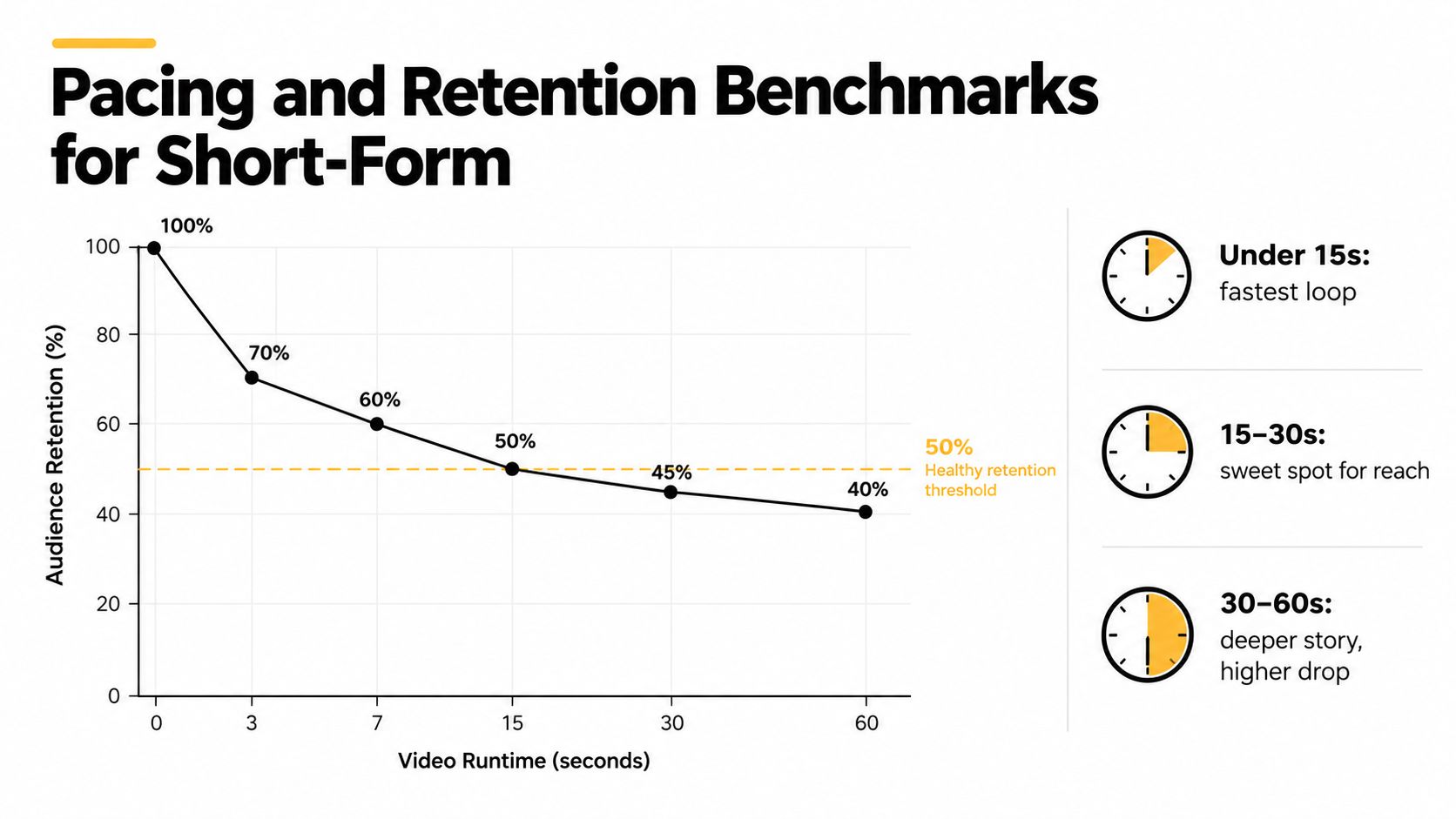
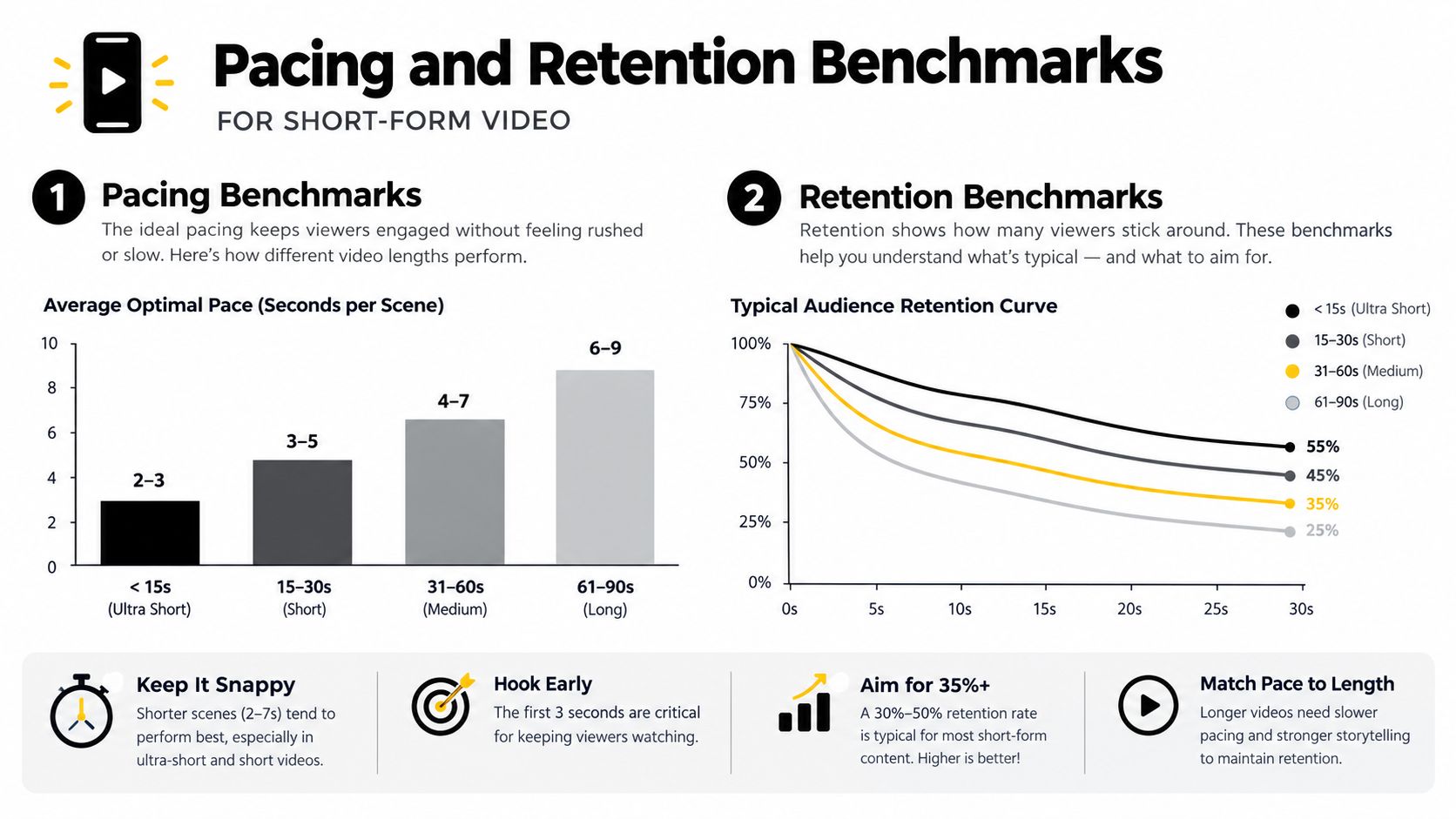
Runtime sets the retention target. Short clips allow less room for a slow setup because each early exit removes a larger portion of the narrative. The benchmark targets are above 60% for under-15-second clips, above 50% for 15–30 seconds, and above 40% for 30–60 seconds, based on the retention benchmark guidance from Retensis.
Match the structure to the runtime
A 15-second mystery cannot carry the same number of turns as a 60-second mystery. Give the short clip one question and one payoff. A longer version can support a reversal, a second piece of evidence, or a more developed character choice, provided every beat changes what the viewer understands.
Use this pacing logic:
- Under 15 seconds: Open on the contradiction, deliver one escalation, and end with either a resolution or a loop into the opening.
- 15–30 seconds: Establish the question, introduce a concrete complication, and pay it off before the premise loses force.
- 30–60 seconds: Build a chain of evidence, place a turn in the middle, and make the final reveal specific enough to justify the longer watch.
The middle needs scheduled information, not filler. Add a micro-revelation, a small fact that changes the meaning of what came before. In a missing-person story, the first clue can suggest an accident, while the next shows that the missing person planned the disappearance. Each reveal gives the viewer a reason to update the question.
Create visual movement, not random movement
Pattern interrupts work when they carry narrative information. Change the image when the speaker introduces a clue, shifts location, or reaches a decision. Cutting only because the edit feels quiet creates activity without improving comprehension. Random zooms and constant transitions can also make automated templates feel repetitive rather than purposeful.
Use captions as pacing signals. Keep the central premise legible, place text away from interface controls, and change it when the story changes direction. Transcribing every spoken word can create visual noise. Highlight the contradiction, clue, or consequence that silent viewers need to follow.
Looping requires the same discipline. Connect the final sentence to the first image so a replay feels natural, while still revealing the answer. The final phrase can add a second interpretation or return to the opening premise. Hiding the payoff to force another view frustrates viewers and weakens trust in future episodes.
A replay should feel like a discovery, not a technical trick.
Track the exact exit point. A drop before the first new piece of information usually indicates an overpromised hook or a slow setup. A middle drop points to weak micro-revelations. If viewers reach the ending but replay less often, the conclusion may be clear without giving them a rewarding detail to revisit. Use those patterns to refine reusable story modules, then let production automation apply the changes consistently across uploads.
Designing Modular Arcs for Serial Continuation
A one-off spike can make a channel look healthy while giving you no dependable audience for the next upload. Serial storytelling changes the unit of success from a single view to a continuation decision. Did the viewer want the next episode, recognize the recurring premise, and understand why returning would be worthwhile?
Short-form series data identifies Episode 1 to Episode 2 retention above 65% as excellent and Episode 1 to Episode 10 retention above 22% as excellent, according to Reelytics' short-form series retention benchmarks. These figures aren't a license to stretch every idea into a series. They're a reminder to measure whether the format creates durable interest beyond its first episode.
Give each episode a complete job
A modular arc has three layers:
- Immediate promise: The current episode answers a focused question or delivers a meaningful event.
- Continuing tension: One unresolved consequence makes the next episode relevant.
- Recognizable system: Recurring characters, locations, rules, or themes help viewers identify the series quickly.
The current episode must stand on its own. “Part two coming soon” isn't a payoff. It tells the viewer that you withheld the useful part of the story, which can reduce trust. End with a consequence instead. The character finds the hidden room, but the room contains evidence that changes the original mystery. The viewer receives an answer and gains a sharper question.
Build return paths into the format
Recurring characters make production easier because the audience already understands the basic relationship. A detective, narrator, student, creature, or skeptical friend can serve as a stable anchor while each episode introduces a different conflict. Recurring visual motifs perform a similar function for faceless channels. The same color treatment, caption style, sound signature, or opening construction can make a new upload recognizable before the account name appears.
Avoid cliffhangers that depend on arbitrary interruption. A useful cliffhanger changes the stakes or the interpretation of the story. A weak one stops before the sentence ends. The first creates curiosity. The second creates irritation.
Series rule: Close the episode's emotional question, then open the next plot question.
Measure continuation separately from initial reach. A high-view first episode with weak second-episode retention may have a broad hook but no durable premise. A smaller first episode with stronger continuation can reveal a more valuable format because the audience understands what it wants from the series.
Design your episode library as interchangeable modules. One arc can explore a recurring character's origin, another can reveal a rule of the fictional world, and a third can test that rule under pressure. This lets you publish consistently without forcing one plotline past its natural ending.
Scaling Production and Cross-Platform Distribution
Consistency becomes an operational problem long before it becomes a creative one. A strong format can still disappear when every episode requires manual scripting, image selection, narration, subtitles, editing, rendering, and separate uploads. Automation helps remove repetitive labor, but it doesn't remove the need for editorial judgment.
A study of 912 million blog posts found that only 1.3% of articles generated 75% of all social shares, illustrating how strongly attention concentrates among breakout content in the viral marketing statistics review from Webtonic. The lesson for short-form producers isn't to publish careless volume. It's to create enough optimized attempts that a small number of strong concepts have a chance to break through.
Create a repeatable production line
Start with a format bible. Define the narrator's tone, image style, caption rules, story length, acceptable themes, and ending pattern. This prevents automation from producing technically polished videos that no longer feel like the same channel.
Then run the workflow:
- Choose the premise. Select a conflict that can be understood from one sentence.
- Draft the beats. Mark the hook, escalation, reveal, and continuation point before generating assets.
- Generate aligned visuals. Each image should represent a specific story beat, not merely the general topic.
- Review the voiceover. Remove filler, repeated explanations, and lines that don't advance the question.
- Check subtitles. Correct names, timing, line breaks, and placement on the vertical frame.
- Render and schedule. Prepare versions for TikTok, YouTube Shorts, and Instagram Reels, then review each platform's presentation before publication.
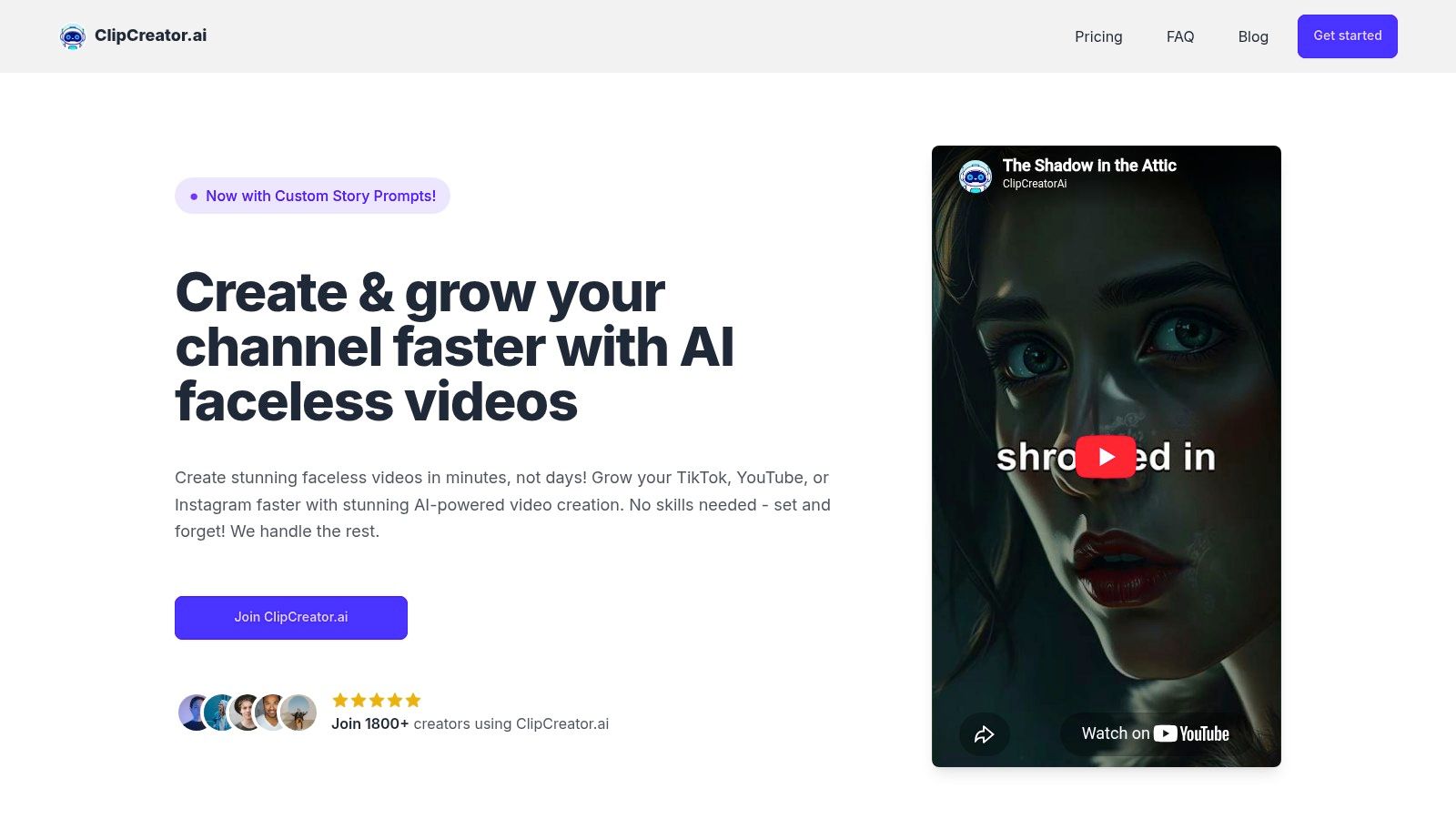
ClipCreator.ai is one option for this workflow. It generates faceless story videos from templates or custom prompts, pairing narratives with story-aligned images, voiceovers, subtitles, and a vertical HD output, with scheduling and multi-platform auto-posting available for connected accounts. Treat it as a production layer, not a substitute for premise selection or retention review.
Cross-posting should preserve the core story while respecting each platform's native context. Don't assume one caption, opening frame, or call to action will perform identically everywhere. Keep a clean master, remove platform-specific watermarks where applicable, and record which version used which hook so later analytics remain interpretable.
Iterating Based on Analytics and Drop-Off Data
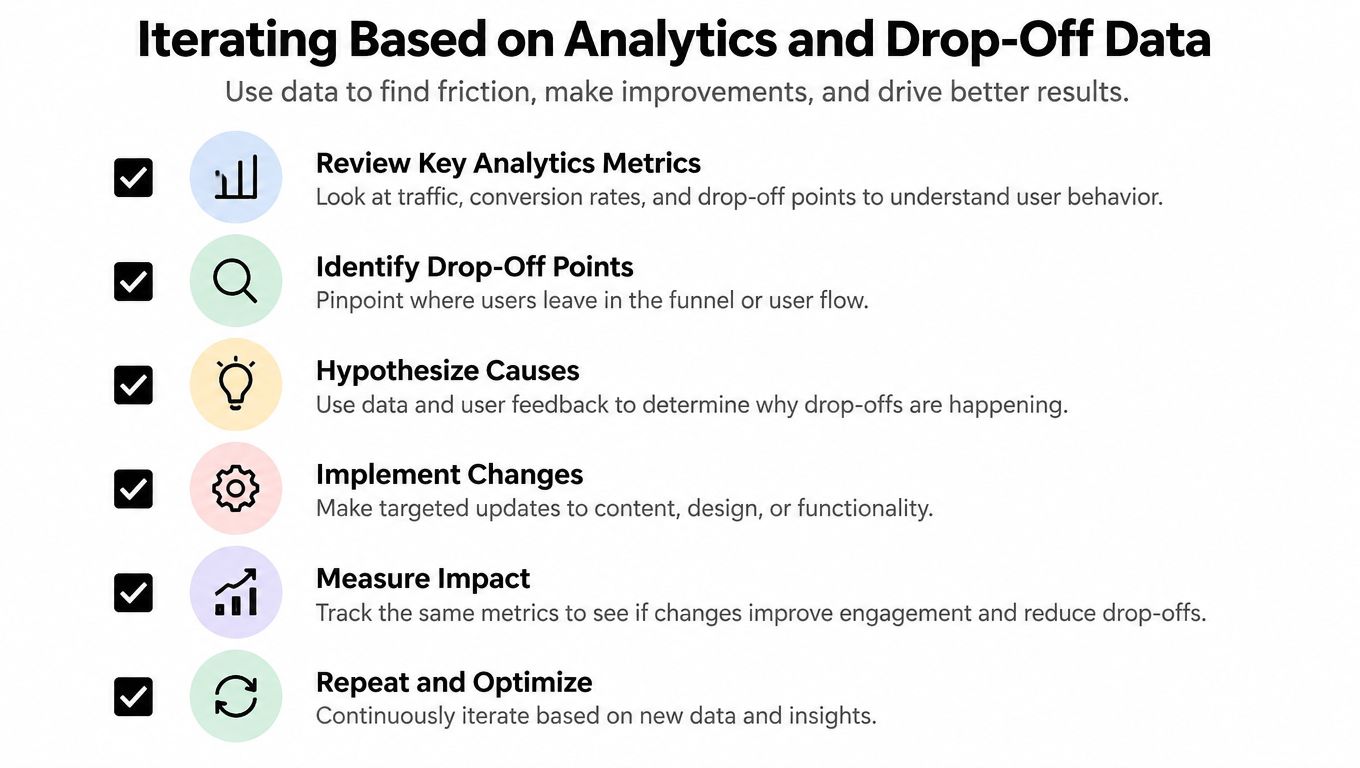
Publishing answers only one question, whether the video reached people. Analytics answers the more useful question, where did the story stop earning attention? Read the retention curve alongside the script and edit timeline. A drop at a precise moment is often a structural clue, not a verdict on the entire concept.
Diagnose the failure before changing the video
Use a simple feedback loop:
- Find the first meaningful drop. Note the exact visual and spoken line at that point.
- Classify the problem. Decide whether viewers lost interest because of a weak promise, slow pacing, confusing context, repetitive imagery, or an unearned payoff.
- Change one variable. Rewrite the first line, replace the opening frame, shorten the setup, or move the reveal earlier.
- Preserve the premise. Don't discard a strong idea merely because one execution underperformed.
- Compare like with like. Evaluate versions with the same story type and a clearly documented change.
- Feed the result forward. Add successful hooks, transitions, and endings to the channel's format bible.
A drop immediately after a title card usually points to delayed value. A drop during a long voiceover over one static image points to insufficient visual progression. A stable curve followed by a sharp fall just before the ending suggests the promised payoff arrived too late or didn't justify the wait.
For platform-specific interpretation, use how to see TikTok analytics to locate the retention curve, traffic sources, and engagement signals available in the dashboard. Don't confuse likes with narrative health. A viewer can like a premise and still fail to complete it, while a strong completion pattern can reveal that the story structure works even before comments become visible.
Analytics should narrow the edit. It shouldn't replace the editor.
Test the opening before rebuilding the entire episode. If the premise is sound, create a new first frame and a shorter first sentence. If viewers stay through the hook but leave in the middle, preserve the opening and restructure the escalation. If the ending earns completion but not continuation, improve the next-episode promise rather than changing the current payoff.
The practical advantage compounds. Each upload gives you a clearer understanding of which emotional drivers, visual patterns, and story lengths fit your audience. Over time, virality becomes less about guessing what the algorithm wants and more about operating a disciplined system that turns viewer behavior into the next creative decision.
ClipCreator.ai can turn a prompt or proven story template into a faceless short video with generated visuals, lifelike narration, subtitles, and scheduling for major short-form platforms. Use ClipCreator.ai to build a repeatable production pipeline, then apply the retention and continuation process above to decide which stories deserve another episode.

Create your first video in under 2 minutes
Pick a niche, and ClipCreator.ai generates and auto-posts faceless videos to your channels every day.
Join ClipCreator.ai