Going viral isn’t about getting lucky—it’s about understanding a formula. When a video nails a powerful emotional hook, offers something genuinely novel, keeps viewers watching (retention), and is incredibly easy to share, it creates the perfect conditions for platform algorithms to push it into the stratosphere.
Decoding The Science Behind Viral Videos
Ever found yourself scrolling and wondering how a ridiculously simple video managed to rack up millions of views? It’s almost never an accident. Behind every piece of viral content is a potent mix of human psychology and algorithmic triggers. Figuring out what makes a video pop isn't about chasing trends; it's about mastering the core principles that grab an audience and refuse to let go.
Think of it less like buying a lottery ticket and more like crafting the perfect key for a very specific lock. A viral video is built on a foundation that connects with people on a psychological level, making them feel an impulse to not just watch, but to hit that share button. That's how a private viewing experience explodes into a public cultural moment.

The Four Pillars of Viral Content
To really get a handle on how virality works, you have to break it down into four core pillars. These are the ingredients that, when combined, create content that spreads like wildfire. For creators using tools like ClipCreator.ai, intentionally building videos around these pillars can be a game-changer.
Let's quickly go over the foundational concepts we'll be diving into.
To give you a clearer picture, here’s a quick breakdown of the four pillars that form the foundation of viral content.
The Four Pillars of Viral Content
| Pillar | Description | Example |
|---|---|---|
| Emotion | Content that triggers a strong, high-arousal emotional response (awe, laughter, shock, anger) creates an immediate connection and a powerful urge to share. | A heartwarming video of a soldier's surprise homecoming. |
| Novelty | In a saturated feed, anything that's new, unexpected, or presents a unique twist on a familiar topic instantly stands out and grabs attention. | The first-ever "unboxing" video or a new dance challenge. |
| Retention | Keeping viewers hooked until the end signals to the algorithm that the content is valuable. High retention is rewarded with broader reach. | A short DIY video with a surprising final result revealed at the very end. |
| Shareability | The content is simple to understand, relatable, and easily passed on. It often contains a universal truth or joke that people want to share with their friends. | A funny, relatable meme about the struggles of working from home. |
These four pillars are the building blocks of content that doesn't just get seen—it gets shared.
By understanding and applying these four pillars, you shift from hoping for virality to engineering it. Each element is a lever you can pull to increase your content's potential reach and impact.
In the next few sections, we'll pull back the curtain on each of these pillars, showing you exactly how they work and how you can start building them into your own video strategy.
The Psychology of a Viral Video
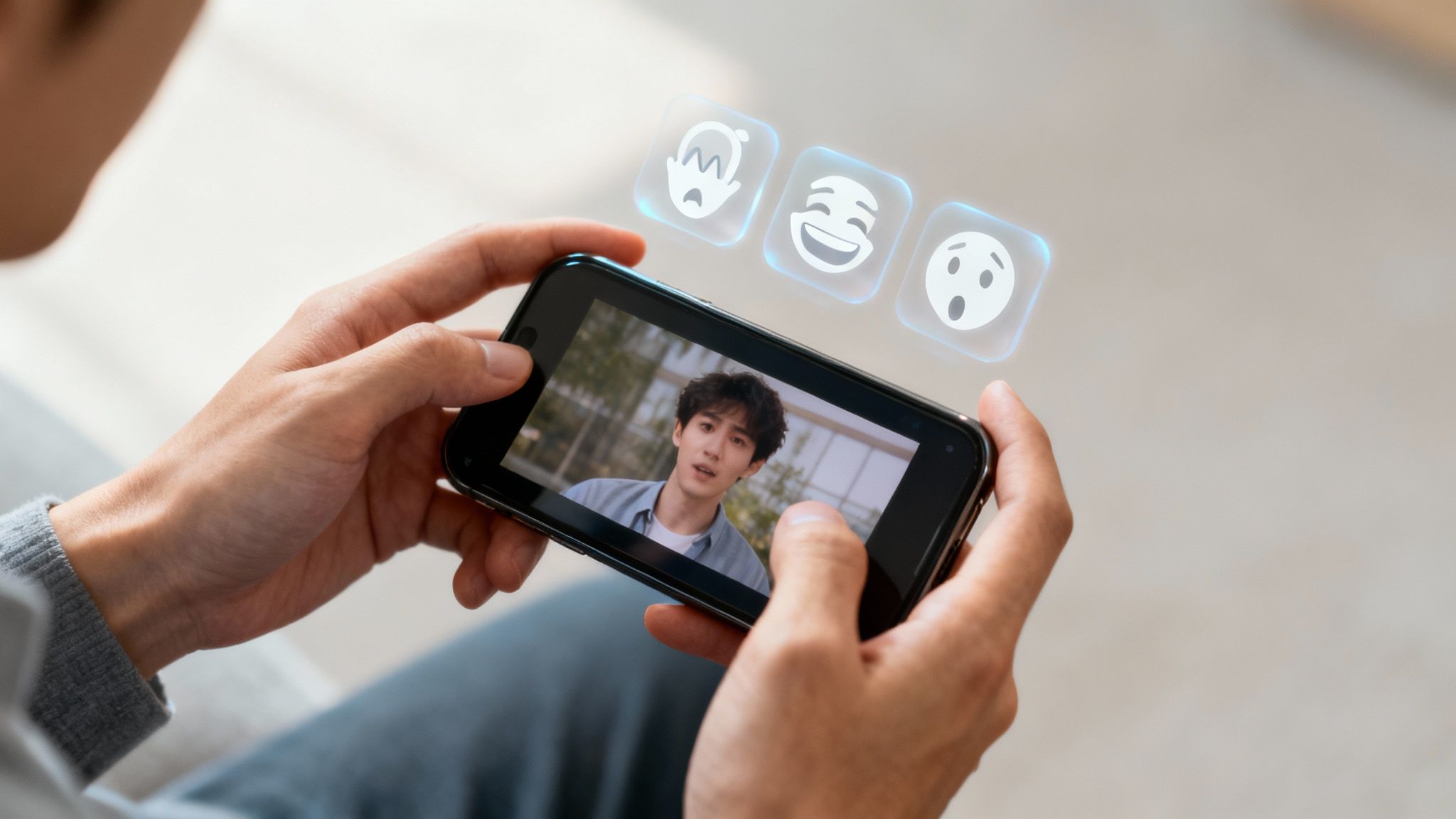
Ever wondered what makes millions of people stop scrolling, watch a video, and immediately hit the share button? It’s not just luck. The decision to share is deeply psychological, sparked by powerful emotional triggers that forge an instant connection between the viewer and the content. If you want to understand what makes a video catch fire, you have to get inside the viewer's head.
A viral video isn’t just seen; it’s felt. It cuts through the noise and speaks directly to our core human emotions. Think of it as a great conversation starter. When a video makes you laugh until you cry, gasp in surprise, or feel a sudden rush of inspiration, your first instinct is to turn to someone and say, "You have to see this!" Sharing is just the digital version of that impulse.
This is exactly why content that taps into shared human experiences—the good, the bad, and the hilarious—is so potent. It creates a sense of community and reminds us we're not alone.
Igniting Emotions to Drive Shares
The single biggest driver of virality is emotion. But not all emotions are created equal. The most shareable ones are what psychologists call "high-arousal" emotions—the ones that get our hearts pumping and make us want to do something. These feelings are active, not passive.
Think of these emotions as the fuel for sharing. They create a psychological urgency, making viewers feel almost compelled to pass the experience on to someone else.
Here are the key emotions that consistently turn viewers into sharers:
- Awe and Wonder: Content that shows us something spectacular—a breathtaking time-lapse of the northern lights or a jaw-dropping display of skill—makes us feel connected to something bigger than ourselves.
- Laughter and Joy: Humor is universal. A genuinely funny clip offers a moment of relief and happiness, a little gift that people are eager to pass along to their friends.
- Surprise and Intrigue: Videos with a clever twist, a shocking reveal, or an unexpected outcome hijack our attention. That "wow" factor is incredibly shareable.
- Righteous Anger or Inspiration: Content that shines a light on injustice or tells a powerful story of overcoming the odds can unite people, making them feel empowered and part of a movement.
When you focus on these emotional pillars, you’re no longer just making a video; you’re crafting an experience that resonates on a much deeper level.
Viral content doesn't just entertain; it activates. It creates a physiological response—a laugh, a gasp, a tear—that makes the act of sharing feel like a natural extension of the viewing experience.
This emotional spark is what gets the ball rolling. While other things like cultural relevance or an influencer co-sign can amplify a video's reach, the fire usually starts with raw emotional power. Just look at the infamous viral explosion of Rebecca Black’s song “Friday.” The strong reactions it provoked fueled over 5,500 parodies and remixes that racked up 815 million views, proving how passionate engagement can give content a life of its own. You can dive deeper into how this works in the full analysis.
The Undeniable Power of Novelty
Beyond pure emotion, our brains are hardwired to hunt for novelty. We’re constantly scanning our surroundings for anything new, different, or unexpected. In a social feed where users mindlessly scroll past hundreds of posts, novelty is your secret weapon for stopping them in their tracks.
Imagine your content as a bright, flashing sign in a sea of gray buildings. If it looks and feels like everything else, it’s invisible. But if it offers a fresh take, a bizarre concept, or a surprising visual, it instantly breaks the pattern and grabs attention.
Novelty doesn't mean you have to invent something completely new. It can be as simple as:
- A Unique Combination: Mashing up two unrelated ideas, like "explaining historical events with modern slang."
- An Unexpected Format: Presenting information in a new way, like using satisfying kinetic sand animations to explain a complex scientific topic.
- A Contrarian Viewpoint: Offering a well-argued perspective that goes against a popular belief.
This element of surprise disrupts expectations and creates a memorable experience. By tapping into these deep-seated psychological triggers—strong emotion and genuine novelty—you move beyond simply making videos and start creating unmissable, shareable moments.
How Algorithms Fuel The Viral Fire

While raw emotion and a brilliant idea might create the initial spark, it's the algorithm that pours gasoline on the fire. You can think of the systems on TikTok, YouTube, and Instagram as incredibly focused talent scouts. Their one job? Keep people glued to the screen for as long as humanly possible.
To pull this off, they are in a constant state of hunting for the most captivating content they can find. These algorithms don't care about art or your personal style; they operate on cold, hard data. Every single interaction a viewer has with your video—a like, a comment, a rewatch—is a vote. It’s a signal telling the algorithm, "Hey, this is good. Show it to more people."
This is the very process that can take a video seen by a handful of followers and blast it into a shared global experience. If you want to go viral, you have to understand how this machine works.
The Algorithm as a Talent Scout
Picture a talent scout at a packed open mic night. They can't possibly watch every full performance. Instead, they give each act a few seconds. If they hear a killer hook or a powerful voice, they lean in. And if the small crowd right in front of the stage goes wild, that scout really starts to pay attention.
That's almost exactly how social media algorithms work. When you first post a video, it isn't shown to all your followers, let alone the world. It’s quietly served to a small "test audience." The algorithm then becomes an obsessive people-watcher, tracking every move this group makes.
Algorithms don't guess what's good; they measure it. The initial performance of your video with a small test audience determines whether it gets a shot at the main stage or gets pulled from the lineup.
If this initial group eats it up—watching until the very end, hitting the share button, dropping comments, and saving it for later—the algorithm registers these as overwhelmingly positive signals. It essentially concludes, "We've got a hit on our hands!" and immediately starts pushing it to a much, much bigger audience. This cycle repeats, with each successful round of engagement expanding the video's reach until it achieves viral escape velocity.
Key Signals That Algorithms Love
Algorithms are relentlessly tracking user behavior to figure out what's worth promoting. While the exact recipe is a closely guarded secret and is always being tweaked, a few core ingredients are always on the list. Nailing these is how you feed the algorithm exactly what it wants.
- Watch Time and Completion Rate: This is the big one. If people are watching your video from start to finish, you're sending the strongest possible signal that your content is genuinely engaging.
- Shares and Saves: A share is the ultimate stamp of approval. Someone is literally putting their own name on your content and recommending it to their friends. A save means your video is so valuable they want to come back to it again and again.
- Comments and Engagement: A buzzing comment section tells the algorithm that your video is sparking a real conversation. It’s not just passive entertainment; it’s creating a community, and platforms love that.
- Initial Engagement Velocity: Speed matters. A sudden burst of likes, shares, and comments in the first hour is a massive signal to the algorithm that you’ve struck gold and it needs to act fast.
This is why you have to play the game on each platform's terms. The most successful creators are laser-focused on optimizing your videos for YouTube, where things like click-through rates on thumbnails and audience retention graphs are gospel.
Knowing which signals matter most allows you to build them right into your video's DNA. This also connects directly to knowing how to find trending topics, since a popular subject already has a built-in audience just waiting to engage. You're giving the algorithm a head start by tapping into what people are already excited about.
Crafting Your Viral Video Production Strategy

Knowing what makes a video pop off is one thing. Actually making one is another. It's time to put theory into practice. Forget about expensive cameras and fancy studio setups for a minute. A video built to go viral is all about strategy—every single second is engineered to grab and hold on to a viewer's attention.
This is especially true for short-form video, the format that’s completely taken over our feeds. These quick clips aren’t just a fad; they represent a total shift in how we consume content. They fit perfectly into the on-the-go, mobile-first world we live in, which is exactly why platforms are pushing them so hard. For creators, this is your direct line to getting the algorithm on your side.
The numbers don't lie. Short-form videos pull in 2.5 times more engagement than longer videos. A huge 47% of marketers see them as the content most likely to go viral. With billions of people watching videos on their phones—a figure expected to hit 42.6% of the global population by 2025—getting good at short-form isn't just an option anymore. If you want to dive deeper, these video marketing statistics paint a very clear picture.
Mastering the All-Important Hook
In the endless scroll of a social media feed, you don’t have minutes to make an impression. You have seconds. The first three seconds of your video are everything. That's your hook. Its one and only job is to stop someone's thumb mid-scroll and spark enough curiosity to get them to watch a few seconds more.
A weak hook is a death sentence for your video. A strong one, on the other hand, acts like a magnet, pulling the viewer in and convincing them to stick around for the story.
Here are a few hook formulas that just plain work:
- Ask a Provocative Question: Tap into a common frustration or curiosity. Something like, "Are you making this one mistake with your morning coffee?" works wonders.
- Start Mid-Action: Don't bother with a slow, boring intro. Drop the viewer right into the most exciting or confusing part of the story. They’ll stick around just to figure out what’s going on.
- State a Bold or Unpopular Opinion: Go against the grain. A hook like, "Here's why you should stop setting goals" is way more interesting than "How to set better goals."
- Create a Knowledge Gap: Hint at a secret or a little-known fact that the viewer feels they need to know. The classic "You've been peeling bananas wrong your whole life" is a perfect example.
The goal isn't to create clickbait. It's to make a genuine promise to the viewer about the value they're about to receive if they just keep watching.
Production Techniques for Maximum Retention
Okay, so your hook worked. Now what? The rest of the video has to deliver on that initial promise. High audience retention is one of the most powerful signals you can send to the algorithm. It screams, "This content is valuable!" Every choice you make from here on out should answer one question: "Does this keep people watching?"
This is where automated tools like ClipCreator.ai become a secret weapon. They are built from the ground up to weave these retention-focused elements into your videos automatically.
A viral video isn't just one big idea; it's a series of micro-engagements. Every text overlay, sound effect, and scene change is another reason for the viewer to keep watching.
To build an experience people can't look away from, focus on these production elements:
| Technique | Why It Works |
|---|---|
| Dynamic Text Overlays | They guide the eye and reinforce your message, which is a lifesaver for people watching with the sound off. |
| Compelling Stock Footage | Interesting and relevant B-roll keeps the screen from feeling static or boring. It keeps the visual energy up. |
| Strategic Sound Design | The right background music can completely change the emotional feel, and simple sound effects make key moments pop. |
| Fast-Paced Editing | Quick cuts and scene changes every 2-4 seconds create a high-energy pace that prevents people's minds from wandering. |
When you combine a killer hook with these deliberate production techniques, you create a viewing experience that feels seamless and captivating. This is the core of how to create a short video that doesn’t just get viewed but gets watched all the way through—giving it the best possible shot at getting that massive algorithmic boost.
Getting Your Video in Front of the Right People
Making a video that could go viral is one thing. Actually making it happen is another. A brilliant clip that nobody sees is a missed opportunity—like a world-class musician playing in an empty subway station. If you really want to understand what makes a video take off, you have to ditch the "post and pray" approach and start thinking like a strategist. It's all about giving your content the strongest possible launch.
This process starts even before anyone hits play. Knowing the ins and outs of YouTube thumbnail best practices is ground zero for getting that crucial first click. From there, it's all about nailing the timing and building momentum.
The First Hour is Everything
That first 60 minutes after you hit "publish" is the golden window. This is when the algorithms are watching your video like a hawk, hungry for audience signals. A huge, immediate wave of engagement—likes, comments, shares, and especially saves—is a massive green light for the platform. It basically shouts, "Hey, people love this! Show it to more of them!"
This initial velocity is what separates the duds from the viral hits. A video that gets a slow trickle of views over a full day has almost no chance compared to one that gets a flood of interaction right out of the gate. Your mission is to manufacture that initial burst of excitement.
When to Post and How to Get Found
There's no single "magic hour" to post that works for everyone. It's all about figuring out when your people are scrolling and ready to engage.
- Follow the Data: TikTok, Instagram, and YouTube all have built-in analytics. Use them. They'll show you exactly when your followers are most active. This isn't a guess; it's hard data.
- Think About Your Niche: Does your content fit a certain time of day? If you’re making videos about morning productivity hacks, an early morning post just makes sense. If you're a gamer, a late-night slot might be your sweet spot.
- Test, Test, Test: Don't be afraid to experiment. Post at different times and on different days of the week. Keep a close eye on which time slots deliver the biggest initial pop in engagement, and then build your schedule around that.
Hashtags are also a key part of the puzzle. They aren't just for show; they're like digital signposts that tell the algorithm what your video is about and who might want to see it. A good strategy uses a mix of broad, popular tags (like #LifeHacks) and more focused, niche tags (like #KitchenOrganizationTips) to cast a wide net while still reaching your core audience.
A successful launch isn't just about what you post, but when and how. By timing your content to coincide with peak audience activity and using relevant hashtags, you are strategically placing your video in the path of engagement.
This is how you turn posting from a game of chance into a calculated move. A solid video distribution strategy is what separates the creators who consistently see big numbers from those who just get lucky every now and then.
Your Action Plan for the First 30 Minutes
The moment your video goes live, the clock starts ticking. Your work isn't done; it's just getting started. Now it’s time to fan the flames and get that initial engagement snowballing. The goal is to keep the conversation hot and feed the algorithm all the positive signals it loves.
Here’s a quick checklist to run through right after you post:
- Jump on Early Comments: Be ready to reply the second comments start coming in. This not only makes your early fans feel seen but also signals to the algorithm that your post is a hub of community activity.
- Cross-Promote Immediately: Don't let your video live in a silo. Share your new TikTok to your Instagram Stories. Post your YouTube Short to your community tab or X (Twitter) feed. Drive your existing audience from other platforms to the new content.
- Spark a Conversation: End your caption with a question or post a pinned comment to get people talking. Simple prompts like, "What's the one thing you'd add to this list?" or "Have you ever tried this before?" can dramatically increase your comment count.
By taking these steps, you're not just a poster—you're an active participant in your video's launch. You're giving it the push it needs to get noticed by the algorithm and start its climb toward going viral.
Measuring Viral Metrics That Actually Matter
It’s easy to get caught up in chasing millions of views, but that number alone doesn't tell the whole story. It's a vanity metric. To really understand what makes a video catch fire, you have to dig into your analytics and see how people are watching, not just how many. These deeper metrics are the breadcrumbs that lead you to repeatable success.
Think of your analytics as a direct conversation with the algorithm. A video with a massive view count but terrible retention is getting a polite but firm "no, thank you." By focusing on the right data, you can turn every video, hit or miss, into a powerful lesson for the next one.
Beyond Views: Your Core Viral Indicators
To get a real sense of your video's performance, you need to track the numbers that platforms like TikTok and YouTube obsess over. These are the direct signals that tell them your audience is hooked.
Here are the three big ones you should be watching like a hawk:
- Audience Retention Rate: This is the magic number. It's the average percentage of your video that people stick around for. A high retention rate, ideally over 50%, is the single most powerful signal you can send that your content is genuinely engaging.
- Average View Duration (AVD): This goes hand-in-hand with retention. AVD tells you exactly how long you're holding someone's attention. The longer you keep them watching, the more the algorithm will trust your content and push it out to a wider audience.
- Views-to-Shares Ratio: A share is the ultimate form of praise. It's someone saying, "This is so good, my friends have to see it." This ratio shows just how compelling your video is. If one out of every ten viewers feels compelled to share, you've struck gold.
These metrics paint a much clearer picture of what's working. Honestly, a video with a modest view count but a stellar 70% retention rate has way more viral DNA than a clip with a million views and a dismal 20% retention.
The real game isn't about getting views; it's about earning watch time. Virality is built on a foundation of high retention and genuine engagement, not just a passing glance.
This data-first mindset helps you aim for the right targets, which can look wildly different from one platform to another.
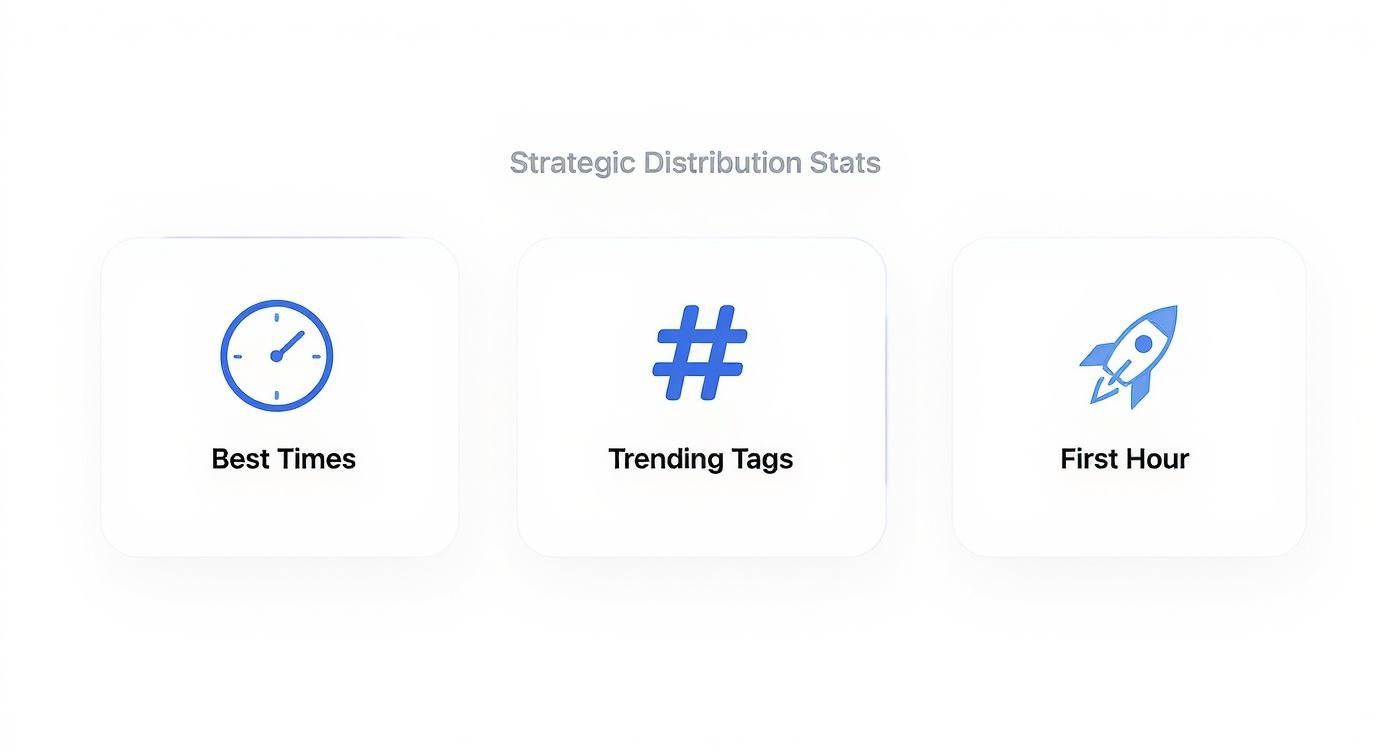
As the stats above hint, things like posting at the right time, using the right tags, and getting strong engagement in that first hour are all crucial signals you send to the algorithm.
Viral View Benchmarks by Platform
It's also important to remember that the definition of "viral" isn't one-size-fits-all. What constitutes a viral hit on TikTok is different from what it takes on YouTube Shorts or Instagram Reels.
| Platform | Typical Viral View Count | Timeframe |
|---|---|---|
| TikTok | 1 Million+ views | 24-72 hours |
| Instagram Reels | 500,000+ views & 50,000 shares | 3-7 days |
| YouTube Shorts | 2 to 3 Million+ views | Within a week |
These are, of course, general benchmarks. The key is to understand the viral thresholds for your specific platform and niche.
By consistently analyzing your data, you’ll start to see the patterns. You'll learn what hooks work, what topics resonate, and what keeps people watching until the very end. Your analytics dashboard isn't just a bunch of numbers—it's your roadmap to creating the next viral hit.
Frequently Asked Questions About Viral Videos
Let's be honest, trying to make a video go viral can feel like a guessing game. There's a ton of advice out there, and a lot of it is contradictory. To cut through the noise, here are some straight-up answers to the questions I hear most often from creators.
Can You Guarantee a Video Will Go Viral?
Nope. Anyone who tells you they can guarantee a viral video is selling you snake oil. You can master all the key ingredients—emotion, novelty, a killer hook—but there's always a bit of luck, timing, and audience mood that's out of your hands.
But here’s the thing: you can dramatically stack the odds in your favor.
The goal isn't to force one video to go viral. The real goal is to build a system where every single video you post has the potential to pop off. That’s how you build real momentum.
Think of it less like catching lightning in a bottle and more like building a better lightning rod. Each video you make, built on a solid framework, improves your chances.
How Important Are Hashtags for Virality?
Hashtags are your video's first handshake with the algorithm. They're super important for getting that initial push, but they won't magically make a boring video popular. Their job is to tell the platform, "Hey, this video is about this, show it to people who like this."
A smart mix of broad and niche hashtags helps your content find its first audience. But remember, a video with a weak hook and terrible retention is going nowhere, even with the "perfect" hashtag. An incredible video can still fly with sloppy tags, but a good hashtag strategy is like giving it a jetpack from the start.
Can a New Account with Zero Followers Go Viral?
Absolutely. This is the beauty of the TikTok and YouTube Shorts algorithms. They are built to judge the content, not the creator.
If your video hits those key engagement signals—especially watch time and shares—the algorithm doesn't care if you have zero followers or ten million. It will blast your video out to a massive audience. In fact, some of the biggest viral hits ever came from brand-new accounts, proving that a great idea is the ultimate equalizer.
What Is the Best Length for a Viral Video?
There's no magic number, but there is a golden rule: as long as it needs to be and not a second longer. For short-form video, shorter is almost always better because it's the key to high audience retention.
Most of the truly massive hits you see on TikTok and Reels clock in somewhere between 7 and 15 seconds. That's the sweet spot. It's short enough to get people to watch it again (a huge signal to the algorithm) and long enough to deliver a quick, satisfying punch.
Ready to stop guessing and start creating videos designed for engagement? ClipCreator.ai automates the entire production process, from viral-style scripts to AI-generated visuals and voiceovers, so you can consistently publish high-retention content. Start creating your next potential hit today!

Create your first video in under 2 minutes
Pick a niche, and ClipCreator.ai generates and auto-posts faceless videos to your channels every day.
Join ClipCreator.ai