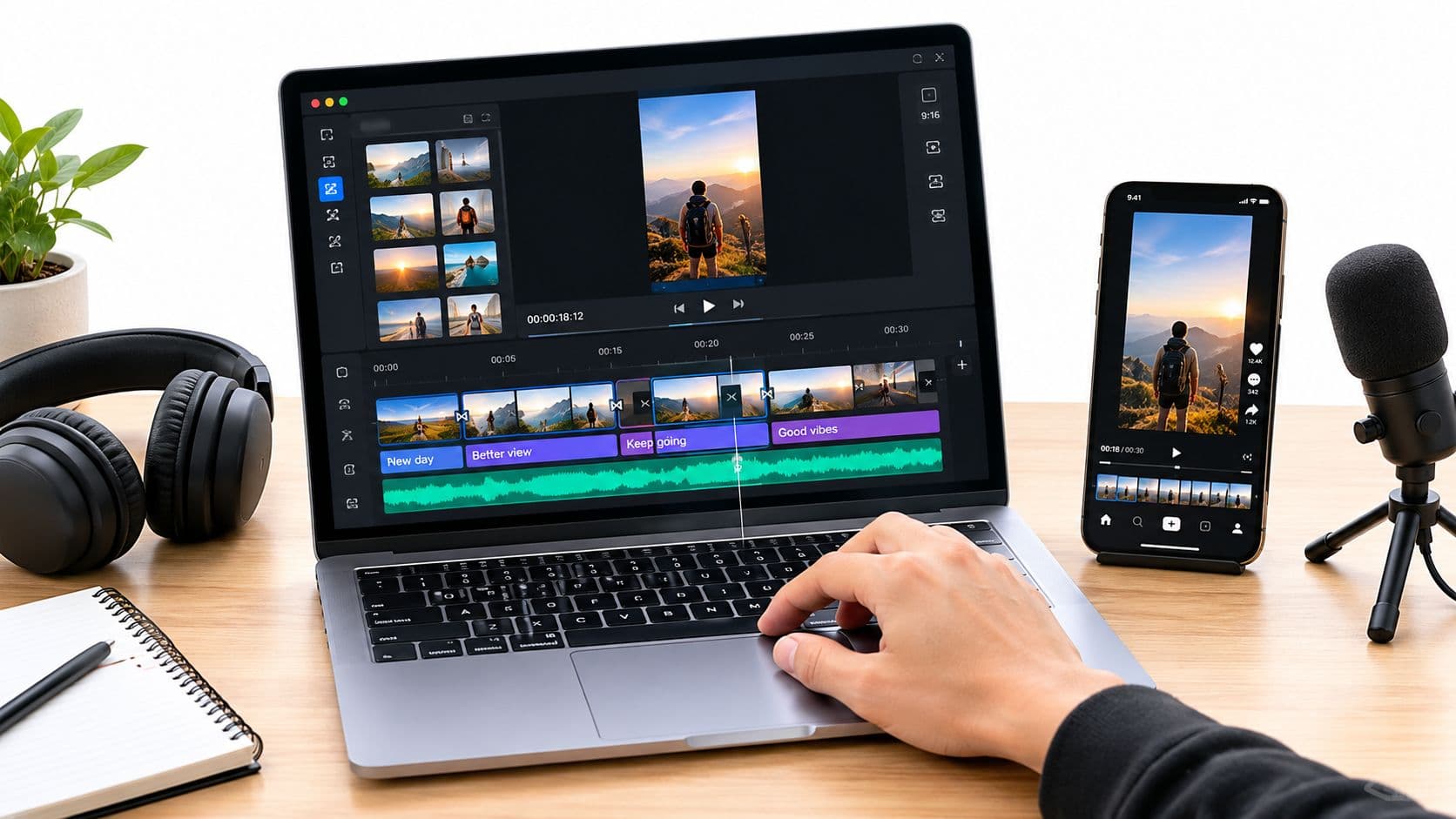
The modern learner's attention span is shorter than ever, making traditional, hour-long training modules feel obsolete. This reality has powered the rise of microlearning, an approach that delivers short, focused bursts of information designed for maximum retention and immediate application. The method has proven its worth across various sectors. Frontline employees access just-in-time job aids on the go, while educators create compelling narrative lessons using short-form video formats.
However, delivering this content effectively requires the right tools. The challenge lies in sifting through a crowded market to find a platform that aligns with your specific goals. Are you training a global sales team, onboarding new hires, or automating social media video content for a brand? Each scenario demands a different set of features. This guide cuts through the noise to provide a detailed analysis of the 12 best microlearning platforms available today.
We will move beyond marketing claims to give you a genuine look at how these tools perform in the real world. For each platform, you will find:
- Honest pros and cons based on user experiences.
- Specific feature breakdowns, including analytics, integrations, and mobile capabilities.
- Clear pricing information to help you budget effectively.
- Best-fit use cases to match the platform to your needs.
This resource is built to be a practical buyer's guide. Each entry includes screenshots for a visual preview and direct links to get you started. We’ve done the heavy lifting so you can confidently select the ideal platform to create impactful, bite-sized learning experiences for your audience.
1. ClipCreator.ai
ClipCreator.ai positions itself as a powerhouse for automated short-form video, making it an exceptional choice for educators and businesses focused on delivering consistent, narrative-driven micro-lessons. Its core strength lies in its "set-and-forget" workflow, which automates the entire video production pipeline. The platform generates a script, pairs it with story-aligned images, adds a lifelike AI voiceover, and applies accurate subtitles before scheduling and auto-publishing the content. This end-to-end automation is a massive time-saver, with many of its 1,800+ users reporting they save over 15 hours a week.
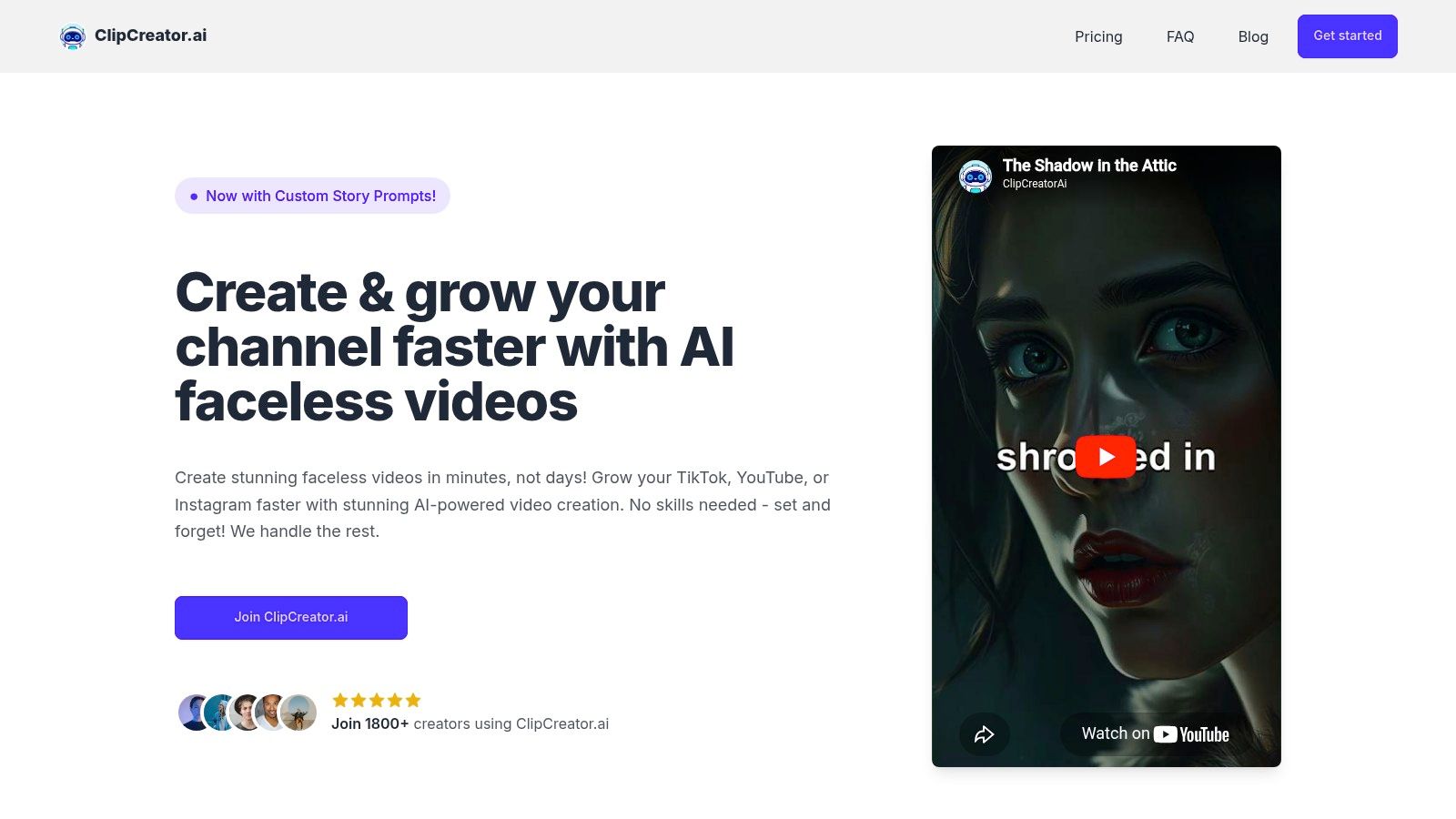
Unlike generic video tools, ClipCreator.ai excels at creating engaging, faceless video content perfect for microlearning. Educators can use pre-built viral templates for formats like "scary stories" or "bedtime tales" or input their own custom prompts to generate educational content that aligns with their curriculum. This flexibility makes it one of the best microlearning platforms for channels that rely on storytelling and consistent output to maintain audience engagement.
Standout Features & Use Cases
- End-to-End Automation: The platform handles everything from scriptwriting and image generation to voiceover and scheduling, freeing up creators to focus on strategy. This is ideal for solo educators or small marketing teams needing to scale video production without a large staff.
- Custom Prompt Generation: While the viral templates are effective for quick content, the ability to feed the AI custom prompts is its most powerful feature for brand alignment. A business could create a series of micro-lessons on financial literacy, or an educator could produce a daily "historical fact" video series, all matching a specific tone and style.
- Integrated Scheduling & Auto-Posting: Direct integration with TikTok and YouTube ensures a predictable publishing cadence. This consistency is a known driver of algorithm-fueled growth on these platforms.
Practical Considerations
While ClipCreator.ai automates production, it offers limited in-video editing capabilities. You can adjust titles and captions, but for frame-level edits or advanced visual effects, you will need to download the video and use a separate editor. The platform’s refund policy is fair but limited: users can get a refund on their first two videos within seven days. After that, all purchases are final due to the compute costs of AI generation.
Pricing:
- Starter: $19/month (3 videos per week)
- Daily: $39/month (1 video per day)
- Pro: $69/month (2 videos per day)
Best for: Educators, course creators, and brands that need a high volume of consistent, narrative-based short-form video content for platforms like TikTok and YouTube.
Website: ClipCreator.ai
2. Axonify
Axonify positions itself as a frontline enablement platform, making it one of the best microlearning platforms for businesses with large, distributed workforces. Its core strength lies in connecting daily, bite-sized training directly to on-the-job performance, a critical loop for industries like retail, logistics, and hospitality. The platform delivers personalized, adaptive microlearning content to employees' mobile devices each day, reinforcing key knowledge without disrupting their workflow.
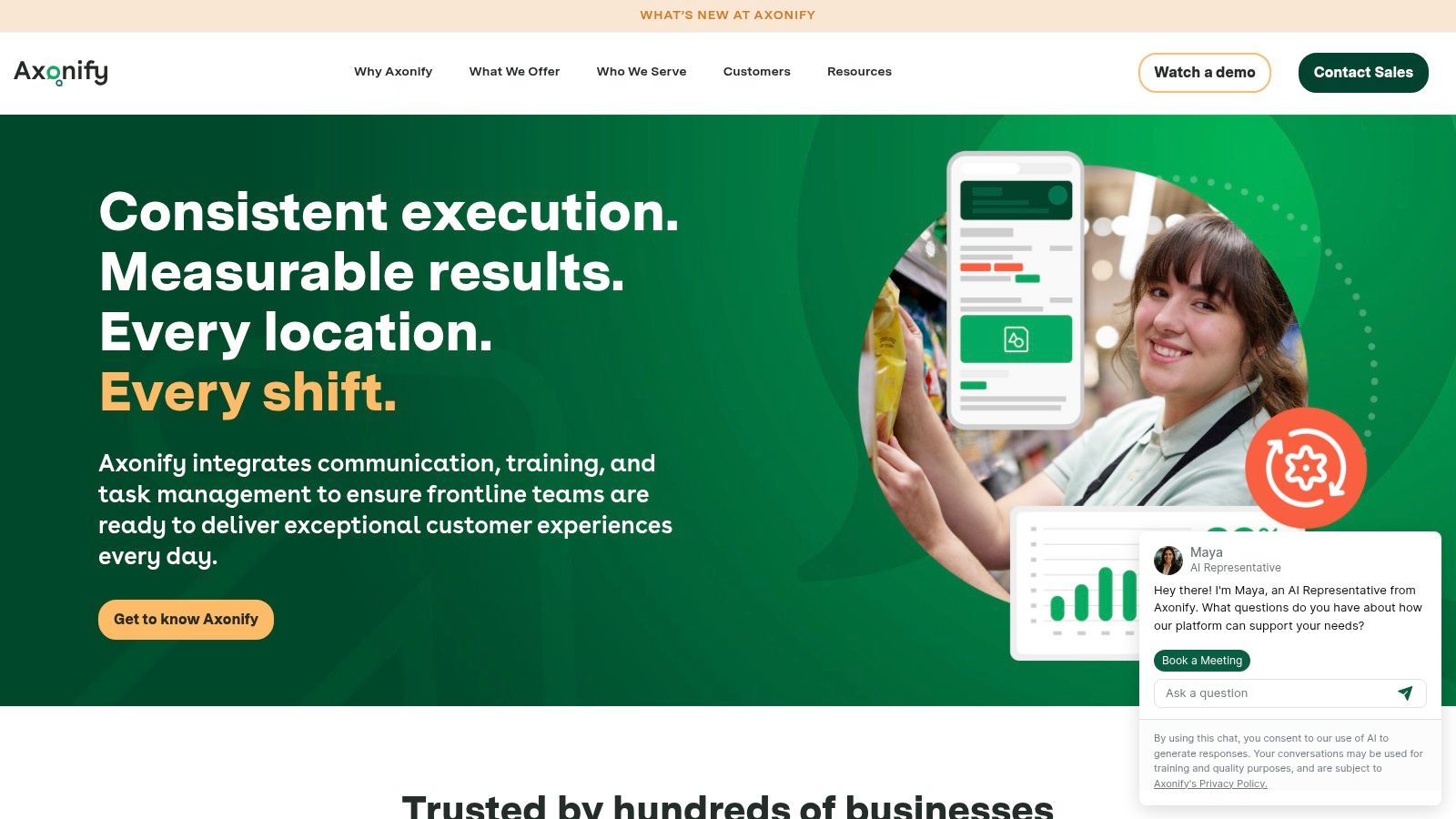
What makes Axonify stand out is its emphasis on measurable business impact. It’s not just about course completion; the platform’s analytics tie learning activities to specific behavioral changes and operational outcomes, like increased sales or reduced safety incidents. This focus on results, combined with robust implementation support, makes it a strategic tool rather than just a content library.
Key Features & Use Cases
- Adaptive Daily Training: Delivers 3-5 minute training sessions daily, using AI to personalize content and focus on areas where an employee needs reinforcement.
- Operational Integration: Includes tools for task management, communications, and checklists, directly linking what employees learn to what they need to do.
- Behavior Analytics: Provides deep insights into how training influences employee behavior and impacts key performance indicators (KPIs).
- Content Marketplace: Offers over 1,000 ready-to-use topics, which is a significant time-saver for getting programs started quickly. This is particularly useful for those who also use dedicated video training software and want to supplement their custom content.
Pricing & Access
Axonify uses a quote-based pricing model, tailored to the size and specific needs of an organization. It is generally better suited for mid-to-large enterprises rather than very small businesses due to its comprehensive nature and associated cost. Access is available via web and a highly-rated mobile app for iOS and Android.
Best For: Large organizations in retail, logistics, hospitality, and banking seeking to improve frontline employee performance with measurable ROI. It’s a powerful choice for companies that need to tie learning directly to operational execution and business results.
Website: https://axonify.com
3. TalentCards
TalentCards, from the creators of Epignosis, is a mobile-first microlearning app built around the concept of delivering training through easily digestible "cards." This approach makes it one of the best microlearning platforms for reaching deskless workforces and teams that need rapid, low-friction training. Its design prioritizes speed of creation for authors and ease of consumption for learners, with content designed for 5-minute learning bursts.
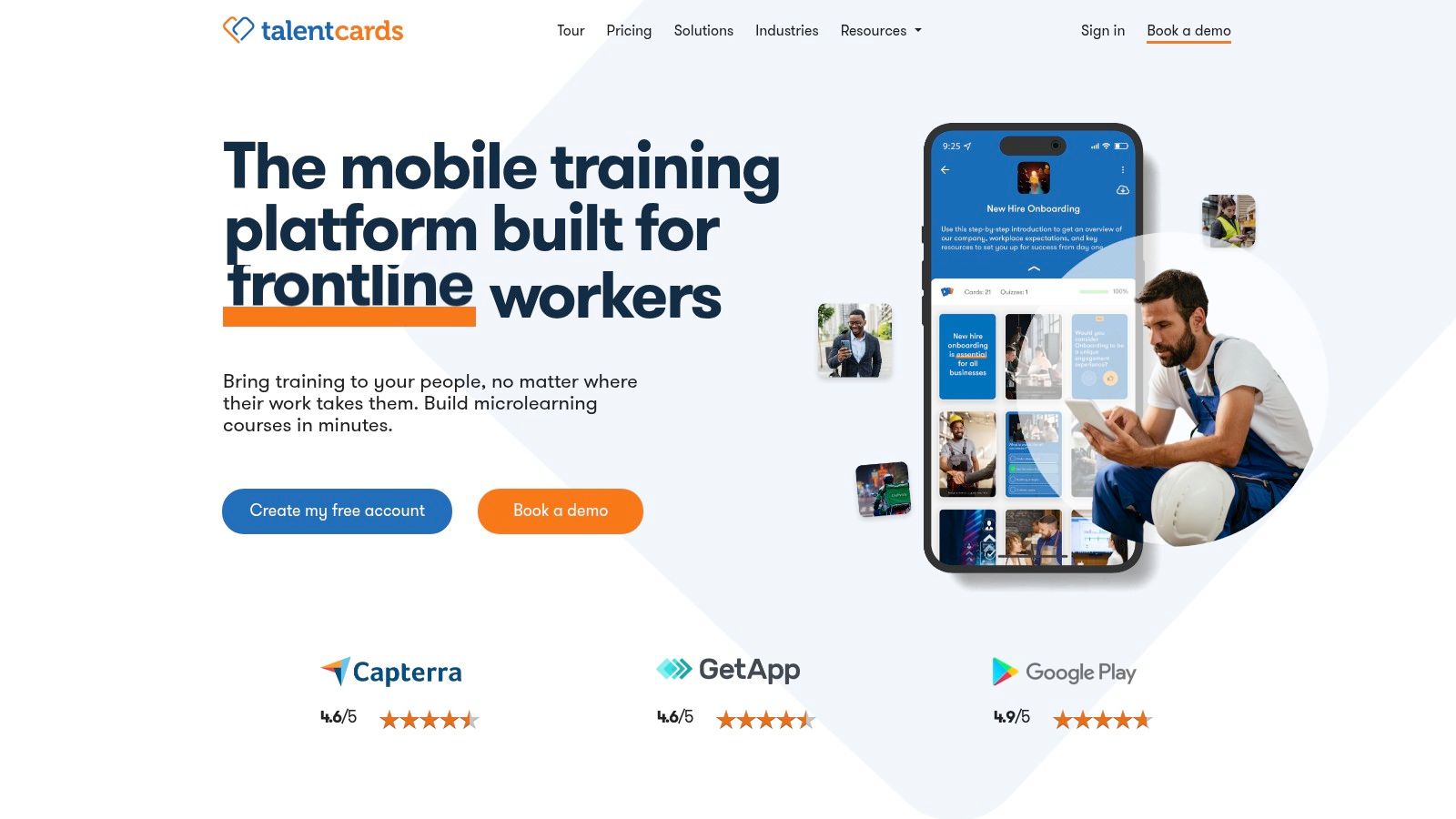
What makes TalentCards distinctive is its simplicity and accessibility. Unlike complex enterprise systems, its card-set builder allows anyone to create engaging courses quickly by adding text, images, audio, and video. The platform also incorporates smart features like AI-powered course generation and spaced repetition to reinforce learning over time, all within a clean, intuitive mobile interface that supports offline access.
Key Features & Use Cases
- Card-Set Course Builder: Create training by assembling cards with multimedia elements. This format is ideal for product knowledge refreshers, safety protocols, and compliance updates. Explore these and other microlearning examples to see the format in action.
- AI & Spaced Repetition: Use AI to generate courses from a prompt or document, and lean on the built-in spaced repetition algorithm to automatically re-surface information for better long-term retention.
- Gamification & Engagement: Features like points, badges, and leaderboards encourage friendly competition and consistent participation among learners.
- Mobile-First with Offline Mode: Dedicated iOS and Android apps allow employees to complete training anytime, anywhere, even without an internet connection, syncing progress once they are back online.
Pricing & Access
TalentCards offers exceptionally transparent pricing, including a perpetual free tier for up to 5 users, which is a major advantage for small teams or pilot programs. Paid plans start at a low monthly cost and scale in blocks of 50 users, making it predictable and affordable for growing businesses. Access is primarily through its top-rated mobile apps, with a web-based portal for administration and content creation.
Best For: Small to mid-sized businesses with distributed or deskless teams in industries like retail, construction, and manufacturing. Its ease of use and affordable, scalable pricing make it a great starting point for organizations new to formal microlearning.
Website: https://www.talentcards.com
4. 7taps
7taps is a pure microlearning creation tool designed for speed and simplicity. It stands out as one of the best microlearning platforms for creators who need to build and share content in minutes, not hours. The platform’s philosophy is built around frictionless access; learners can consume lessons instantly via a link, QR code, or text message, with no app downloads or logins required. This approach dramatically reduces barriers to entry and boosts engagement.
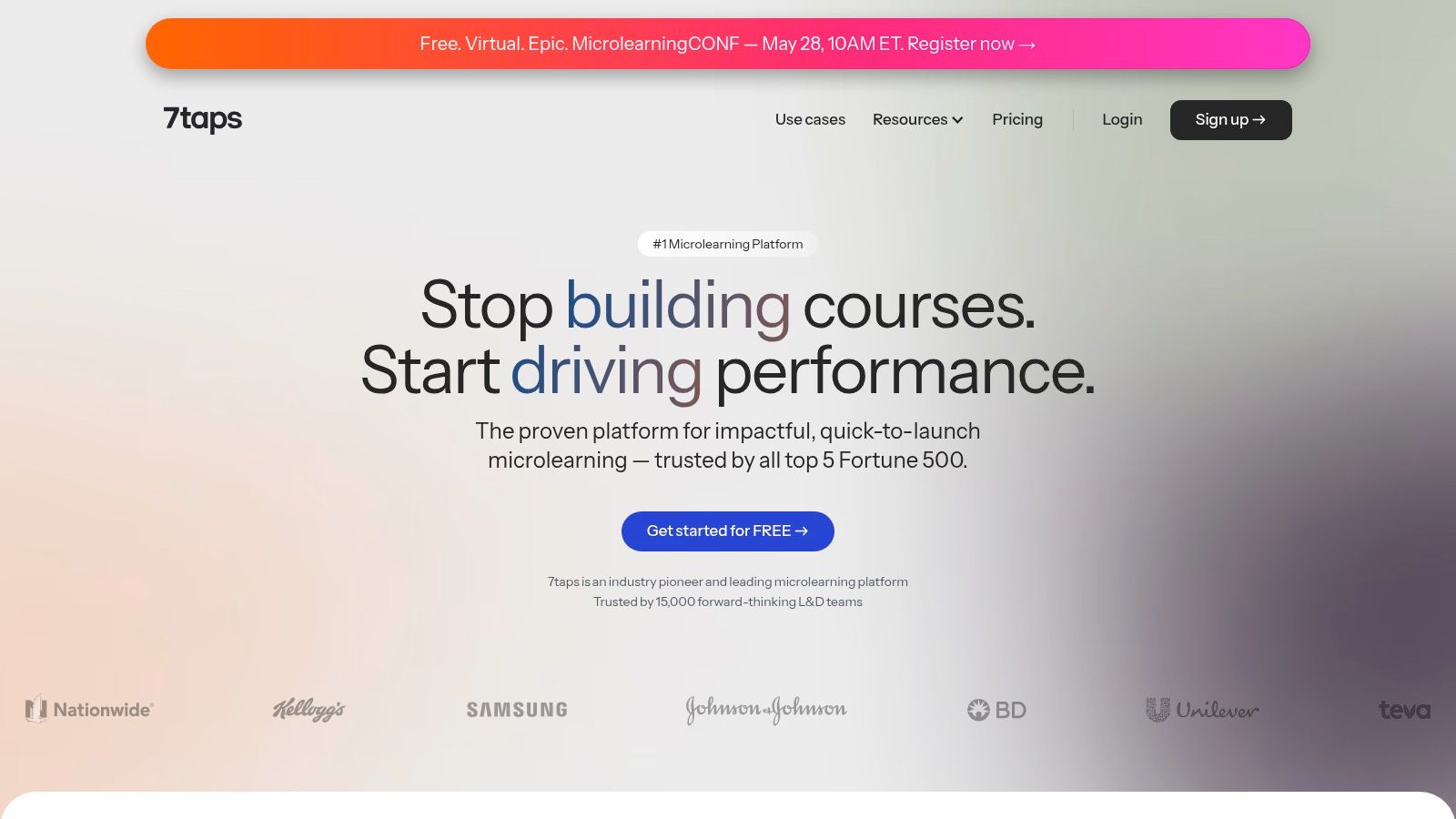
What makes 7taps unique is its laser focus on the authoring experience. The mobile-first, card-based format allows anyone to create visually appealing lessons with text, GIFs, videos, and simple quizzes almost instantly. It’s not trying to be a full-featured Learning Management System (LMS). Instead, it excels as a nimble tool for performance support, just-in-time training, marketing announcements, and reinforcing knowledge from larger training programs.
Key Features & Use Cases
- Ultra-Fast Authoring: Create a complete micro-lesson in under 10 minutes using a simple, card-based interface.
- Frictionless Sharing: Distribute content via a single link, QR code, SMS, or embed it directly into websites and other platforms.
- Mobile-First Design: Lessons are optimized for a vertical, story-like experience on smartphones, similar to the feel of modern short-form content.
- AI Assistant & Templates: Use AI to generate course outlines and content, or start from pre-built templates for common use cases like onboarding or product updates.
Pricing & Access
7taps offers a free plan for individuals to create up to two courses. Paid plans start at $99/year for the Pro plan (individual creators) and move to team-based pricing, making it accessible for both solo users and small to mid-sized businesses. All features are accessed via a web browser, with no software installation needed.
Best For: Teams and individuals who need to create and deploy training content with maximum speed and minimum friction. It’s perfect for sales enablement, just-in-time refreshers, and organizations that want to supplement their main LMS with agile learning content.
Website: https://www.7taps.com
5. Qstream
Qstream is a science-backed microlearning and knowledge reinforcement platform built on principles developed at Harvard Medical School. It excels at driving long-term retention and measuring proficiency, making it one of the best microlearning platforms for regulated industries like healthcare, life sciences, and financial services. The system uses a proven method of spaced repetition and active recall to ensure critical information sticks.
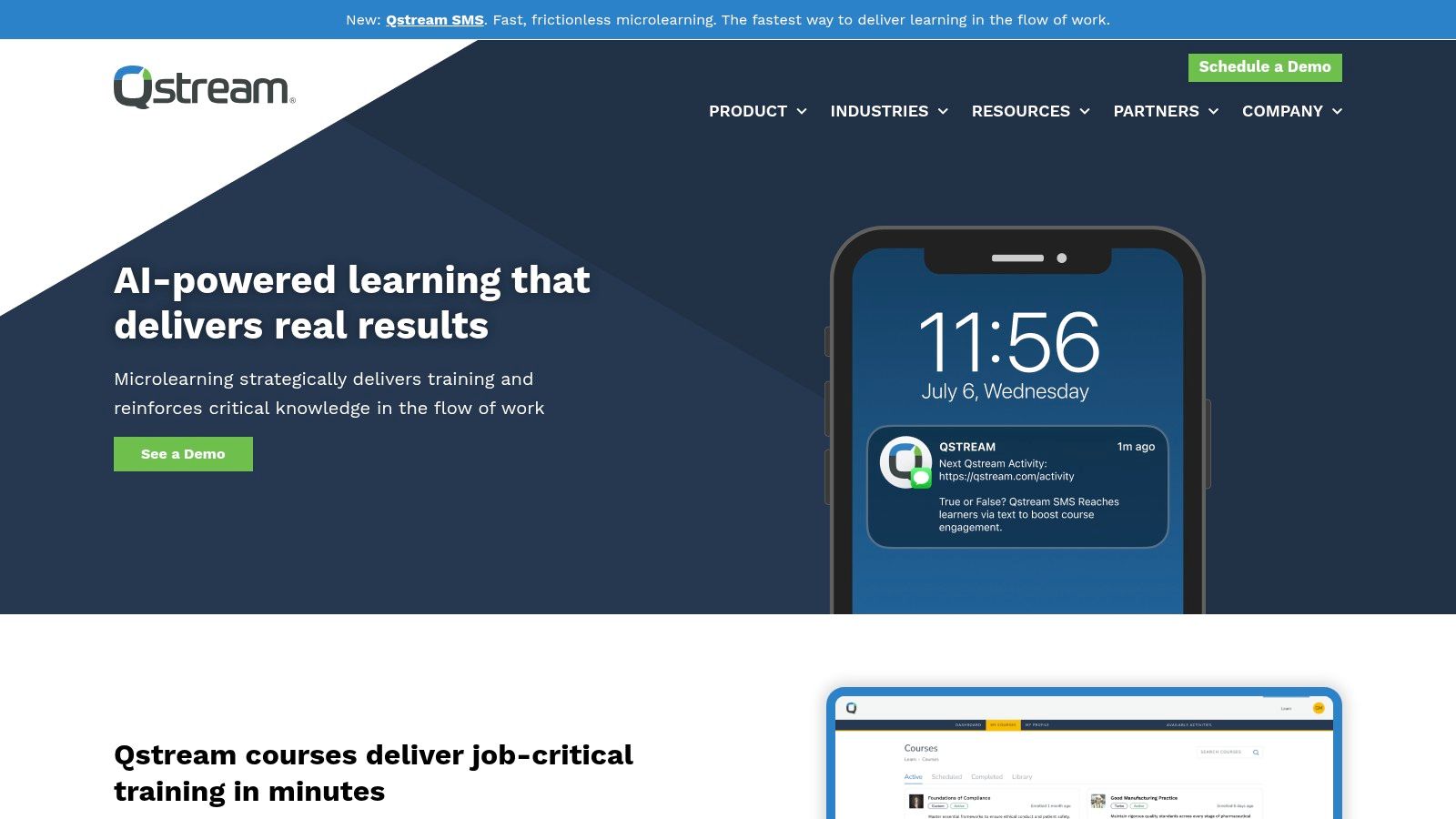
What makes Qstream unique is its confidence-based assessment engine. Users don't just answer questions; they also rate their confidence in their answers. This provides deep analytical insight into knowledge gaps and overconfidence, allowing managers to identify specific coaching opportunities. Its focus on validated methodology makes it a credible tool for high-stakes training where mastery is non-negotiable.
Key Features & Use Cases
- Spaced Repetition Engine: Automatically pushes scenario-based micro-challenges to users at scientifically determined intervals to fight the forgetting curve and maximize retention.
- Confidence-Based Assessments: Captures both knowledge and confidence levels, generating a "proficiency heat map" that highlights areas of risk and mastery across teams.
- Manager Dashboards & Coaching Insights: Provides managers with real-time data on team proficiency, identifying individuals who need targeted coaching and the specific topics to address.
- Scenario-Based Challenges: Moves beyond simple Q&A to present realistic, job-relevant situations that require critical thinking and application of knowledge.
Pricing & Access
Qstream follows an enterprise-focused, quote-based pricing model. The cost depends on the number of users and the specific feature set required. Given its advanced analytics and scientific underpinning, it is best suited for mid-to-large organizations that need to validate knowledge proficiency. Access is provided through a web portal and mobile apps for iOS and Android.
Best For: Organizations in highly regulated or knowledge-intensive fields like pharmaceuticals, medical devices, and financial services. It is ideal for sales enablement and compliance training where proving knowledge retention and identifying proficiency gaps are critical business requirements.
Website: https://qstream.com
6. eduMe
eduMe is a mobile-first training platform designed specifically for the modern deskless workforce, delivering knowledge in a way that mirrors consumer social media apps. Its approach focuses on providing 3–5 minute, social-style microlearning modules directly to frontline workers. The platform is especially effective for gig economy platforms, logistics companies, and large retail brands that require on-the-go, friction-light training experiences without the need for a traditional LMS.
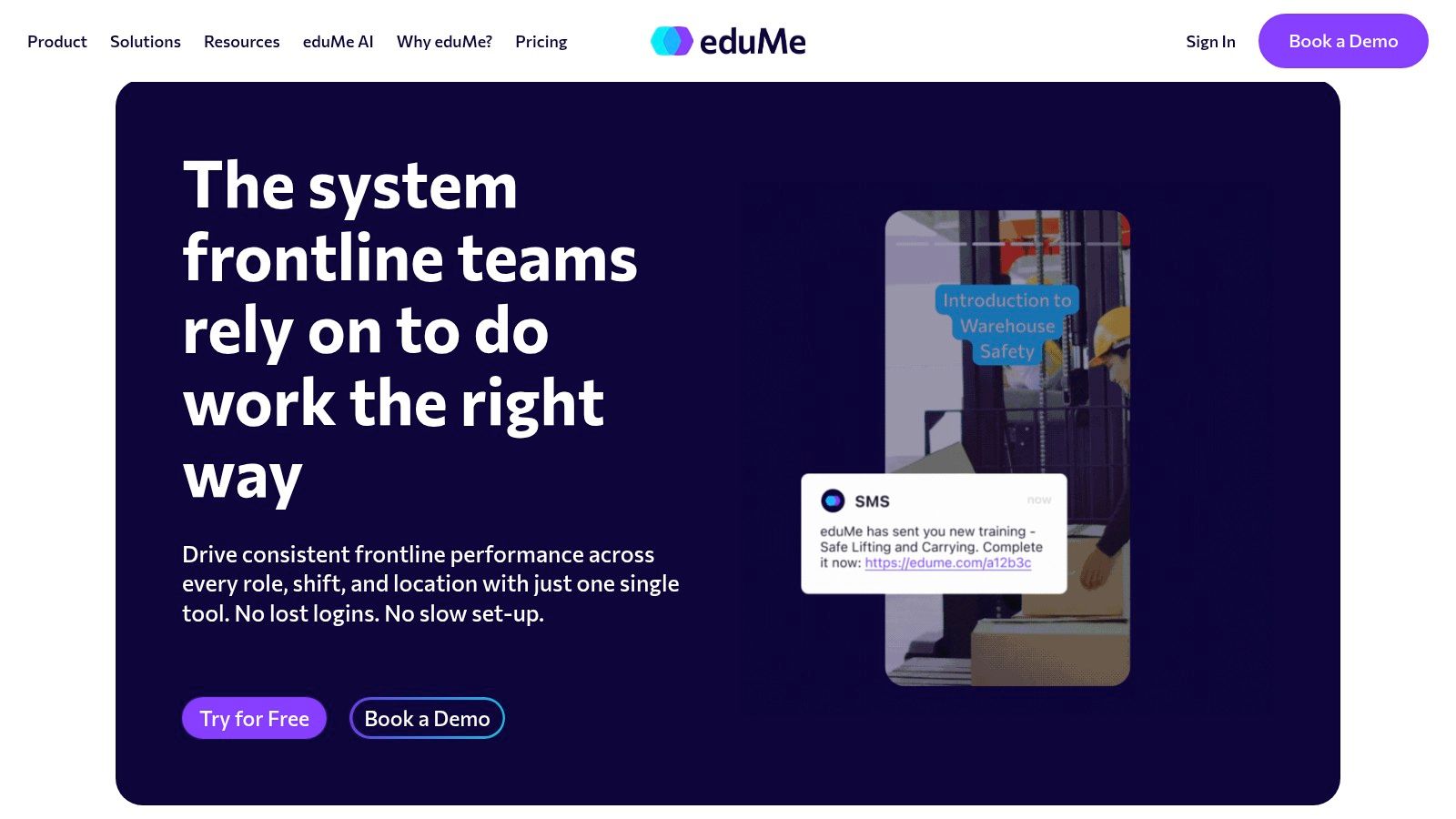
What makes eduMe one of the best microlearning platforms is its sharp focus on the user experience for on-the-go staff. The platform can be embedded within existing workforce tools, allowing employees to access training without a separate app download, which significantly boosts adoption rates. This consumer-grade feel, with vertical video and interactive taps, makes learning feel less like a corporate mandate and more like a natural part of an employee's daily digital life.
Key Features & Use Cases
- Bite-Sized Mobile Lessons: Creates short, engaging lessons using vertical video, image carousels, taps, and quizzes, optimized for mobile consumption.
- Friction-Light Access: Provides seamless access via links or QR codes, and can be embedded directly into other apps, removing the barrier of a forced download.
- Workforce Integration: Connects with HRIS, communication tools, and operational software to deliver timely training to the right people, at the right moment.
- Targeted Delivery: Allows admins to segment audiences by role, location, or performance to push relevant content and communications.
Pricing & Access
eduMe operates on a quote-based pricing model and does not publicly list its pricing tiers. It is tailored to the needs of mid-market and enterprise-level companies with large distributed workforces. Access is primarily through mobile browsers or integrations, reinforcing its "workforce-native" approach. While it has a clear strength in microlearning, organizations needing complex curricula or deep LMS functionality may need to pair it with another system.
Best For: Organizations with large, distributed, and deskless workforces, such as gig platforms, last-mile delivery, and retail. It is an excellent choice for companies prioritizing high adoption rates and a consumer-style learning experience for frontline teams.
Website: https://www.edume.com
7. Gnowbe
Gnowbe stands out as a mobile-first microlearning platform designed with an emphasis on creator-friendliness and community. It makes creating engaging, bite-sized content straightforward, particularly for those building courses for phone-based learners. The platform’s approach combines content delivery with social learning, encouraging reflections, peer-to-peer sharing, and active participation.
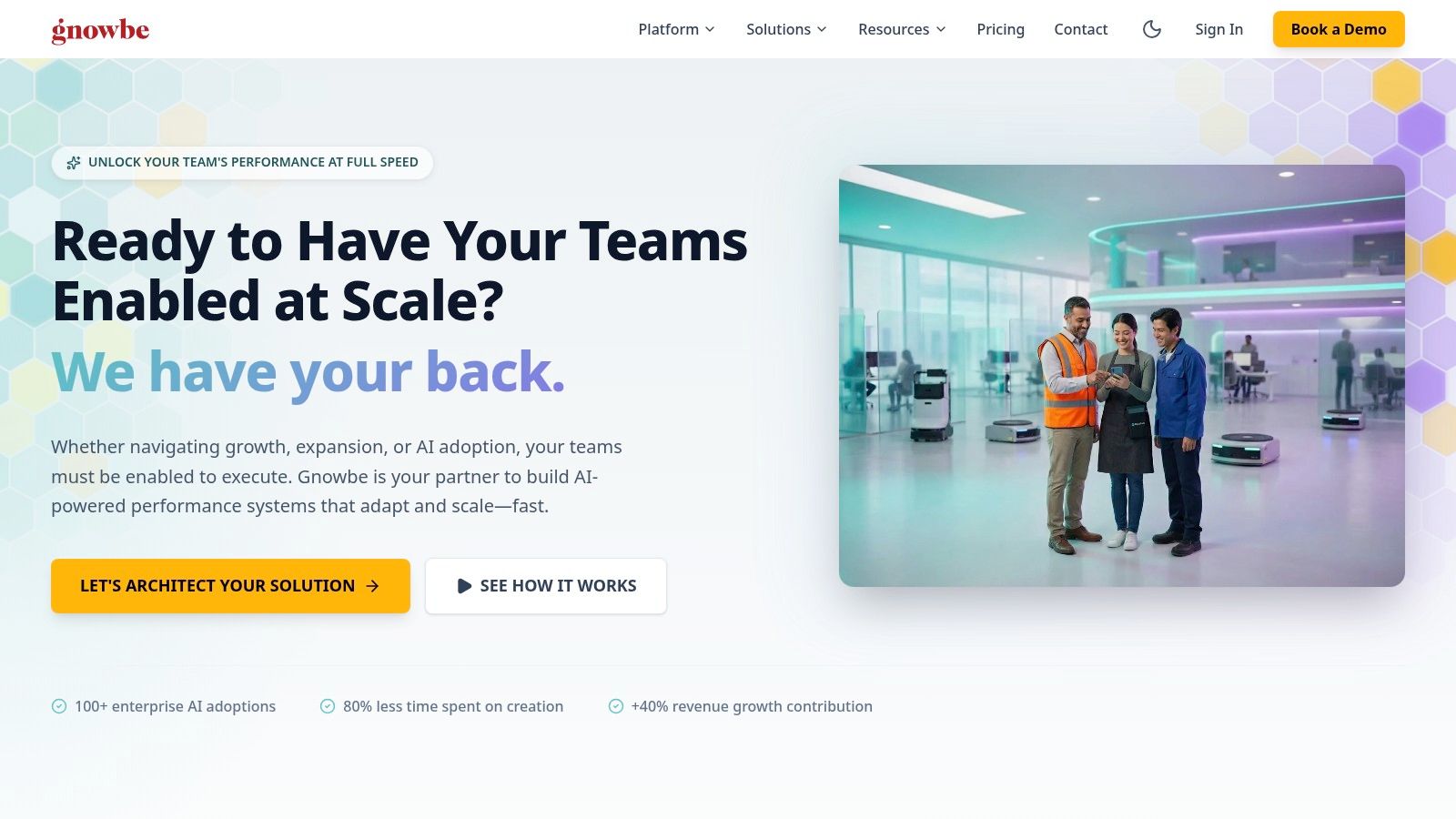
What makes Gnowbe a unique entry among the best microlearning platforms is its accessible entry point and strong community focus. Unlike many enterprise-only systems, Gnowbe offers a free plan and affordable starter options, allowing individuals and small teams to experiment with microlearning without a significant upfront investment. It even offers accreditation tracks in microlearning design, positioning itself as an educational partner, not just a software provider.
Key Features & Use Cases
- Mobile-First Authoring: Features a simple authoring tool optimized for creating content that looks and feels native on a smartphone. Includes AI agents to assist with content generation.
- Social & Community Learning: Built-in functions for social interactions, group discussions, reflections, and peer sharing to boost engagement and knowledge retention.
- Action-Oriented Design: Encourages creators to build programs that prompt learners to apply what they’ve learned through actions and reflections, not just passive consumption.
- Flexible Integrations: Connects with other tools and offers automated translation via a credit-based system, allowing for broader content deployment.
Pricing & Access
Gnowbe provides a range of plans, including a Free tier for up to 10 users, making it ideal for pilots or very small teams. Paid plans like Starter and Pro offer more features and user capacity at a competitive price point. Enterprise plans are available with quote-based pricing for advanced features like SSO and dedicated support. Access is primarily through its highly-rated mobile apps (iOS and Android) and web browser.
Best For: Small to mid-sized businesses, trainers, and educators who want an easy-to-use, mobile-first platform with strong social learning features. Its free and low-cost plans make it perfect for those wanting to trial microlearning on a small scale before committing to a larger rollout.
Website: https://www.gnowbe.com
8. OttoLearn
OttoLearn specializes in adaptive, gamified microlearning designed to drive long-term knowledge retention and mastery. It centers on a continuous daily practice model, using spaced repetition and knowledge cards to reinforce critical information. This approach makes it one of the best microlearning platforms for organizations focused on ensuring employees don't just learn something once, but truly master it over time.
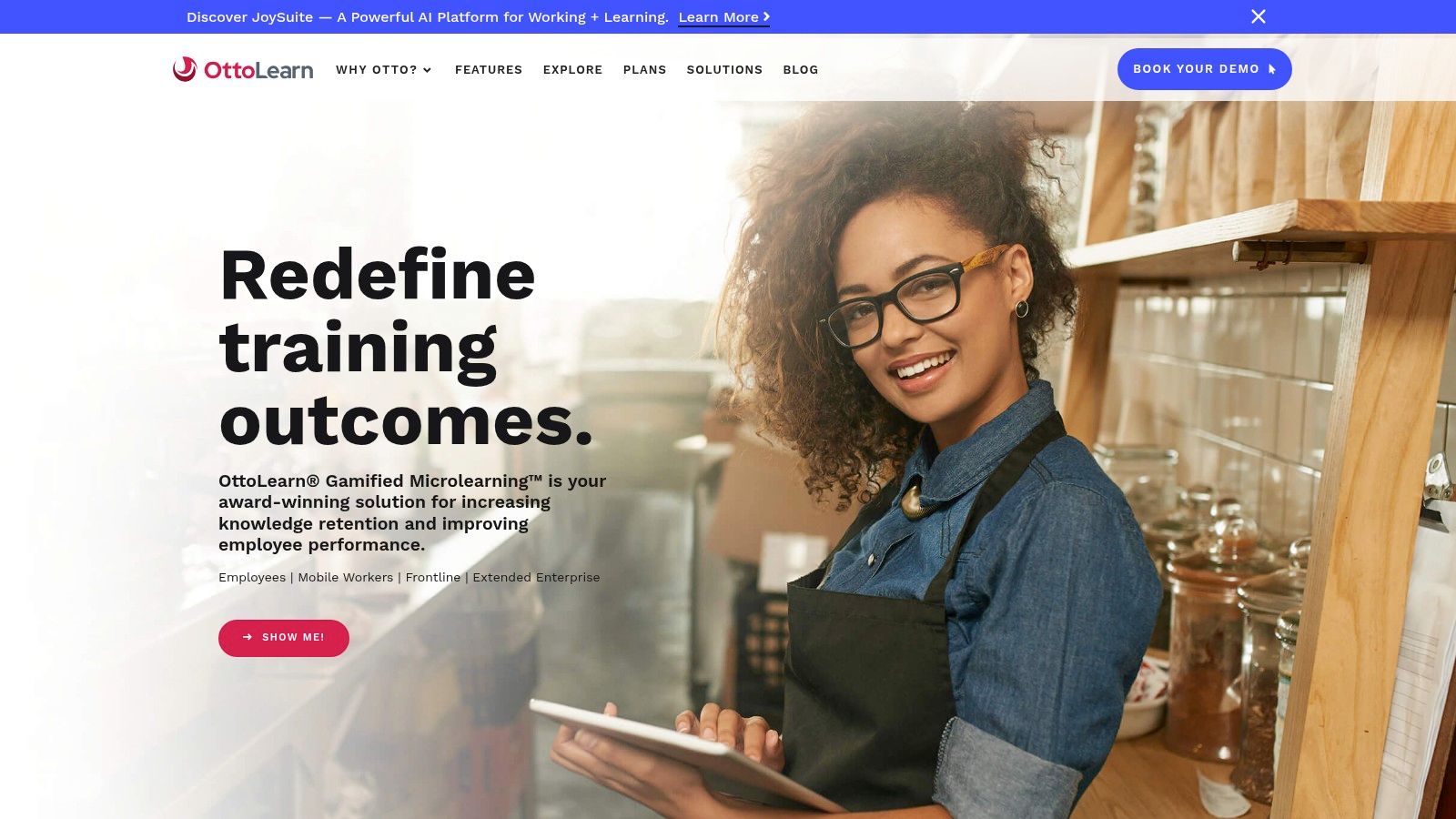
What makes OttoLearn distinct is its structured implementation support through its optional CORE program. This managed service acts as an operational playbook, helping learning teams successfully roll out and maintain an ongoing reinforcement culture. Rather than just providing the software, OttoLearn offers a partnership to ensure the microlearning strategy is effectively embedded into daily workflows, a significant advantage for teams new to this methodology.
Key Features & Use Cases
- Adaptive Practice with Spaced Reinforcement: The platform's algorithm presents learners with "mastery moments" each day, focusing on areas where their knowledge is weakest to build retention.
- Gamification and Engagement: Features like leaderboards, points, and badges are built-in to motivate learners and encourage consistent daily participation on both web and mobile apps.
- Knowledge Gap Analytics: Dashboards provide clear visibility into employee engagement, topic mastery levels, and specific knowledge gaps across the organization.
- Implementation Support: The optional CORE program offers a guided path to operationalize microlearning, from content strategy to launch and ongoing management.
Pricing & Access
OttoLearn uses a quote-based pricing model, which is not itemized on its website. The cost depends on the number of users and whether the organization opts for the CORE managed implementation program. It is accessible via web browsers and dedicated mobile apps for iOS and Android.
Best For: Organizations that need a system for continuous knowledge reinforcement rather than one-time course delivery. It is an excellent choice for companies in regulated or high-stakes industries that require proof of ongoing competency and want hands-on support for operationalizing their training strategy.
Website: https://www.ottolearn.com
9. Centrical
Centrical advances the concept of employee development by tightly weaving together microlearning, real-time performance management, and advanced gamification. It's built for organizations, particularly in sales and customer service, that want to directly influence employee behavior and drive specific business outcomes. The platform operates on the principle that learning is most effective when it's continuous, engaging, and directly connected to an employee's daily goals and achievements.
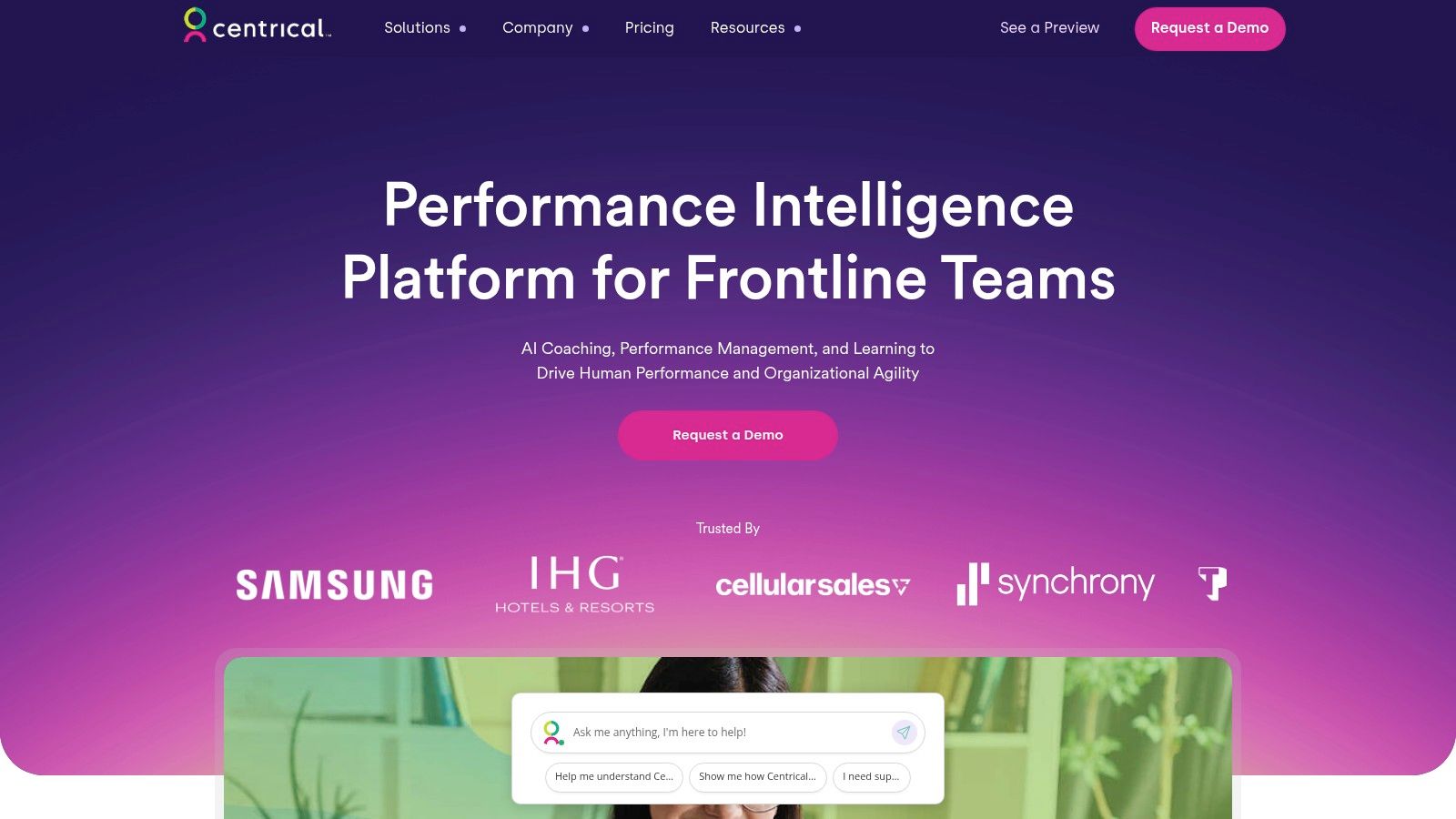
What makes Centrical one of the best microlearning platforms is its holistic approach to performance. It doesn't just deliver training; it creates an entire ecosystem where employees see a clear line between completing a learning module, improving a skill, and hitting a key performance indicator (KPI). This closed-loop system provides managers and operations leaders with powerful analytics, showing exactly how learning initiatives are impacting the bottom line.
Key Features & Use Cases
- Personalized Microlearning Paths: The platform delivers targeted, bite-sized content based on an individual's performance data, skill gaps, and career goals, ensuring training is always relevant.
- Advanced Gamification: Goes beyond simple badges by incorporating points, leaderboards, and challenges that are directly tied to achieving real-world business objectives and KPIs.
- Real-Time Performance Dashboards: Gives employees and managers immediate visibility into performance metrics, with AI-powered coaching suggestions to guide improvement.
- Augmented Coaching: Provides managers with data-driven insights and tools to conduct more effective coaching conversations, turning performance data into actionable feedback.
Pricing & Access
Centrical follows a custom, quote-based pricing model designed for enterprise clients. Its comprehensive feature set means it is not a fit for small teams or companies looking for a simple content authoring tool. Access is provided through a web interface and dedicated mobile apps for iOS and Android, ensuring employees can engage from anywhere.
Best For: Large sales and customer service organizations focused on driving measurable performance improvements. It’s an ideal choice for businesses that need to connect learning activities directly to operational KPIs and foster a culture of continuous improvement.
Website: https://centrical.com
10. Area9 Rhapsode (Area9 Lyceum)
Area9 Rhapsode brings a research-driven, scientific approach to microlearning, positioning itself as one of the best microlearning platforms for high-stakes fields like healthcare, life sciences, and complex technical training. Built by Area9 Lyceum, its core function is a powerful adaptive learning engine that goes beyond simple personalization. The platform adjusts content in real time based not only on what a learner knows, but also on how confident they are in their knowledge, a concept known as metacognition.
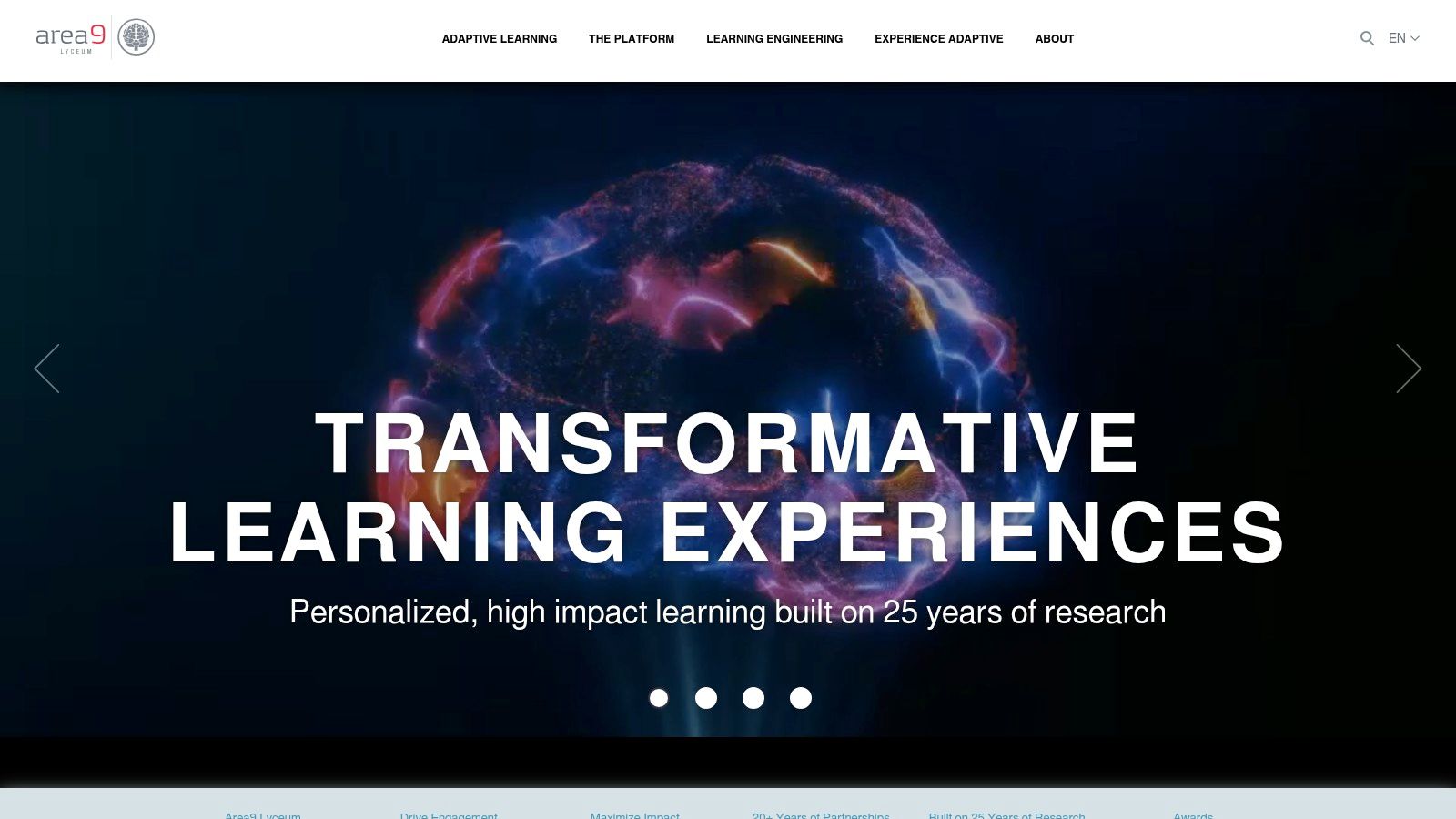
What makes Area9 Rhapsode unique is its focus on achieving "conscious competence." It identifies and corrects instances where learners are "unconsciously incompetent," meaning they are confident but incorrect. This is critical in compliance and safety-sensitive environments where such knowledge gaps pose significant risks. The platform delivers these targeted, bite-sized interventions through a clean, mobile-optimized experience, ensuring learning is both effective and accessible.
Key Features & Use Cases
- Adaptive Learning Engine: Utilizes AI and cognitive science to deliver a truly one-to-one learning path, probing for understanding and confidence to correct misconceptions.
- Metacognitive Tracking: Measures a learner’s self-awareness, providing data on where they are overconfident or underconfident, which helps in building true mastery.
- Mobile-Optimized Delivery: Content is designed for responsive delivery on any device through a progressive web app (PWA), supporting learning anywhere.
- Content Migration & Integration: The Rhapsode BRIDGE toolset facilitates the migration of existing content and allows for integrations with other enterprise systems.
Pricing & Access
Area9 Rhapsode follows an enterprise-level, quote-based pricing model. It is designed for large organizations and specific high-consequence training verticals. The complexity of its adaptive engine and implementation process means it is less suited for small businesses or simple training needs. Access is provided via web browser and its responsive mobile interface.
Best For: Large enterprises in healthcare, finance, and engineering that require verifiable mastery and need to eliminate critical knowledge gaps. It’s ideal for organizations that value a data-driven, evidence-based approach to corporate training and performance improvement.
Website: https://area9lyceum.com
11. MobieTrain
MobieTrain is a mobile-first microlearning platform designed specifically for frontline workforces in sectors like retail, hospitality, and logistics. Its main advantage is its ability to rapidly deploy and localize training across geographically dispersed teams. The platform focuses on practical, on-the-floor application, making it a strong contender among the best microlearning platforms for operational training rather than just theoretical knowledge.
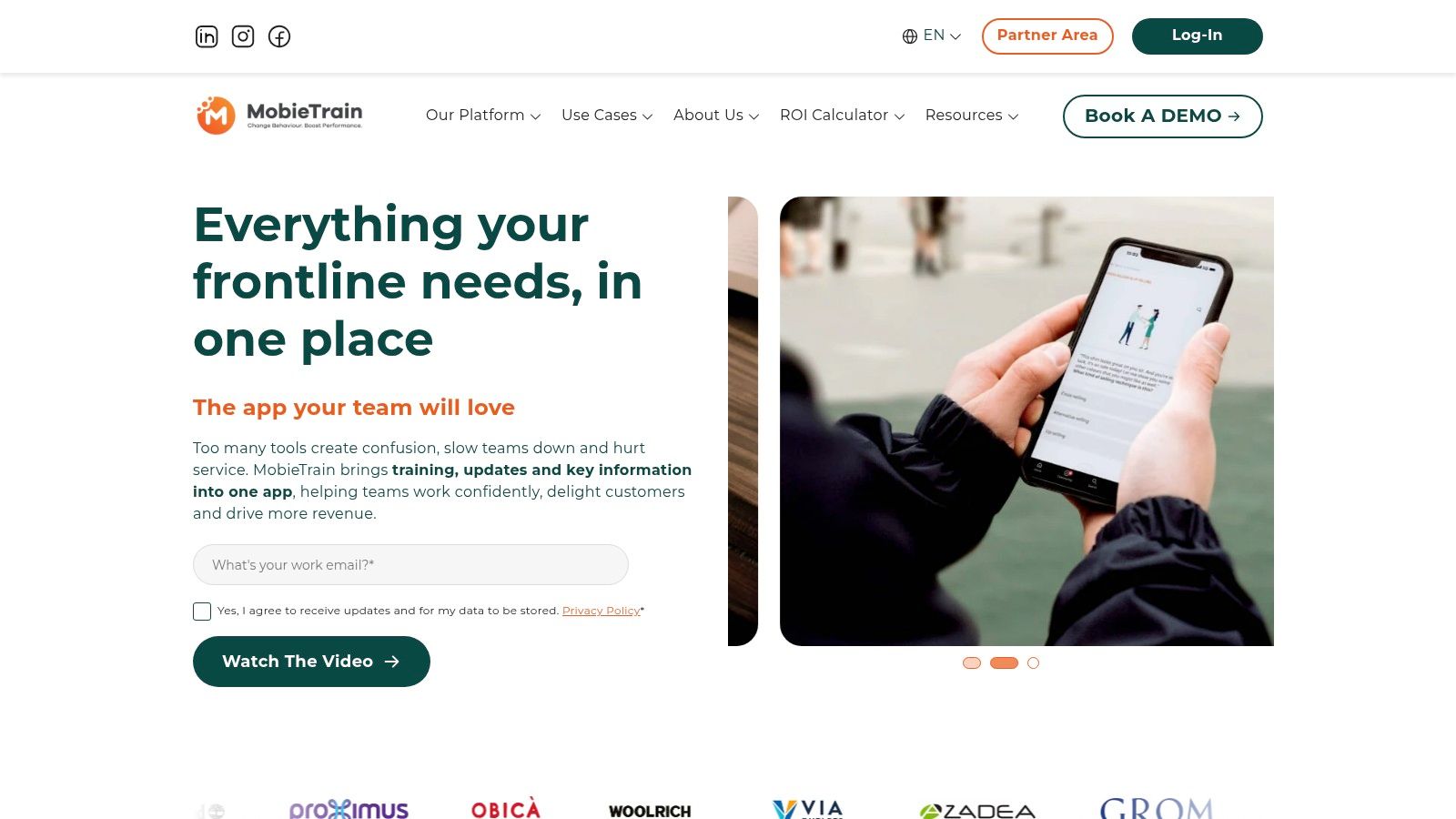
What sets MobieTrain apart is its built-in scalability for global brands. The platform's auto-translation feature supports over 30 languages, allowing companies to create a single master course and instantly adapt it for different regions. This removes significant friction for international organizations that need to maintain consistent standards and procedures while respecting local languages and cultures. The focus is squarely on operational excellence, not just compliance ticking.
Key Features & Use Cases
- Mobile-First Learning Paths: Content is delivered through gamified, bite-sized lessons and quizzes optimized for smartphones, fitting easily into a busy frontline employee's day.
- Auto-Translation: Enables single-source content to be automatically translated into more than 30 languages, perfect for fast-moving global rollouts of new products or procedures.
- Role and Location-Based Analytics: Administrators can segment learning data by job role, store, or region to identify knowledge gaps and compare performance across different teams.
- Rapid Content Updates: Designed for industries with frequent changes to standard operating procedures (SOPs), promotions, or product information, allowing for quick content pushes.
Pricing & Access
MobieTrain operates on a quote-based pricing model and is generally structured for organizations with at least 100 learners. It is less suited for very small businesses or individual users. The platform is accessed via its highly-rated mobile apps for iOS and Android, reinforcing its mobile-first philosophy.
Best For: International retail, hospitality, or logistics companies with a large, multilingual frontline workforce. It’s an ideal solution for businesses needing to deploy frequent operational updates and training across many sites quickly and consistently.
Website: https://www.mobietrain.com
12. Arist
Arist rethinks microlearning delivery by meeting learners exactly where they are: in their messaging apps. This text-first platform delivers bite-sized lessons via SMS, WhatsApp, Slack, and Microsoft Teams, eliminating the need for employees to log into a separate system. This approach makes it one of the best microlearning platforms for reaching deskless workers or driving behavior change through consistent, low-friction nudges.
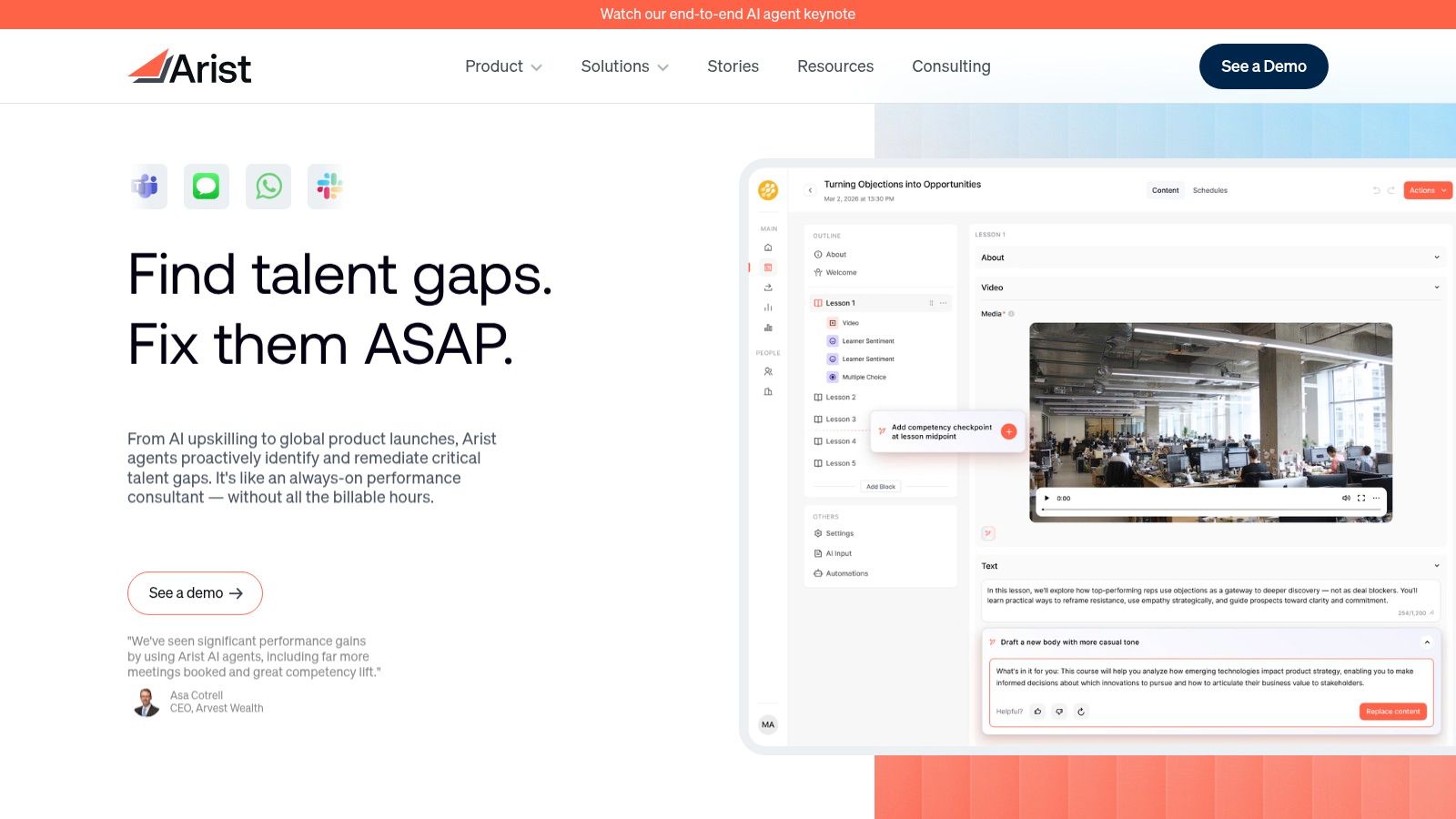
What makes Arist unique is its powerful simplicity and unparalleled reach. By operating within existing communication channels, it achieves exceptionally high engagement and completion rates. The focus is less on complex multimedia and more on impactful, text-based interactions, spaced repetition, and just-in-time support, making it ideal for reinforcement, onboarding drips, and habit-building programs where accessibility is paramount.
Key Features & Use Cases
- Text-First Delivery: Courses are sent as a series of messages through SMS, Slack, Teams, or WhatsApp, ensuring content reaches learners without extra effort.
- AI-Assisted Course Generation: An integrated AI helps instructional designers quickly build text-based courses, suggesting content and structuring lessons for the message format.
- Enterprise Integrations: Seamlessly connects with core business communication tools, making deployment straightforward for IT and HR teams.
- Analytics and Insights: Tracks engagement, completion rates, and feedback directly within the messaging flow, providing clear data on learner interaction.
Pricing & Access
Arist provides custom pricing based on the organization's size, intended use, and specific needs. It is suitable for a wide range of company sizes, from startups to large enterprises, that prioritize reach and engagement over traditional LMS features. Access is managed through a web-based admin portal, while learners interact entirely within their chosen messaging apps.
Best For: Organizations needing to train distributed or deskless workforces, reinforce key concepts with spaced repetition, or deliver critical updates with high open rates. It excels in contexts where app downloads are impractical and friction must be minimized.
Website: https://www.arist.co
Top 12 Microlearning Platforms — Quick Feature Comparison
| Product | Core Features | Unique Selling Points ✨ | Target Audience 👥 | Quality ★ |
|---|---|---|---|---|
| ClipCreator.ai 🏆 | AI scripts + story-aligned images, lifelike voiceovers, subtitles, scheduling & auto-posting (HD ≤90s) | Proven viral templates; set‑and‑forget publishing; full content ownership ✨ | Creators, educators, agencies, businesses 👥 | ★★★★☆ 💰 Starter $19 / Daily $39 / Pro $69 |
| Axonify | Adaptive microlearning, daily reinforcement, comms, analytics | Frontline‑focused enablement; measurable ops outcomes ✨ | Retail, hospitality, logistics, banking 👥 | ★★★★☆ 💰 Quote-based |
| TalentCards | Card‑set builder (images/audio/video), offline, spaced repetition | Very low barrier; clear tiered pricing; fast mobile learning ✨ | Deskless teams, frontline trainers 👥 | ★★★★☆ 💰 Free tier → paid tiers |
| 7taps | Ultra-fast authoring; share via link/QR/SMS; no app required | Frictionless delivery; instant consumption; rapid deployment ✨ | Teams needing quick micro-lessons, comms 👥 | ★★★★☆ 💰 Free trial / paid plans |
| Qstream | Spaced repetition, scenario challenges, confidence ratings | Research-backed (Harvard origins); strong retention analytics ✨ | Healthcare, life sciences, sales enablement 👥 | ★★★★★ 💰 Enterprise/quote |
| eduMe | Vertical video, taps, quizzes; friction-light access; integrations | Mobile-first UX for gig/frontline; high adoption in distributed workforces ✨ | Gig platforms, retail, logistics, frontline staff 👥 | ★★★★☆ 💰 Quote-based |
| Gnowbe | Mobile authoring with AI assist; social learning & reflections | Creator-friendly; AI-assisted content; accreditation tracks ✨ | Small cohorts, L&D teams, community builders 👥 | ★★★★☆ 💰 Free & Starter plans |
| OttoLearn | Adaptive practice, gamification, mastery analytics | Daily mastery focus; implementation playbook (CORE) ✨ | Teams focused on ongoing reinforcement 👥 | ★★★★☆ 💰 Quote-based |
| Centrical | Personalized microlearning, gamification, AI coaching, KPI dashboards | Ties learning to performance/KPIs; enterprise analytics ✨ | Sales, customer ops, enterprise enablement 👥 | ★★★★★ 💰 Custom pricing |
| Area9 Rhapsode | Adaptive engine, metacognitive tracking, mobile PWA | Deep adaptive research pedigree; proven outcomes for complex training ✨ | Healthcare, life sciences, technical training 👥 | ★★★★★ 💰 Enterprise pricing |
| MobieTrain | Mobile lessons, role/location targeting, auto‑translation (30+) | Strong multi-site/localization; ops‑focused deployments ✨ | Retail, hospitality, transport/logistics 👥 | ★★★★☆ 💰 Quote-based |
| Arist | Text-first delivery (SMS/WhatsApp/Slack/Teams/email), AI course gen | Extremely low friction; high reach via existing channels ✨ | Organizations needing broad reach & nudges 👥 | ★★★★☆ 💰 Custom / usage-based |
Making Your Final Decision: From Plan to Pilot
You've explored a dozen of the best microlearning platforms, from the corporate-focused power of Axonify and Centrical to the text-based simplicity of Arist and the social media prowess of ClipCreator.ai. The journey from evaluating features to making a final choice requires a shift in perspective. It's no longer about which platform has the longest feature list, but which one aligns most precisely with your specific goals.
The common thread connecting all these tools is their focus on delivering knowledge in short, digestible bursts. However, their execution and ideal applications vary dramatically. A sales team needing to master complex product details will find Qstream’s scenario-based repetitions invaluable. In contrast, a creator economy educator aiming to produce narrative micro-lessons for TikTok will find a tool like ClipCreator.ai a much better fit for their video-centric workflow.
From Comparison to Action: A Practical Checklist
Moving forward involves a structured approach to decision-making. Before you sign any contracts, work through these critical steps to ensure your choice leads to tangible results.
- Define Your Core Problem: What specific pain point are you trying to solve? Is it low engagement with existing training? The need to scale social video production? Or perhaps bridging knowledge gaps for a remote workforce? Be precise. "Improving safety compliance" is a better goal than "better training."
- Identify Your Primary Audience: Consider the technical aptitude and daily routines of your learners. A deskless workforce will benefit from a mobile-first platform like TalentCards or eduMe. Social media creators and their audiences expect high-quality, short-form video, making platforms with strong video automation essential.
- Run a Focused Pilot Program: Never commit to a full-scale rollout without a trial run. Select a small, representative group of users and a single, measurable objective. For example, use 7taps to create a 3-day onboarding sequence for five new hires and measure their time-to-productivity. A pilot demonstrates real-world value and uncovers potential implementation hurdles.
- Measure Everything: Track metrics that matter. This goes beyond simple completion rates. Measure behavioral change, performance improvements, or engagement analytics. Did the pilot program with OttoLearn actually reduce costly errors? Did the automated videos from your new tool increase watch time on YouTube Shorts?
- Consider the Broader Learning Ecosystem: Think about how your chosen microlearning platform will fit with your existing tools. If you already use a traditional Learning Management System (LMS), check for integration capabilities. For those building a learning program from the ground up, exploring a comprehensive online course platform comparison can provide valuable context on how different types of learning tools can work together.
The Right Tool for the Right Job
Ultimately, the best microlearning platforms are not one-size-fits-all solutions. A large enterprise managing compliance training has fundamentally different needs than a solo creator building a faceless YouTube channel.
For corporate L&D, factors like robust analytics, gamification, and integrations (found in tools like Axonify or Centrical) are paramount. For educators and brands focused on content creation, the critical features are video templates, AI-driven scripting, and efficient content workflows, making a tool like ClipCreator.ai a strategic asset. Your final decision should be a confident investment in a platform that directly addresses your unique challenges and empowers your specific audience to succeed. The right tool, combined with a thoughtful implementation strategy, is what separates a fleeting initiative from a lasting organizational change.
Ready to turn your ideas into engaging micro-lessons for social media? ClipCreator.ai specializes in helping you create compelling, story-driven videos quickly. Stop struggling with complex video editors and start producing consistent content that captivates your audience. Visit ClipCreator.ai to see how you can automate your video creation today.

Create your first video in under 2 minutes
Pick a niche, and ClipCreator.ai generates and auto-posts faceless videos to your channels every day.
Join ClipCreator.ai