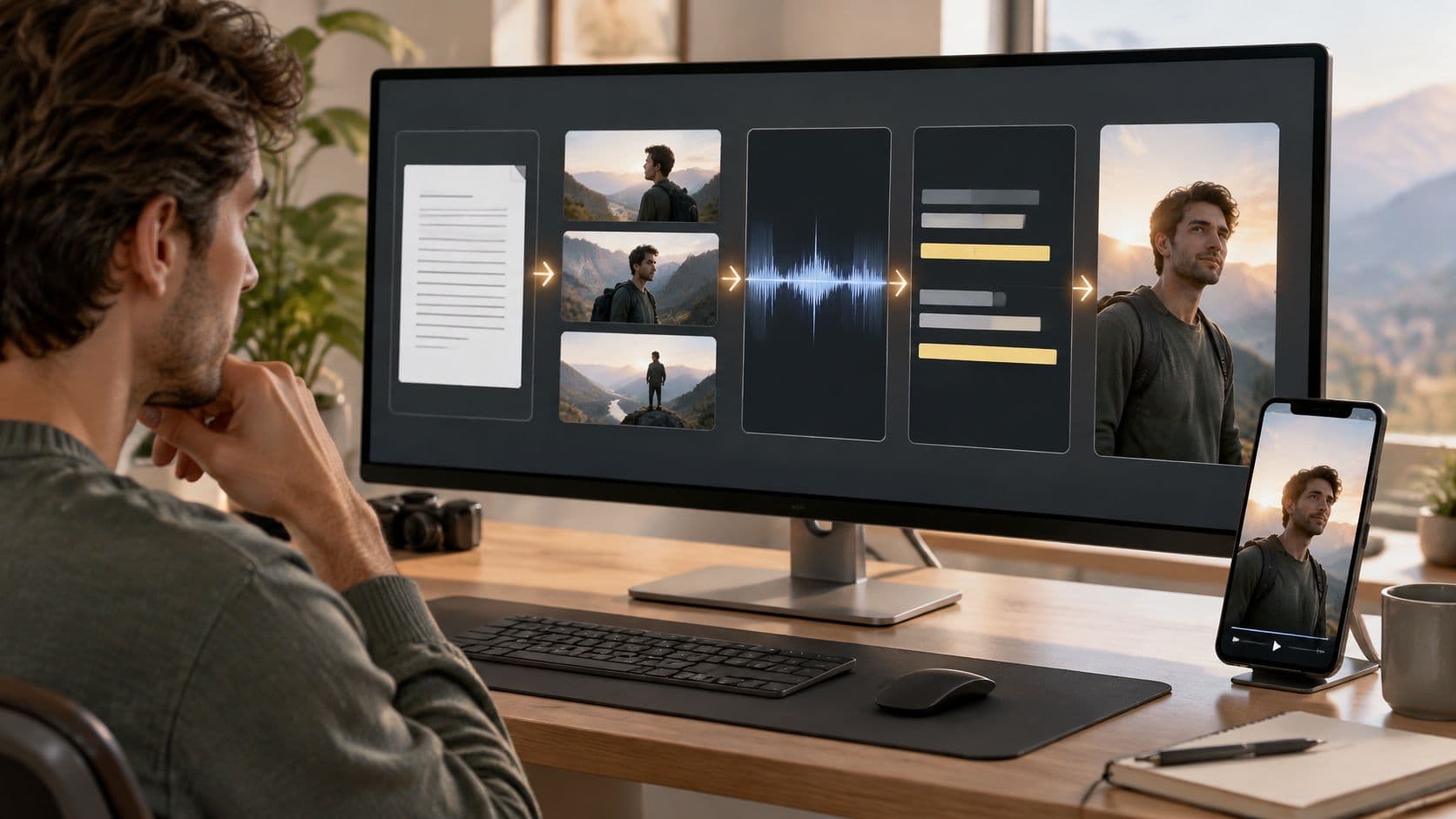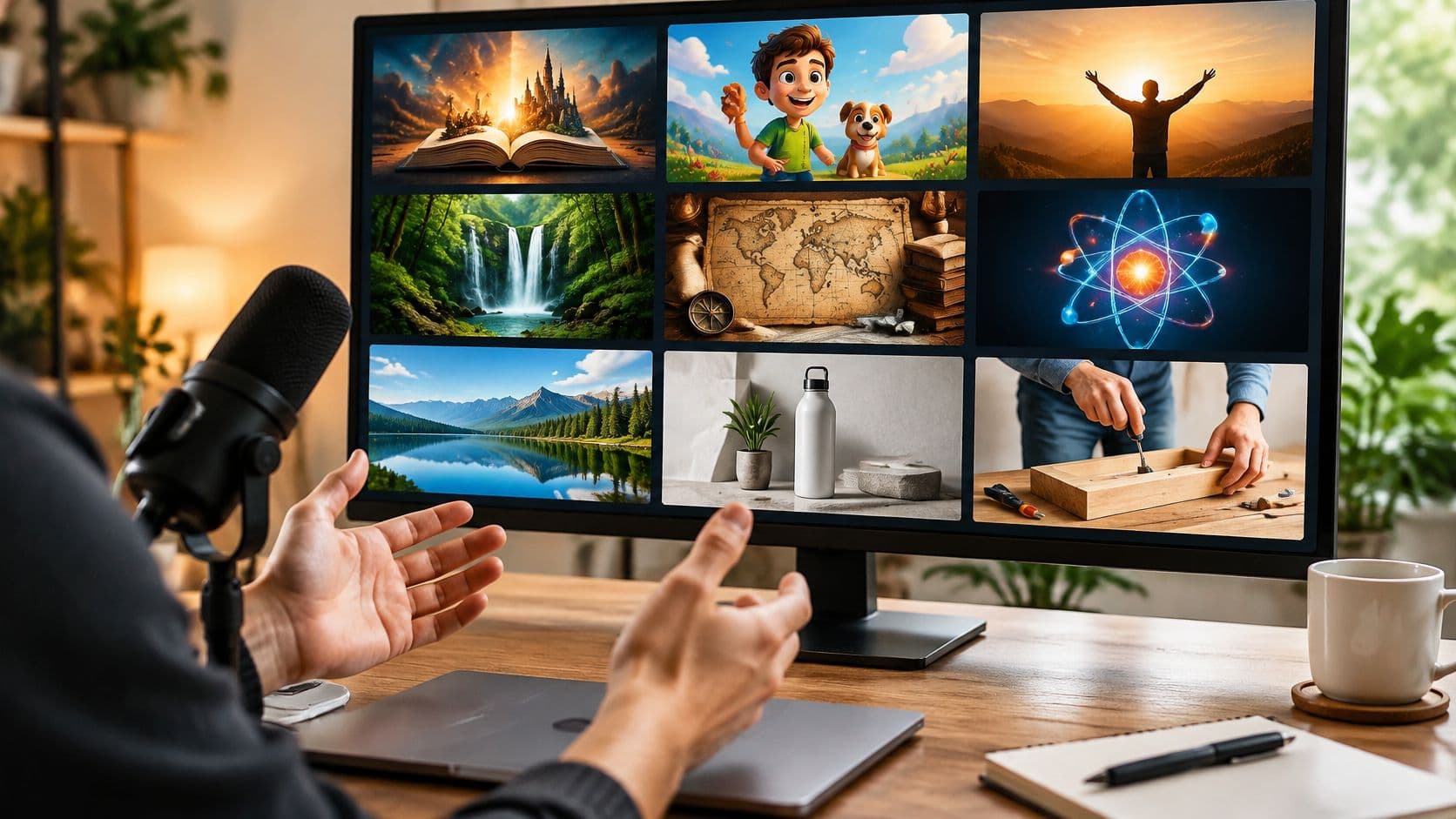
You want to build an audience, but you hate being on camera. You've got a few evenings free each week, no editing budget, and a folder of video ideas that never make it past the planning stage. The problem isn't necessarily your confidence. You need a format you can produce without turning every upload into a filming session.
Faceless channels replace an on-camera presenter with a recognizable storytelling system. That might be a narrator, animated diagrams, atmospheric illustrations, screen recordings, or carefully edited archival material. You don't need a personality brand built around your face, but you do need an editorial identity that viewers recognize.
The potential audience is substantial. YouTube said Shorts reached 2 billion logged-in monthly users in 2023, as documented by Mark Studios' short-form video statistics. That establishes the scale of distribution, not your likelihood of success.
Choose a format you can make well on an ordinary working evening, not just when you're unusually motivated.
The strongest faceless channel ideas fit your writing skills, available production time, and tolerance for research or licensing work. Evaluate them by effort, viewing behavior, monetization constraints, and the mistake most likely to undermine the channel. For longer YouTube uploads, you can also compare YouTube thumbnail tools, but settle the content promise before polishing the packaging.
1. Scary Story Narration Channel
A night-shift cleaner hears someone typing in an office that's been locked for years. That's enough to open a story. You don't need a presenter, elaborate animation, or a long introduction.
Scary-story narration suits creators who can write tension and direct a voiceover. Use original fiction, restrained sound design, and images that reveal information gradually. A consistent narrator and color palette help separate your series from interchangeable horror slideshows.
A quiet exterior can establish the setting without showing the threat.

Build Suspense Without Withholding the Ending
Production effort is moderate, with most work going into the script and audio. Keep visuals simple, but change them when the listener learns something important. You can explore visual storytelling methods to make framing and repeated objects carry part of the narrative.
- Watch-time behavior: Open with the disturbance, then escalate it. Give each episode a satisfying reveal, even when a larger mystery continues.
- Monetization constraint: Don't build the business around graphic imagery or shock alone. A suspense-led story gives you more editorial flexibility.
- Beginner compliance risk: Publicly accessible Reddit posts aren't automatically yours to narrate. Write original stories or obtain permission before adapting someone else's work.
For a practical starting workflow, use this guide to making a horror story video. Build around a recurring setting, such as a strange apartment building, while giving each episode a different conflict and resolution.
2. Bedtime and Sleep Story Channel
Sleep content requires almost the opposite editing instincts from horror. Your listener wants predictable pacing, comfortable audio, and a story that doesn't demand constant attention. Sudden music changes, sharp sound effects, and urgent subscription requests work against that experience.
Say your series follows a traveler visiting quiet mountain villages. Each episode can introduce a different place while preserving the same gentle voice, descriptive style, and unhurried ending. This is a better foundation than stretching a short fairy tale with repeated sentences.
The visual should feel comfortable even when the viewer barely looks at it.

Treat Audio Quality as the Main Production Task
Production effort is moderate, but the burden falls on narration cleanup rather than fast editing. Listen through headphones for abrupt breaths, uneven loudness, clipped words, and background loops with obvious seams. This bedtime story video workflow can help you organize the narrative and visuals.
Listeners may return to familiar stories or leave an episode playing while they unwind. However, a long runtime isn't evidence that they enjoyed every passage, so assess return viewing alongside retention.
Monetization needs to respect the listening experience. Abrupt commercial transitions can undermine the reason someone chose the video. Longer stories also require more writing and audio review than their simple visuals suggest.
The beginner compliance mistake is treating children's bedtime stories and adult sleep content as interchangeable. Decide whom you're addressing, review YouTube's audience-designation requirements, and confirm the relevant settings before publishing. Also clear the rights to background music and any adapted stories.
3. Animated Micro-Lesson Channel
Start with a question a learner can answer afterward, such as why a sunflower turns toward light. Then build the explanation around a diagram rather than decorating a dense script with unrelated animation.
A clear labeled illustration can do more teaching than constant movement.

Production effort is moderate to high. Research, visual accuracy, and synchronization take longer than assembling stock footage. Study TED-Ed and Kurzgesagt for the relationship between narration and explanation, rather than trying to reproduce their animation complexity.
Make Every Visual Explain Something
A useful lesson structure is a question, a visible mechanism, and an application. Introduce vocabulary when the learner needs it, then keep that term consistent in the narration and captions. A quiz-style closing prompt can reveal whether the explanation was clear.
Use the embedded lesson as a reference for studying explanatory pacing.

Watch-time depends on comprehension, not just curiosity. If viewers need to pause because labels disappear too quickly, faster editing won't fix the lesson.
A recurring animated teacher can provide continuity. In YouTube's virtual-creator report, a sample of 300 virtual creators generated more than 15 billion views globally in 2024, demonstrating that an on-camera human isn't essential to a recognizable host format.
Educational downloads or relevant partnerships are possible monetization paths, but credibility comes first. The beginner risk is publishing a polished factual error, especially when generated diagrams look convincing. Verify both the script and the visual labels before export.
4. Lo-Fi and Ambient Music Channel
A student looking for background music doesn't necessarily want a story. They want a stable sound environment that lets them keep working. Lo-fi and ambient channels serve that listening task, making them different from narration-led faceless formats.
Lofi Girl is a useful reference for a coherent combination of mood, sound, and recurring imagery. The practical lesson isn't to copy the character or room. It's to make your own audio and visual choices feel like parts of the same experience.
Simple Visuals Don't Mean Simple Production
For a rainy-library concept, pair restrained music arrangements with a subtle window animation. Avoid dramatic transitions between tracks, and inspect the loop point so the scene doesn't visibly jump.
- Production effort: High if you compose and mix original music, lower if you license a suitable catalog. Either route requires careful audio review.
- Watch-time behavior: Listeners may stay for background use rather than actively watching. Evaluate returning listeners and session patterns, not visual engagement alone.
- Monetization constraint: Your ability to earn depends partly on the rights attached to every recording and composition.
- Beginner compliance risk: A royalty-free label isn't a universal permission slip. Confirm commercial use, platform coverage, attribution, and any restrictions.
If you create lo-fi beats with AI, inspect the service's current usage terms before publishing. Keep the license, download record, and project files together.
Production rule: If you can't document why you're allowed to use a track, don't make it the foundation of your channel.
This format fits someone who enjoys audio production more than scripting. It's a poor shortcut for someone hoping a static image will eliminate the need for original work.
5. Motivational Quote and Stock Footage Channel
This is easy to assemble and difficult to distinguish. A mountain clip, a dramatic voice, and a familiar quote give viewers little reason to remember who published the video.
Start with a specific audience instead. For students returning to study after a disappointing exam, offer an actionable reset: review the mistakes, choose the next task, and prepare the workspace. The footage should support that situation rather than imply that every ordinary problem requires an epic transformation.
Replace Borrowed Inspiration With Useful Commentary
Production effort is relatively low when you have a licensed footage library and a consistent caption style. The main work is writing advice that isn't interchangeable with competing uploads.
Watch-time depends on relevance and progression. State the situation immediately, explain the obstacle, and finish with something the viewer can do. Repeating the opening sentiment in different words adds runtime without adding value.
The monetization weakness is a lack of distinctive material. YouTube's clarification of its monetization policies says AI-assisted content can remain eligible, while mass-produced, repetitive, or minimally valuable content does not meet its originality expectations.
That makes template sameness the central beginner risk. A different quote over the same sequence of stock clips isn't a strong editorial strategy. Add original interpretation, a worked scenario, and advice suited to the audience.
Keep licenses for footage, music, and recordings. Don't assume a famous speech is reusable because other channels have uploaded it, and verify quote attribution before displaying someone's name. A narrower, useful series is more defensible than an endless collection of borrowed slogans.
6. Fun Facts and Top 10 Listicle Channel
A strange-animal countdown gives the viewer an immediate promise: each entry will reveal something worth knowing. The challenge is delivering genuine discoveries rather than recycling claims that sound surprising because they're wrong.
This format fits creators who enjoy research and concise writing. Choose a repeatable subject, such as unusual animal adaptations, everyday engineering, or overlooked geography. A channel about everything interesting is harder to give a recognizable identity.
Research First, Countdown Second
For an animal-adaptation episode, collect reliable references before deciding the order. Write the explanation in plain language, then choose visuals that show the relevant feature. Don't force a ranking when the items don't have a meaningful basis for comparison.
- Production effort: Low to moderate for straightforward topics, but verification can take longer than editing.
- Watch-time behavior: A countdown provides progression. Deliver worthwhile information throughout instead of saving all the value for the final reveal.
- Monetization constraint: Generic compilations offer limited differentiation for advertisers, sponsors, and viewers.
- Beginner compliance risk: Incorrect claims and misleading visuals can turn an entertaining series into a misinformation problem.
Cite the supporting references in the description and identify important sources on screen when practical. If an image is illustrative rather than documentary, make that distinction clear.
A strong episode also explains why the fact matters. Instead of merely naming an unusual feature, show how the animal uses it. That added explanation gives viewers a reason to watch your version rather than another list with the same headline.
Batch research by theme, but write each episode around its own question. Efficiency should come from shared preparation, not duplicated narration.
7. True Crime Narration Channel
True crime is a research commitment before it's a video format. Timelines, maps, archival material, and narration can explain a case without an on-camera host, but they can also make speculation appear more authoritative than it deserves.
A manageable starting concept is a documented historical fraud case with an established outcome. Build the script from court material and reputable reporting, and separate what investigators alleged from what a court determined. Avoid beginning with an unresolved case because it has an attention-grabbing mystery.
Keep Evidence Separate From Reconstruction
Production effort is high because sourcing, verification, and legal review can outweigh editing time. Maintain a claim log that records the source for each consequential statement, including dates, identities, quotations, and procedural status.
Watch-time often depends on unanswered questions, but don't invent uncertainty or conceal an established outcome just to prolong suspense. Explain the sequence clearly and distinguish gaps in the public record from your own unanswered questions.
A documentary tone doesn't turn an unsupported accusation into a fact.
Monetization is constrained by subject matter and presentation. Graphic detail, exploitative packaging, and sensational thumbnails make this a poor choice for someone seeking a straightforward advertising business. Consider whether the channel remains viable without relying entirely on ads.
The beginner risk is treating allegations as verdicts or generating realistic scenes that viewers might mistake for evidence. Label reconstructions clearly, avoid unnecessary private details, and use content warnings where appropriate.
Consult a qualified legal professional about defamation and privacy issues in the countries you target. If that level of care doesn't fit your available time, choose fictional mystery narration instead.
8. Animated History Storytelling Channel
A map showing a trade route shifting around a blocked harbor can explain more than a parade of historical portraits. History works best when the visuals show geography, sequence, and cause, rather than merely supplying a period atmosphere.
Choose a narrow editorial territory, such as the history of everyday inventions or how transport changed cities. Say an episode explains why a settlement developed beside a river crossing. Show the terrain, the crossing, and the later road network as the narration develops the argument.
Animate the Explanation, Not Every Object
Production effort is moderate to high. You'll need research time and reusable map or timeline templates, but you don't need character animation in every scene.
- Watch-time behavior: Open with a specific question and resolve it through events. Viewers shouldn't need to memorize a list of rulers before understanding the stakes.
- Monetization constraint: Archival footage, photographs, maps, and modern illustrations can carry different usage restrictions.
- Beginner compliance risk: An old subject doesn't make a modern image public domain, and generated historical scenes aren't documentary evidence.
Keep source notes with the script and distinguish established facts from interpretation. When historians disagree, explain the disagreement rather than presenting your preferred account as settled.
Wendover Productions offers a useful reference for narration supported by maps and explanatory graphics, even though its coverage extends beyond history. Borrow the principle of making relationships visible, not another channel's visual identity.
Organize related episodes by place, era, or mechanism so interested viewers have a natural next video. Each episode should still answer its own question rather than function only as an incomplete installment.
9. Faceless Business Tips and Brand Explainer Channel
Your customer asks why an invoice is overdue, how an onboarding process works, or which product option suits them. Each question can become a useful faceless video without putting a founder in front of a camera.
Business explainers work best when they demonstrate a decision or process. Use actual screen recordings, simplified diagrams, and clearly labeled examples. Decorative stock footage should support the explanation, not replace evidence of how the product works.
A consistent desk or map motif can give strategy-focused episodes a recognizable setting.

Answer a Real Customer Question
Production effort is low to moderate when the business already has documentation and subject expertise. This guide to AI explainer videos can help turn that material into a narrated sequence.
Watch-time follows practical relevance. Show the problem early, demonstrate the solution, and remove introductory branding that delays the answer. For a service business, qualified inquiries may matter more than broad reach or ad revenue.
The beginner compliance risk is presenting an anonymous AI persona as a credentialed human expert. YouTube's monetization guidance emphasizes authenticity and disclosure for relevant realistic synthetic content, with particular sensitivity around purported expertise in health, legal, financial, and political topics.
Name sources, identify the responsible business, and have qualified people review sensitive advice. Never invent customer results or show a generated interface as though it were the actual product. A modest, accurate demonstration builds a stronger business asset than an impressive promise you can't substantiate.
How the nine faceless channel formats compare
| Item | Best For | Main Risk | Production Effort |
|---|---|---|---|
| Scary Story Narration Channel | Suspenseful short-form storytelling | Crowded niche and originality or age-restriction issues | Moderate: scripts, narration, atmospheric visuals, and sound |
| Bedtime and Sleep Story Channel | Relaxation, sleep, and family audiences | Slow growth and possible children's content ad limits | Low to moderate: calm narration, simple visuals, and longer audio |
| Animated Micro-Lesson Channel | Teaching focused concepts and building educational authority | Inaccurate information or animation that undermines credibility | Moderate to high: research, fact-checking, animation, and subtitles |
| Lo-Fi and Ambient Music Channel | Long passive listening for study, sleep, or focus | Music licensing and copyright claims | Low after creating licensed audio and a looping visual |
| Motivational Quote and Stock Footage Channel | Shareable inspiration for a defined audience | Saturation, generic messaging, and licensing issues | Low: short scripts, licensed footage, and text overlays |
| Fun Facts and Top 10 Listicle Channel | Quick, repeatable short-form entertainment | Inaccurate facts and declining trend relevance | Low to moderate: research, narration, and fast-paced graphics |
| True Crime Narration Channel | Research-driven serialized case storytelling | Defamation, privacy, and sensitive-content risks | High: sourcing, fact-checking, careful scripting, and visuals |
| Animated History Storytelling Channel | Evergreen historical education and mini-documentaries | Research errors, licensing issues, and disputed interpretations | High: research, source review, maps, timelines, and animation |
| Faceless Business Tips and Brand Explainer Channel | Business education, brand awareness, and lead nurturing | Generic advice and weaker audience connection | Low to moderate: repurposed content, branded visuals, and scheduling |
Pick One Format, Test It, and Publish on Schedule
Choose the format that fits your ordinary workload, not the one attached to the most impressive view count. If you enjoy writing fiction, scary stories may be sustainable. If you already answer customer questions all day, business explainers give you material you understand.
Be honest about the work you're willing to repeat. History requires source checking, sleep stories require patient audio review, and music channels require rights management. None becomes effortless because the creator stays off camera.
Run a Small Editorial Test
Start with a compact series before expanding into unrelated topics. Write down the audience, the promise, the visual style, and the kind of ending each episode should deliver. Then produce a small batch so you can judge both the viewer response and the production burden.
- Track production effort: Record which stages cause delays, especially research, visual selection, narration cleanup, and corrections.
- Review retention: Look for exits around confusing explanations, repetitive passages, slow openings, or premature calls to action.
- Assess completion in context: Compare episodes with similar purposes and lengths. Don't judge a sleep story by the same viewing pattern as a trivia clip.
- Check sustainability: Ask whether you can keep finding worthwhile topics without weakening sourcing or repeating yourself.
Change a meaningful element at a time. If you replace the subject, narrator, visual style, and opening simultaneously, you won't know which change helped. Keep a record of your editorial decisions alongside the performance notes.
Build Consistency Without Mass-Producing Sameness
Reusable assets save effort: caption styles, narration settings, map templates, licensed sound libraries, and source-note documents. The substance still needs to vary. Each episode should offer a fresh story, explanation, demonstration, or conclusion.
For short narrative formats, ClipCreator.ai can shorten the production cycle by turning a story type or custom prompt into a video with narration, story-aligned images, and subtitles. After you connect a TikTok or YouTube account, it can handle creation through publishing; you can also download generated videos and publish them manually.
Automation doesn't replace editorial responsibility. Review names, pronunciation, image accuracy, rights, and any necessary disclosures before content goes live. Scheduling helps you maintain a routine, but it shouldn't lock you into publishing work you haven't checked.
The right choice among these faceless channel ideas is the one you can make distinctive and dependable. Pick a specific audience, finish a coherent series, and use the response to improve the next batch rather than restarting with another niche.
ClipCreator.ai offers automated short, faceless videos built from story templates or custom prompts, with generated visuals, voiceovers, and subtitles. Visit ClipCreator.ai to turn your chosen story or explainer concept into a video, then download it for review or connect a supported account for scheduled publishing.

Create your first video in under 2 minutes
Pick a niche, and ClipCreator.ai generates and auto-posts faceless videos to your channels every day.
Join ClipCreator.ai