So, you want to go viral on TikTok? It's not about luck or catching lightning in a bottle. After creating and analyzing thousands of videos, I can tell you that there's a surprisingly consistent formula behind the platform's biggest hits.
It all boils down to one thing: you have three seconds to either give someone undeniable value or make them intensely curious. That’s it. That's the core of the entire game.
Your Blueprint for Going Viral on TikTok
Forget everything you think you know about complex algorithms and secret growth hacks. In 2026, TikTok success is built on a repeatable process, a framework that you can apply to every single video you create.
Think of any viral video you've seen recently. I guarantee it did three things exceptionally well: it hooked you in, gave you something of value, and made you want to share it. That’s the entire blueprint. Let's break it down.
The Three Core Elements of a Viral Video
Every video that truly explodes on TikTok has mastered a simple, three-part structure.
First, it grabs you by the throat with a powerful hook. If you don't stop the scroll immediately, you've already lost. Your opening is everything.
Next, it delivers on the hook's promise with clear, concise value. This isn't just about "how-to" content. Value can be a hilarious story that makes someone laugh, a shocking fact that makes them think, or a quick tip that solves a tiny, annoying problem. The key is that the viewer feels they got something out of watching.
Finally, the best videos are built to be shared. People share things that are relatable, surprising, or so incredibly useful they feel like they're doing their friends a favor by sending it. Shares, saves, and comments are rocket fuel for the algorithm; they tell TikTok this content is gold and needs to be shown to more people.
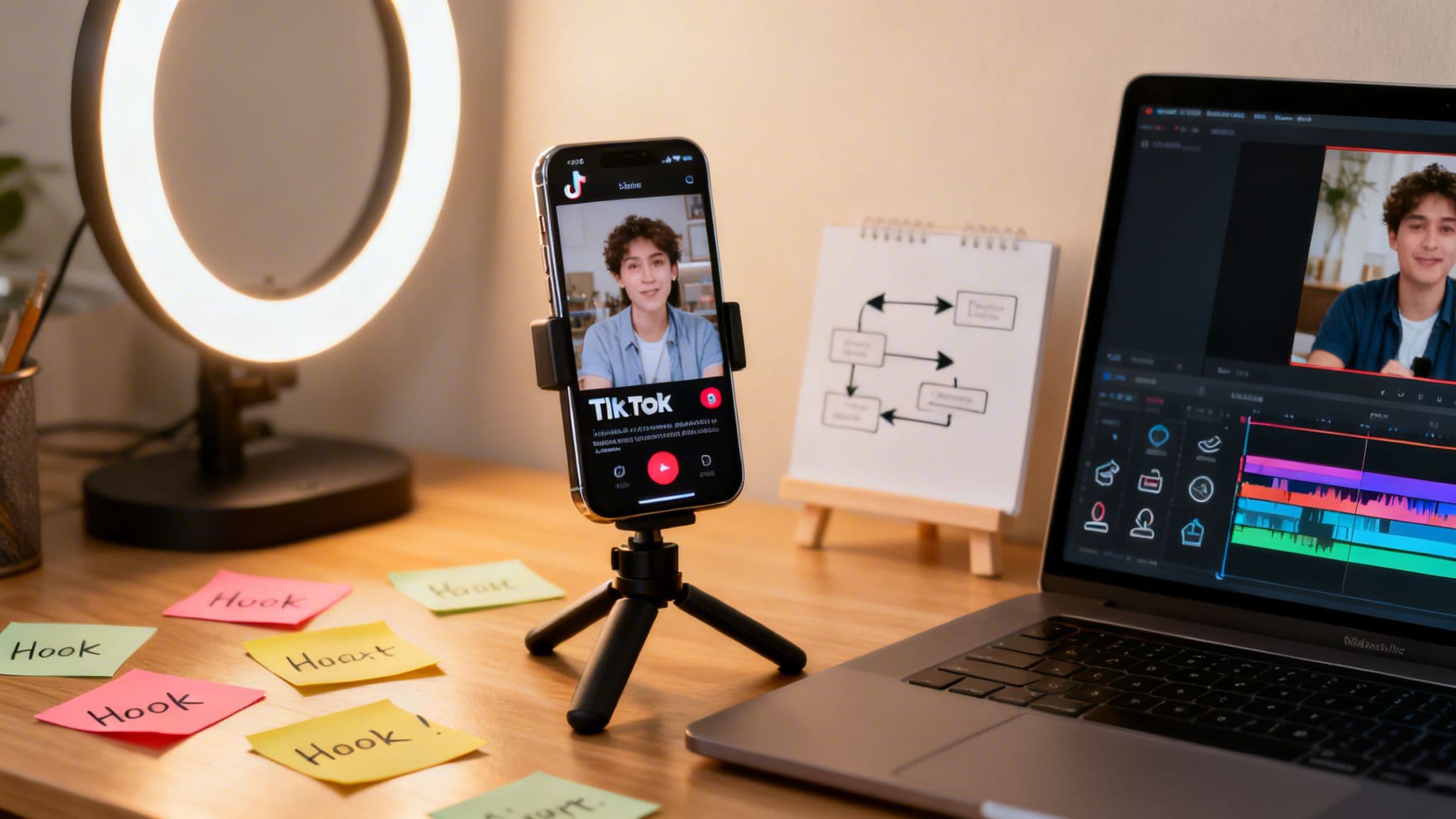
I’ve mapped out this exact flow for you here. It’s the journey every viral video takes a viewer on.
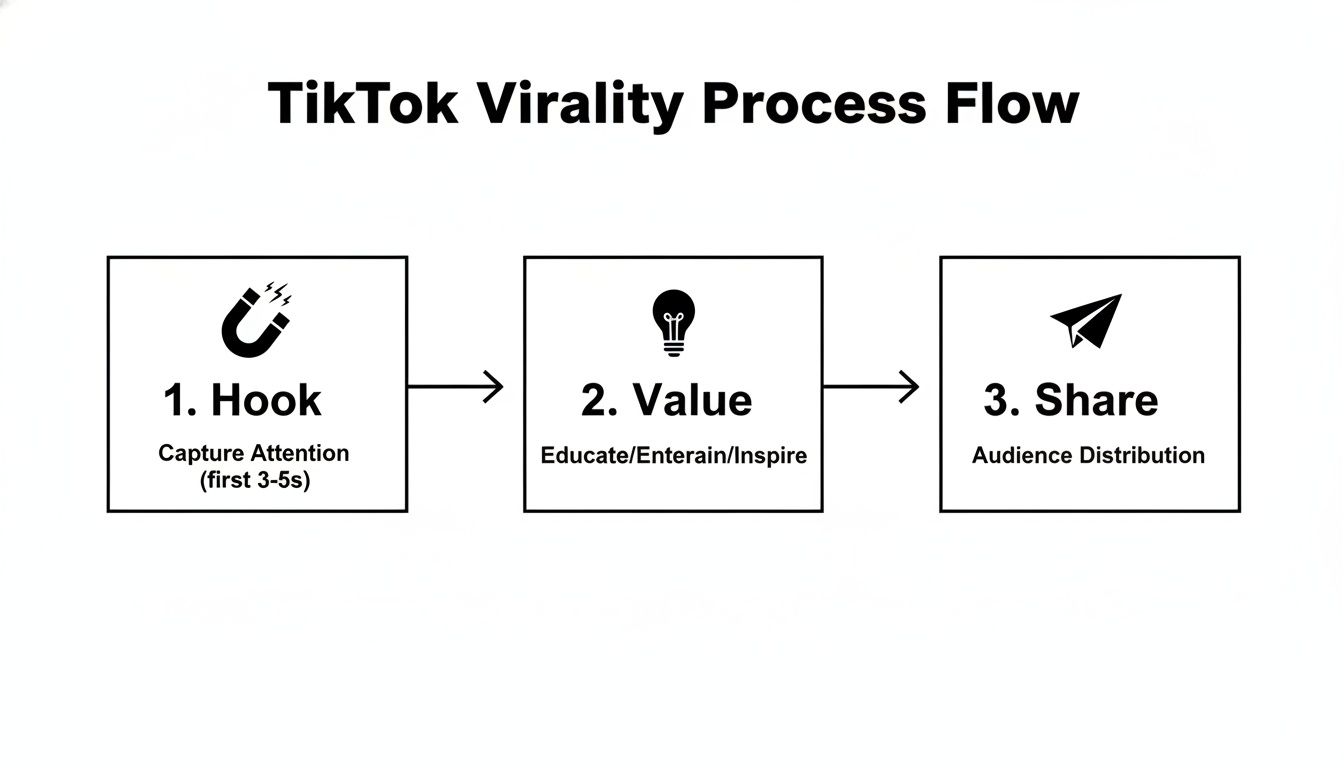
Once you internalize this hook-value-share sequence, you stop creating content randomly and start building videos with viral potential baked in from the start.
To help you keep these essentials top of mind, here’s a quick-reference table summarizing what we've just covered.
The Core Components of a Viral TikTok Video
| Component | Description | Why It Matters for Virality |
|---|---|---|
| Magnetic Hook | The first 1-3 seconds of your video. It must immediately grab attention and create curiosity. | Stops the user from scrolling. A weak hook means your video is dead on arrival, no matter how good the rest is. |
| Compelling Value | The "meat" of the video. This can be educational content, entertainment, or emotional resonance. | Delivers on the hook's promise and keeps the viewer watching, increasing watch time—a critical metric for the algorithm. |
| Innate Shareability | Content that viewers feel compelled to send to friends, save for later, or duet. | High engagement signals (shares, saves, comments) tell the algorithm your video is high-quality and should be pushed to a wider audience. |
Having this framework is the first step, but how do you apply it consistently without burning out?
Scaling Your Content Without Being on Camera
A huge piece of this puzzle is consistency. The algorithm loves creators who post regularly. But let's be real, being on camera every day is exhausting and, for many, a huge roadblock.
This is where a game-changing strategy comes in: faceless video creation.
This approach is how many top accounts are able to scale their output massively. By removing the need to film yourself, you can build a true content machine. You focus on what works:
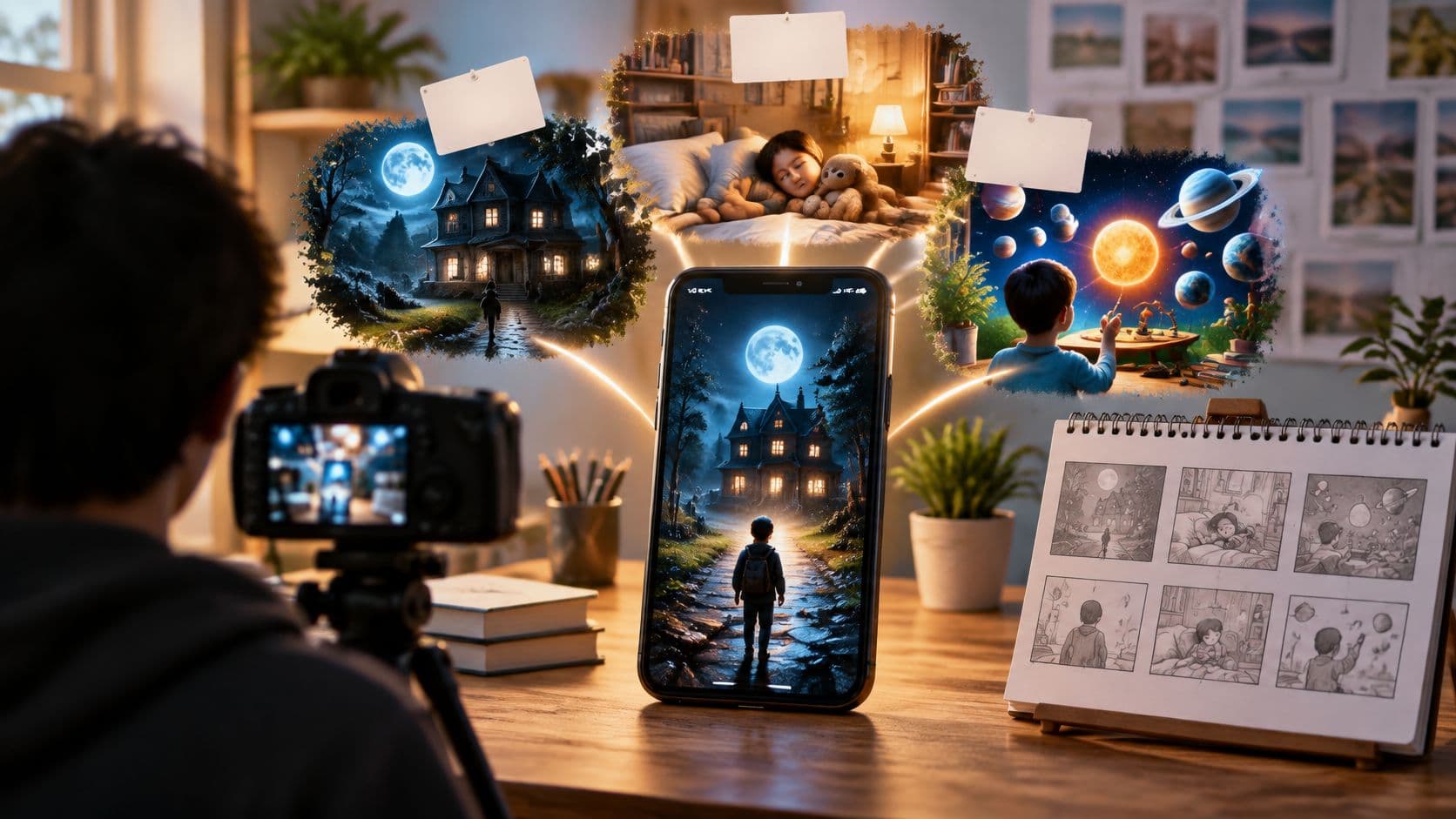
- Proven templates: Think "scary stories" with stock footage, "quick facts" over engaging B-roll, or "product reviews" using screen recordings.
- Systematic production: With a repeatable format, you can use tools to help find visuals, write scripts, and generate voiceovers, slashing your production time.
- Relentless publishing: Once you have a system, maintaining a consistent posting schedule becomes much, much easier.
You stop being the bottleneck in your own content creation. Instead of trading your time for every single video, you build a system for virality that works for you.
Of course, once the views start rolling in, you'll want to know how to turn them into income. Understanding the monetization side, like learning how to become a TikTok affiliate, is a natural next step in building a sustainable presence on the platform.
Mastering the First Three Seconds with Proven Hooks
On TikTok, you don't get a second chance to make a first impression. You have about three seconds—maybe less—to stop a viewer from scrolling. The entire battle for attention is won or lost in that tiny window.
Forget vague advice like "be authentic." Let's get into the specific, field-tested formulas that I've seen work time and time again to stop the scroll cold. A killer hook makes a promise: either it shows a result so incredible the viewer has to see the process, or it hits on a problem so relatable they desperately need your solution.
This is your psychological contract with the viewer. Nail the opening, and you signal that the next 30 seconds are a worthwhile investment, which is exactly what sends your average watch time through the roof—a huge plus for the algorithm.
The Unbelievable Result First Hook
One of the most powerful ways to grab attention is to show the mind-blowing final result right away. You’re essentially starting your story at the end, presenting the "after" before you even hint at the "before." This creates an information gap that people are psychologically wired to want to fill.
Think about it. Instead of a cooking video that starts with the mundane task of chopping onions, you hit them with a shot of a stunning, mouth-watering dish. The text overlay? "This took me only 10 minutes to make." The immediate reaction is, "No way. I have to see how they did that."
This strategy works in practically any niche:
- Fitness: Open with a clip of you acing an advanced gymnastic move, paired with the text, "I couldn't do a single pushup 30 days ago."
- Art: Show off a hyper-realistic portrait with the hook, "You won't believe this was made with kids' crayons."
- DIY: Pan across a perfectly organized, color-coded closet with the caption, "This closet was a disaster zone this morning."
You're front-loading the value. You're not asking for trust; you're proving from frame one that your video is worth watching.
The Controversial Statement or Question Hook
Nothing sparks curiosity faster than a bold statement that challenges a deeply held belief. This hook plays on our desire to either nod in furious agreement or figure out why someone is so spectacularly wrong. The goal is to be provocative enough to make someone pause, not to be needlessly offensive.
This isn't about chasing cheap drama. It’s about offering a unique perspective that triggers a mental pattern-interrupt—that "Wait, what?" moment that stops the thumb mid-scroll.
Look at these examples:
- "You're cleaning your kitchen all wrong."
- "Everything you know about saving money is a lie."
- "This is the most overrated tourist destination in Europe."
Each one makes you want to know why. Viewers have cleaned their kitchens for years or followed specific financial advice. Your job, then, is to back up that bold claim with genuinely useful information. Once you have your hook, you've also got the core idea for your script. For a deeper look at building out the rest of your video, check out our guide on how to make a script.
The Problem-Agitate-Solve Hook
This is a classic marketing framework, and it's gold on TikTok because it's fast, empathetic, and effective. You start by calling out a common pain point, amplify the frustration it causes, and then position your video as the perfect solution.
Here’s how it breaks down:
- Problem: State a relatable frustration. "Hate waking up tired every morning?"
- Agitate: Underscore the negative consequences. "It kills your productivity and has you chugging coffee just to function."
- Solve: Offer your simple, elegant solution. "Try this 2-minute stretching routine before you even get out of bed."
This framework builds an instant connection. You're not just a creator; you're someone who understands their struggle and has a clear, actionable answer. It’s a powerful way to generate content that feels genuinely helpful, leading to way more saves and shares.
Turning That Hook Into a Viral Hit
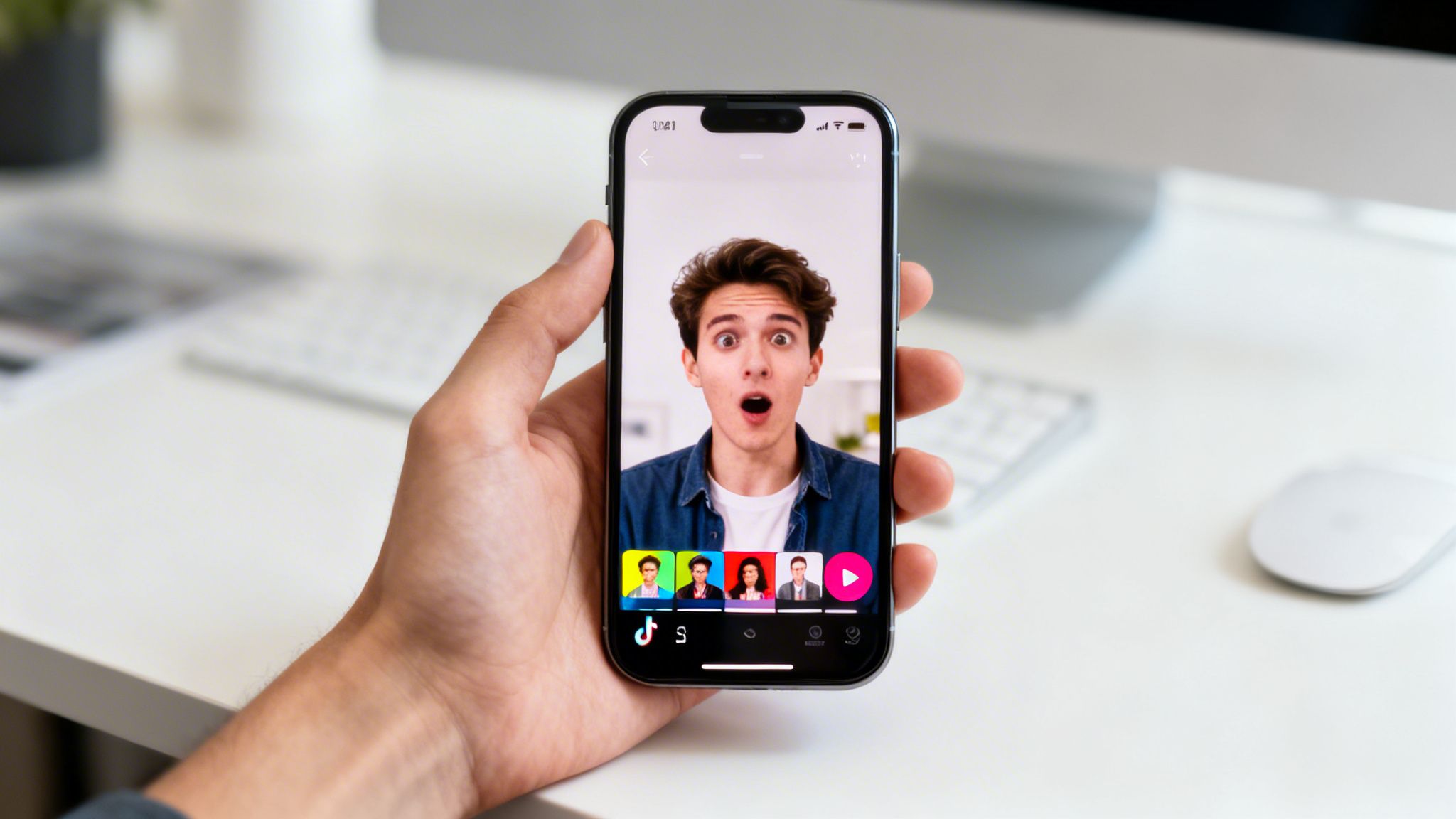
Alright, you got them to stop scrolling with a killer hook. Great. But that's just the first hurdle. The next 30 to 60 seconds are where you either earn a loyal follower or become just another forgotten video. It’s time to deliver on the promise you made in those first few seconds.
Think of it as a simple transaction: you created a question or curiosity with your hook, and now you have to provide a satisfying answer. If you showed off an incredible result, you’d better be ready to walk them through how you did it. If you made a bold, controversial claim, this is your moment to back it up with evidence that makes them go, "Huh, I never thought of it that way."
Every good TikTok tells a tiny story. You have your hook (the beginning), the valuable information (the middle), and a conclusion with a clear call-to-action (the end). This simple narrative structure is what keeps people watching, and watch time is everything.
The Undeniable Power of a Good Tutorial
If there's one format you should master for TikTok, it’s the tutorial. I've seen it time and time again, and the data backs it up. A whopping 62% of TikTok users say they prefer watching tutorials over any other kind of content.
That's a massive lead over product reviews (39%) and even personal stories (38%). For anyone looking to build an audience, this is a huge green light. Tutorials immediately position you as an expert, they're incredibly shareable, and they provide genuine value that keeps people coming back. You can dig into more of these stats in this eye-opening breakdown of TikTok trends.
But don't just list out steps. To make a tutorial truly stick, you need to show the transformation. Start with the messy "before," guide them through the process, and end with the clean, satisfying "after." It makes even the simplest how-to feel like a journey.
How to Go Viral Without Showing Your Face
Let's be real: being "on" all the time for the camera is exhausting. It's a huge bottleneck for most creators. This is where faceless videos come in as a game-changer, letting you pump out high-quality content without burning yourself out.
Faceless content puts the information front and center. The focus is on the value you're providing, not on you. It's a perfect match for the tutorial format and allows you to create a ton of content quickly using stock footage, screen recordings, or AI-powered visuals.
Here are a few faceless styles that are crushing it right now:
- Quick Tip Overlays: Find some super-satisfying B-roll footage (think ASMR, painting, or nature clips) and slap a bold text overlay on it with a single, powerful tip. It's fast, effective, and endlessly repeatable.
- AI-Driven Stories: Tools like ClipCreator.ai have gotten incredibly good. You can feed it a script, and it will generate a full video with slick visuals and a surprisingly human-sounding voiceover to explain a complex topic.
- Screen Recordings: If you're teaching anything related to software or tech, nothing beats a clean screen recording. Just add a clear voiceover explaining what you're doing, and you have one of the most trusted teaching formats online.
This approach lets you build a system for content creation. Your output is no longer tied to how you feel on a particular day.
Once you systematize your production with faceless videos, you stop being just a content creator and start becoming a content strategist. Your energy goes into the script and the value—the two things that actually drive viral growth.
Scripting for Engagement, Not Just Views
Your script is the skeleton that holds your entire video together. On a platform as fast as TikTok, you can't afford a single wasted word. The goal is to be tight, punchy, and keep building curiosity until the very end.
First, figure out the one single thing you want your viewer to learn or feel. That's your core message. Now, build your script around it and cut everything else. Write it like you're talking to a friend—keep the language simple and direct.
From there, you need to intentionally add "engagement triggers" to your script. These are little prompts that encourage people to interact:
- Ask a relatable question. Kicking off with "Ever have one of those days where...?" instantly creates a bond.
- Drop a surprise. About halfway through, hit them with a little-known fact or an unexpected twist. It's a great way to reset their attention.
- Use a specific Call to Action (CTA). Forget "follow for more." Tell them exactly what to do. "Save this for your next grocery run" or "Share this with a friend who always burns their rice."
Saves and shares are massive signals to the TikTok algorithm. When you write a script specifically designed to earn them, you're building a video that's engineered for reach from the ground up.
Gaining a Technical Edge with Editing, Sound, and SEO

Even the most brilliant idea and a perfect hook can die on the vine if the final video feels clunky. The polish you apply during editing isn't just about looking professional; it's about holding onto the attention you just fought so hard to win in those first three seconds.
This is where you get a real advantage over other creators. Think of these next steps as your pre-flight check before launching a video. By mastering editing pace, sound design, and some basic SEO, you’re turning a good video into one that the algorithm is dying to show to more people.
Keep the Pace Snappy with Dynamic Editing
The currency of TikTok is attention, and the market is ruthless. To keep viewers from swiping away, your video’s pace has to be relentless. Long, boring shots are the enemy of high retention rates. Your goal is constant visual stimulation.
Here are the editing tricks I’ve seen make the biggest difference:
- Fast Cuts: You need to be changing the shot or camera angle every 2-3 seconds. It sounds fast, but this creates a sense of energy and stops the viewer's eyes from glazing over. Even if you're just showing one thing, punch in with a zoom or cut to a slightly different perspective.
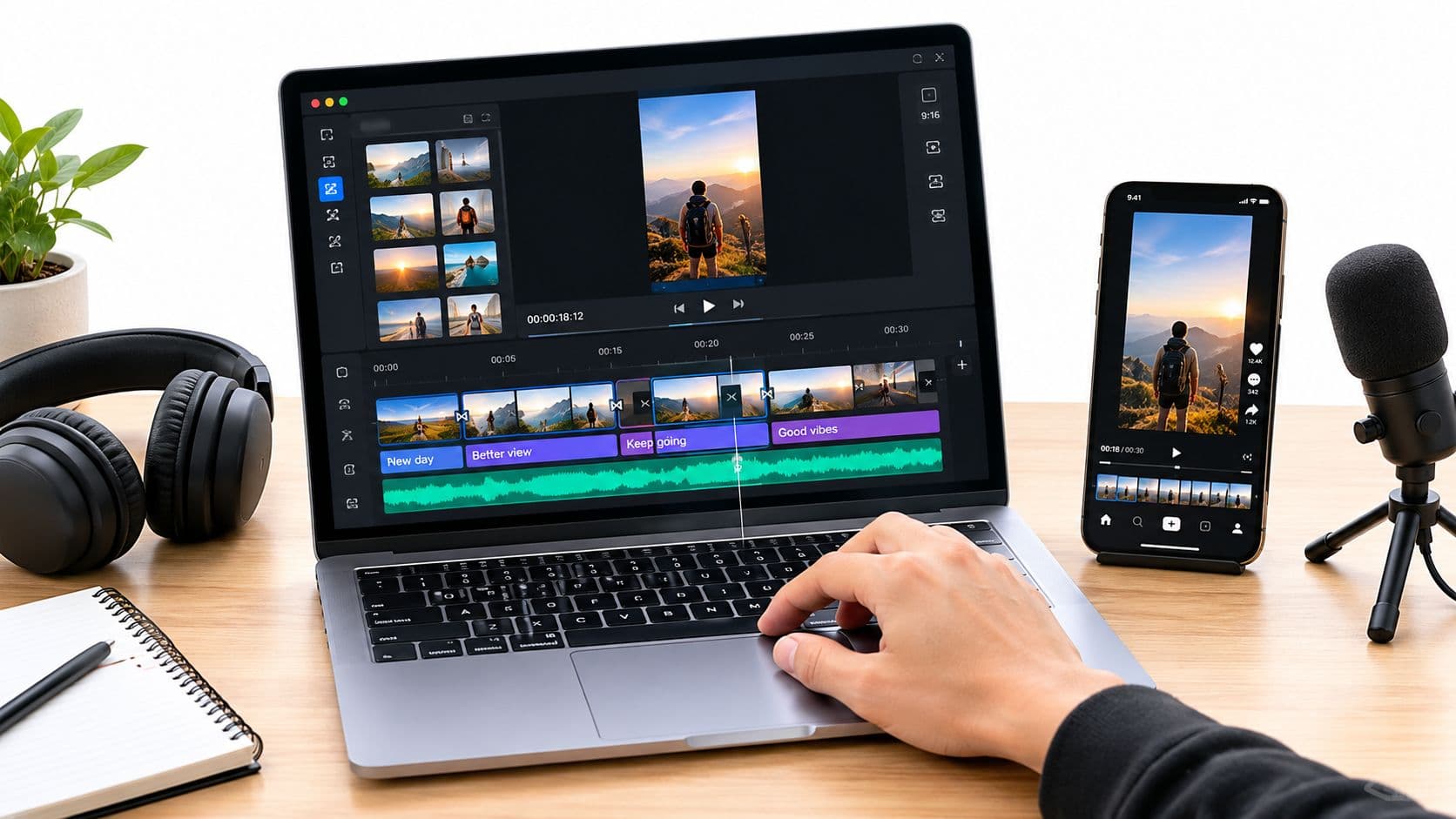
- Dynamic Subtitles: Plain, static captions are a missed opportunity. Use an app that creates animated, word-by-word subtitles that pop onto the screen as you speak. This creates a visual rhythm that keeps people glued to the screen.
- On-Screen Text Overlays: Use text callouts to highlight your most important points. They act like little signposts, guiding the viewer through your story and making sure they don’t miss the good stuff.
These might seem like small tweaks, but they add up. Each cut and text pop is another micro-hook that keeps a finger from swiping.
The Critical Role of Sound Design
On TikTok, what you hear is arguably more than 50% of the experience. Sound is what sets the mood and, more importantly, it's often the main engine for virality. Your audio strategy really needs to cover two bases.
First, you have to pay attention to trending audio. Using a popular song or sound clip is like jumping into a conversation that's already happening. The algorithm knows people like that audio, which gives your video an instant relevance boost. It's a simple way to get an early push.
Second is your original sound—your voiceover, background music, and sound effects. Your audio choices should amplify the feeling of your video. Are you telling a story? Use suspenseful music. Showing a quick tip? Go for something upbeat. For those looking to add a polished narrative layer, learning how to do voiceover on TikTok is a game-changer.
I see this mistake all the time: the background music is so loud it completely drowns out the voiceover. Your message has to be heard. Always mix your audio so the voice is the star, and the music is just the supporting actor.
Tools like ClipCreator.ai are built for this, automatically layering pre-licensed music with AI voiceovers and ensuring the levels are perfectly balanced right out of the gate.
Optimizing Your Video for TikTok SEO
It’s official: TikTok is a search engine. People are no longer just scrolling; they're actively searching for "how-to" guides, product reviews, and answers to their questions. If you’re not optimizing for search, you’re leaving views on the table.
Your caption is prime keyword real estate. Before you write it, ask yourself: "What would someone type in the search bar to find this video?" Weave those phrases into your description naturally. Don’t just list keywords; write a compelling sentence that also happens to be search-friendly.
Next up, hashtags. The goal here isn't to use a ton of them. Stick to 3-5 super-relevant hashtags. I’ve found this mix works best:
- A broad category tag (e.g., #bakingtips)
- A niche-specific tag (e.g., #sourdoughstarter)
- A video-specific tag (e.g., #nofailfocaccia)
Finally, don't forget that TikTok listens to your video. The algorithm transcribes your audio and reads the text on your screen. When you actually say your keywords and include them in your on-screen text, you’re giving TikTok powerful signals about your content. Those subtitles aren't just for accessibility—they’re an incredible SEO tool. If you want to dig deeper, you can check out the difference between open vs closed captions in our detailed guide.
Optimizing Your Publishing Strategy for Maximum Reach
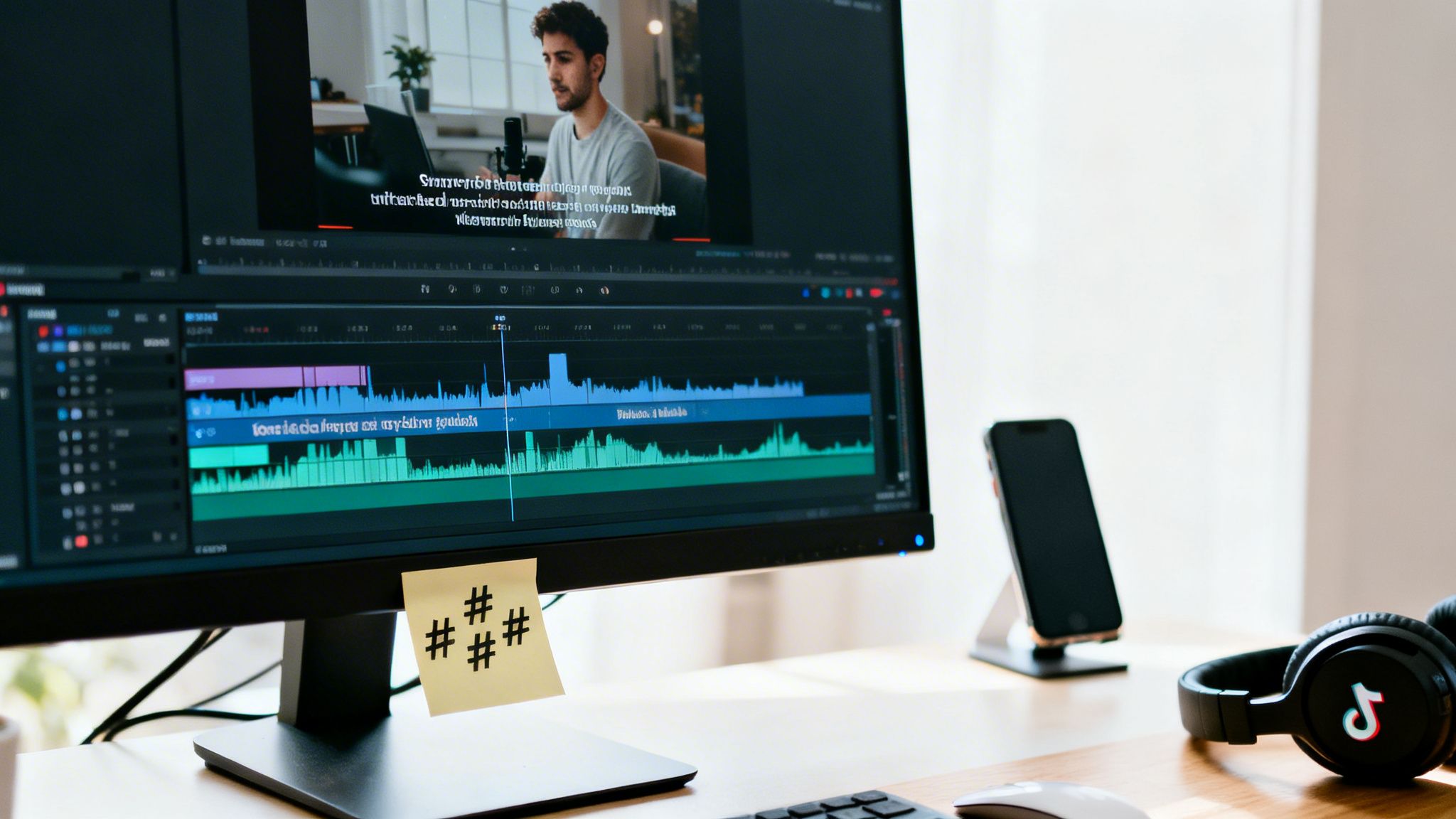
You can pour your heart into creating the perfect video, but if you just toss it onto the platform at a random time, it's likely to go nowhere. A solid publishing strategy isn't just a final touch; it’s what gives your content a fighting chance. It's all about initial velocity.
Think of it this way: when you post, you need a quick burst of views, likes, and shares. That immediate traction is a powerful signal to the TikTok algorithm that people are vibing with your content, which convinces it to push your video out to a much wider audience. Without that early momentum, even a masterpiece can get buried.
Pinpoint Your Audience's Peak Activity
Stop guessing when to post. Seriously. You’re just wasting great content. The good news is, TikTok tells you exactly when your followers are most active.
Finding these golden hours is straightforward. Just head to your profile, tap the three-line menu, and go to Creator Tools > Analytics > Followers. Scroll down a bit and you’ll find the “Follower activity” section. This is your personalized roadmap, showing you the exact days and hours your audience is glued to their phones.
Pay close attention to the hourly data. If your audience peaks at 8 PM, posting at 8 AM means your video will be old news by the time they log on. Aim to post about an hour before peak activity to build momentum.
By posting just before these peak times, you give your video the best possible launchpad. The immediate engagement from your existing followers is the spark you need to start a viral fire.
The Power of Consistent Posting
TikTok is a content machine. With an estimated 34 million videos posted daily, you have to be consistent to stay relevant. You’re not just competing for attention; you're showing the algorithm that you're a serious creator who consistently brings value. The reward is worth it—TikTok's average engagement rate of 3.7% still smokes Instagram Reels (0.65%). To see more data on this, you can discover more insights about TikTok statistics.
A steady posting rhythm keeps your name top-of-mind for your audience and trains the algorithm to know what you’re all about. While there's no single magic number, posting 2-3 times per day is a solid strategy, especially when you're trying to grow.
This kind of frequency does a few things for you:
- More Feedback: Every video is a test. You quickly learn which hooks, sounds, and formats are hitting the mark.
- Faster Learning: You're constantly feeding the algorithm data, which helps it get much better at finding your ideal audience.
- More Shots on Goal: Not every video will be a hit. That's okay. If one flops, you have another chance to score in just a few hours.
If you’re trying to figure out the right posting cadence for your own account, our guide on how often to post on TikTok breaks it down even further.
Embrace Set-and-Forget Scheduling
Let's be real: manually posting videos 2-3 times a day at very specific hours is a surefire path to burnout. Who wants to be chained to their phone like that? This is where automation becomes your best friend.
Using a tool like ClipCreator.ai lets you adopt a "set-and-forget" workflow. You can sit down once, schedule out an entire week of content, and have it all post automatically at the exact peak times you’ve identified. No more frantic, last-minute uploads.
This simple shift in your process ensures you never miss an opportunity to hit the For You page when it matters most. You get to maintain that relentless consistency the algorithm loves, all while freeing up your time and mental energy to focus on what you do best: creating your next viral hit.
Analyzing Your Performance to Scale Success
So, a video took off. Congrats! Was it luck? Maybe. But banking on luck is a terrible strategy for growth. To go viral consistently, you have to shift your mindset from just being a creator to becoming a data detective.
The real secret to building a powerhouse TikTok account isn't just about making great videos. It's about understanding why a video worked—or why it flopped—and then using that knowledge to make your next one even better. This all starts and ends with your TikTok Analytics. Stop guessing what people want and start listening to what their actions are telling you.
What to Actually Look At in Your Analytics
Your follower count going up is a nice ego boost, but it's a vanity metric. It doesn't tell you a thing about why your content is resonating. If you want to get the TikTok algorithm to work for you, you need to become obsessed with the metrics that directly influence your reach on the For You page.
Forget everything else for a minute and focus on these three:
- Average Watch Time: This is the holy grail. It’s the raw measure of how long you can hold someone's attention before they swipe. A long watch time tells TikTok, "Hey, people are genuinely hooked on this."
- Video Completion Rate: What percentage of viewers stuck around for the entire video? A high completion rate is a massive signal to the algorithm that your content delivers on its promise from start to finish.
- Shares and Saves: These are what we call "heavy" interactions. Liking a video is easy and passive. When someone takes the time to share your video with a friend or save it for later, they’re telling you (and TikTok) that your content is incredibly valuable.
From Insights to Actionable Strategy
Looking at data is one thing; doing something with it is another. When you spot a video outperforming the rest, it’s time to put on your detective hat. Pop the champagne later—first, you need to figure out what made it tick.
Go back and dissect that video. Ask yourself some pointed questions:
- What was the exact hook I used in the first 3 seconds?
- Was the editing fast-paced or slow and cinematic?
- What sound did I use? Was it trending? Did it match the vibe?
- What problem did this video solve or what emotion did it trigger?
The goal isn't to make a carbon copy of your viral hit. The goal is to clone the elements that made it successful and apply them to fresh ideas.
This is how you build a powerful feedback loop. Think you’ve found a pattern? Start running simple A/B tests. For example, take one video idea and shoot two different hooks for it. Post them a day or two apart. See which one grabs a higher average watch time. This is how you stop guessing and start building a repeatable formula.
Remember, viral TikTok videos often have a active lifespan of 7 to 14 days, and with users spending an average of 10.85 minutes per session, your content has plenty of time to find its audience. This gives you a great window to analyze performance without rushing. If you want to dig deeper into the numbers, you can find more key TikTok user engagement statistics to help shape your strategy. By using these insights, you're no longer just throwing content at the wall; you're building a system for success.
Frequently Asked Questions About Going Viral on TikTok

Even with a solid framework, you're bound to have questions. Going viral on TikTok can feel like trying to solve a puzzle, but once you understand a few core principles, everything starts to click. Let's tackle some of the most common questions I hear from creators.
What Is the Ideal Video Length for Virality?
This is the golden question, isn't it? While TikTok keeps extending its maximum video length, the algorithm (and human attention spans) still heavily favors shorter content.
I've found the sweet spot is generally between 15 and 45 seconds. This gives you enough time to hook the viewer, deliver real value, and get out—without giving them a chance to get bored and swipe away.
Of course, there are exceptions. If you're telling a captivating story or walking through a multi-step tutorial, you can stretch to the 60-90 second mark. The trick is making sure every single second is essential. As soon as you’ve delivered that final piece of value, cut the video. A clean, abrupt ending encourages people to rewatch, which sends a massive signal to the algorithm.
How Many Hashtags Should I Use for the Best Reach?
Forget what you've heard about stuffing your caption with 20 hashtags. On TikTok, less is definitely more.
I stick to a focused strategy of 3 to 5 highly relevant hashtags. Any more than that, and you risk confusing the algorithm about who your video is actually for.
Think of your hashtags as road signs for your content. You want to give TikTok crystal-clear directions. My go-to formula is one broad tag (#tiktoktips), a couple of niche tags that describe the specifics (#facelesscontentideas), and maybe a trending sound tag if it applies. Just please, do yourself a favor and skip the useless ones like #viral or #fyp. They don't work.
Why Are My TikTok Views Suddenly So Low?
First, take a breath. It happens to everyone. A sudden drop in views is a normal, and often temporary, part of the creator experience. It almost never means you've been "shadowbanned."
So what's really going on? It could be a few things. The algorithm might have just been updated, your latest content might not have resonated as strongly with your audience, or you might have just posted at a bad time.
Don't panic—get curious. Dive into your analytics. If you see a low average watch time on your last few videos, that's your sign. Your hooks need work, or the pacing is off. The only real solution is to stay consistent, keep testing new ideas, and trust the process.
Ready to scale your content without the burnout? ClipCreator.ai automates the entire video creation process, from AI-powered scripts and lifelike voiceovers to auto-publishing on your schedule. Stop spending hours editing and start building a viral content machine today. Learn more at https://clipcreator.ai.

Create your first video in under 2 minutes
Pick a niche, and ClipCreator.ai generates and auto-posts faceless videos to your channels every day.
Join ClipCreator.ai