So, what exactly is a content creator?
Forget the old dictionary definition. Today's content creator is a digital storyteller, an entrepreneur, and a community builder all rolled into one. They're the people producing the videos, articles, podcasts, and social media posts you consume every day on platforms like YouTube, TikTok, and Instagram.
But here's the key distinction: this isn't just a hobby anymore. A modern creator runs their channel or profile like a one-person media company, strategically building an engaged audience with the goal of turning their passion into a real profession.
The Modern Creator Is a Digital Entrepreneur
Think of a creator as the CEO, creative director, and head of marketing for their personal brand. They aren't just hitting "record" and hoping for the best; they're building a business from the ground up, centered entirely on their unique voice and expertise.
Making that leap from casual poster to serious professional is what defines the creator economy today. The main job is to capture and hold people's attention in an incredibly crowded online world.
Success rarely happens by accident. It's the product of a smart strategy that blends raw creativity with sharp business instincts. A huge part of this is defining who you are, which often starts by looking at examples of powerful brand statements to see how others have carved out their niche.
Key Aspects of a Content Creator
The role goes so much deeper than just publishing content. A successful creator manages the entire lifecycle of their work, from dreaming up the initial idea all the way to digging into the analytics to see what worked and what didn't. It's a constant mix of art and science.
A creator is a modern musician, but instead of a guitar, their instrument is a smartphone, and their stage is the internet. They perform for a global audience, building a community one piece of content at a time.
To get a clearer picture, let's quickly break down the core components of this role.
The Content Creator at a Glance
This table sums up what it means to be a creator in today's digital world.
| Aspect | Description |
|---|---|
| Primary Role | To produce and share original digital content—like videos, posts, stories, or podcasts—for a specific audience. |
| Key Platforms | YouTube, TikTok, Instagram, X (formerly Twitter), Twitch, Blogs, and Podcasts. |
| Main Goal | To build a loyal and engaged community, establish genuine influence, and create sustainable income streams. |
| Core Skills | Creativity, storytelling, digital marketing, video and audio editing, and authentic audience engagement. |
Ultimately, a content creator is someone who uses online platforms to share what they know and love. They build a career by forging real connections with people all over the world, and it demands consistency, a willingness to adapt, and a true desire to bring value to their community.
The Exploding Creator Economy
To really grasp what a content creator is, you have to zoom out and see the massive economic engine they're fueling. This is the creator economy—a global industry built by digital storytellers who have figured out how to turn their passions into a profession. It’s a complete flip in how we make, watch, and pay for media.
What used to be a niche corner of the internet is now an absolute powerhouse. We're seeing a fundamental shift where businesses are pulling their advertising dollars from traditional TV and print and pouring them into creators. Why the change? Creators offer something old-school media just can't compete with: authentic, direct connections with incredibly dedicated communities.
The Mind-Blowing Scale of This Digital Shift
The numbers behind this movement are staggering. As of 2024, the creator economy has ballooned to an estimated $205-250 billion**. That's a jaw-dropping **60.8% increase** from 2023 alone. And it's not slowing down—projections show it rocketing to **$1.3-1.5 trillion by 2034, growing at a compound rate of 22-26% each year.
This boom is especially wild in mobile-first regions. Consider this: an incredible 50% of Brazil's entire population—that's 106 million people—now identify as creators. For a deeper dive into these market trends, you can find additional creator economy statistics on Autofaceless.ai.
This explosive growth takes the idea of being a content creator from a simple side hustle and transforms it into a very real, very powerful business opportunity with worldwide reach.
This infographic breaks down what it means to be a modern creator—where they work, what they do, and what they're aiming for.
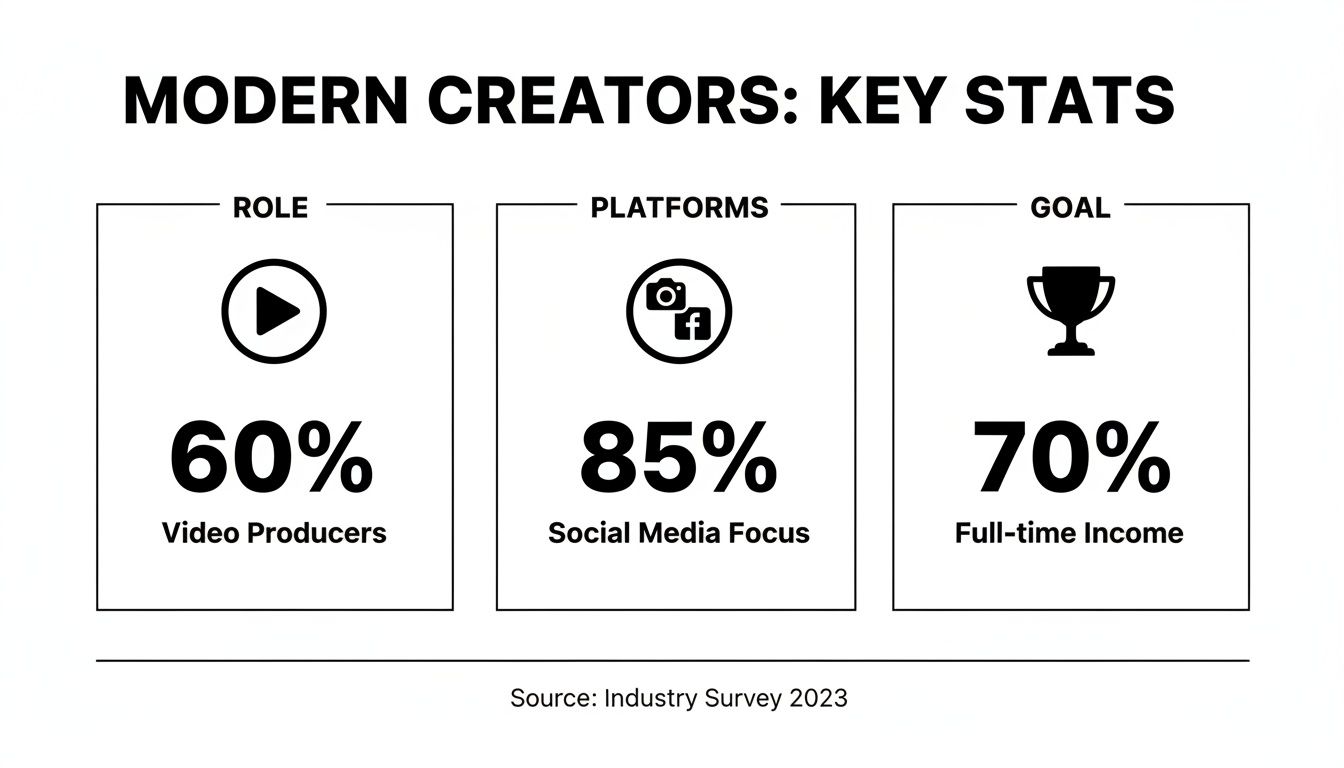
As you can see, today's creators are essentially multi-platform entrepreneurs focused on building a sustainable career, not just a following.
From Passion Project to Profitable Business
At its heart, the creator economy runs on the direct relationship between a creator and their audience. That bond is built on trust and shared interests, which makes a recommendation from a creator feel more like advice from a friend than a corporate ad. Naturally, brands see huge value in that and are eager to partner up to reach genuinely interested customers.
Making that leap from hobbyist to professional, however, requires a serious business mindset. Creators have to consistently deliver high-quality content that their audience loves, all while managing the back end of their brand. This usually involves:
- Building a Community: Gathering a loyal following around a specific niche or topic.
- Creating a Monetization Plan: Juggling different income sources like sponsorships, ad revenue, and affiliate marketing.
- Managing Their Brand: Developing a unique voice and personality that attracts both followers and brand deals.
The most successful creators operate like media startups. They know their audience inside and out, obsess over performance data, and constantly tweak their content to stay relevant and keep growing.
This professional approach is what turns a one-hit viral video into a long-term, sustainable career. For anyone looking to build their own presence online, getting these pieces right is everything. If you're ready to get started, our guide on social media growth strategies is a great next step.
Ultimately, the creator economy has laid out a clear path for anyone with a unique perspective to build a legitimate, thriving business from scratch.
Finding Your Niche and Platform
The digital world is a noisy place. If you want to build a successful brand as a creator, the first thing you need to do is find your corner. Instead of trying to be everything to everyone, the most successful creators carve out a specific niche—a specialized topic where they can become the go-to expert for a dedicated community.
Think of it this way: a generic restaurant that serves a little bit of everything is easily forgotten. But that little spot that makes the absolute best tacos in town? That place becomes a legend. The same goes for content. A creator who focuses on something specific, like "vintage camera repair for beginners," will build a much more loyal and engaged audience than someone just posting broadly about "photography."
Your niche is where your passion, your skills, and what an audience actually wants all come together. It's the secret sauce that makes your content unique and gives people a real reason to stick around.
Choosing Your Creator Archetype
Once you've got a niche in mind, it's time to decide on your creative style. This choice will influence everything you do, from the kind of content you make to the platform you call home. Generally, creators fit into a few main archetypes based on how they present themselves and the length of their content.
One of the biggest forks in the road is choosing to be on-camera or faceless.
- On-Camera Creators: These are the faces of their brands—the classic personalities and influencers you see every day. They build a powerful connection with their audience through their voice and personality, whether they're a lifestyle vlogger, a comedian, or an expert commentator. This path is fantastic for building personal trust.
- Faceless Creators: This is a rapidly growing lane where the content itself is the star, not the person behind it. Think of channels using animated stories, stock footage with compelling voiceovers, or screen recordings for tutorials. It's an ideal approach for anyone who values privacy or wants to build a system for producing a lot of content quickly.
Then, you have to think about content length. This is a huge strategic decision.
- Short-Form Content (under 90 seconds): We're talking TikTok, Instagram Reels, and YouTube Shorts. This format is all about grabbing attention fast. It lives and dies by snappy hooks, quick pacing, and a satisfying punchline or takeaway, all designed for maximum engagement and a shot at going viral.
- Long-Form Content (over 10 minutes): This is the world of deep-dive YouTube videos and podcasts. It's where you get to truly explore a topic, establish yourself as an authority, and build a rock-solid community that comes back for more because they value your in-depth perspective.
A successful content creator doesn't just pick a topic; they strategically match their niche, archetype, and content format to the platform where their ideal audience spends the most time.
Aligning Your Niche with the Right Platform
Every platform has its own vibe, its own algorithm, and its own audience expectations. Picking the right one for your style isn't just a good idea—it's essential for growth.
For instance, a faceless short-form creator who makes creepy story videos is going to feel right at home on TikTok. The platform is practically built for that kind of bite-sized, narrative-driven content.
On the other hand, an on-camera expert who wants to teach complex coding skills would find a much warmer welcome on YouTube. That's where people go when they're actively searching for detailed, long-form tutorials. The trick is to meet your audience where they already are and give them the content they want in the format they love.
The Essential Creator Toolkit and Workflow
Behind every creator you admire is a system. That's the secret sauce. Great content doesn't just magically appear; it's born from a repeatable process that takes a spark of an idea and turns it into something polished and ready for an audience. Nailing this workflow is what separates the pros from the hobbyists.
Think of it like a chef in a busy kitchen. They don’t just wing it. There's a method: sourcing the best ingredients (that's your idea), prepping everything meticulously (production), cooking the dish to perfection (editing), and finally, plating it so it looks irresistible (distribution). Each step builds on the last, and cutting corners anywhere can tank the whole meal.

Let's break down this creative process into its four core stages.
Stage 1: Ideation and Planning
Every piece of content starts here, with a simple idea. But top creators don't sit around waiting for a muse to show up. They're active hunters, constantly looking for inspiration by digging into trends, listening to their audience's pain points, and researching what people are searching for.
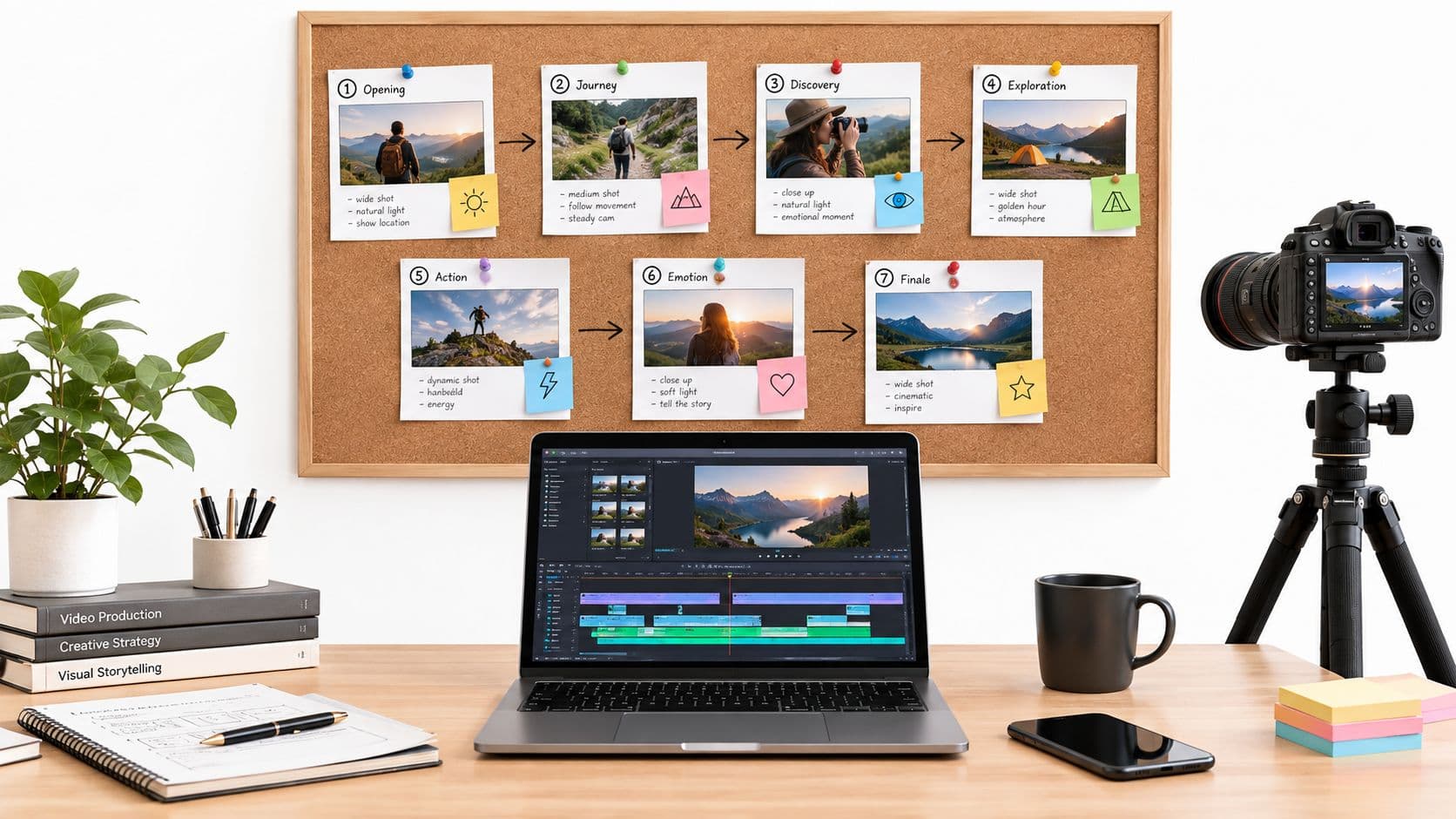
A content calendar is your best friend in this stage. It’s what keeps you consistent, which is something both platform algorithms and your audience love to see. This is also where you'll outline scripts, storyboard your shots, and give yourself real deadlines to stay on track.
Stage 2: Production and Creation
With a solid idea mapped out, it's time to make it real. This is the production phase, and it looks a little different for everyone. For a YouTuber, it’s hitting record on the camera. For a podcaster, it’s getting behind the mic. For a blogger, it's hammering out that first draft.
The goal here is simply to execute. You don’t need a Hollywood-level studio. It's really about getting the basics right—clean audio, decent lighting, and a clear message. Honestly, the smartphone in your pocket is powerful enough to get you started.
The goal of production isn't perfection; it's capturing high-quality raw material. You can’t edit a great video from bad footage, so focusing on getting the fundamentals right during this stage saves massive headaches later.
Stage 3: Editing and Polishing
Raw footage or a first draft is rarely ready for the world. The editing room (or your laptop) is where the magic happens. You’ll trim away the fluff, inject some personality with music and graphics, and mold your raw material into a story that flows.
Editing is where your creative and technical sides meet. It’s about:
- Pacing: Chopping out dead air and awkward pauses to keep your audience hooked.
- Storytelling: Arranging your clips to build suspense, deliver a punchline, or make a point.
- Enhancements: Adding text on screen, sound effects, or color grading to make the whole thing pop.
Stage 4: Distribution and Promotion
Finally, it’s time to get your masterpiece in front of eyeballs. But distribution is so much more than just hitting "publish." You need a strategy. This means writing titles and descriptions that people are actually searching for, using the right hashtags, and posting when your audience is most active.
And the work isn't over once it's live. Promotion means sharing your content on other platforms, jumping into the comments to build a community, and looking at the analytics to see what resonated. Without a smart distribution plan, even the most amazing content can get lost in the noise. For anyone looking to get an edge, exploring AI content creation tools can be a huge help, especially for automating some of this heavy lifting.
How Content Creators Actually Make Money
Ever wonder how your favorite creators turn their passion into a paycheck? It’s not magic. It’s a business. Think of a successful content creator as a small media company, and like any media company, their most valuable asset is the attention they’ve captured. Monetization is simply the process of converting that attention into real income.
The smartest creators don’t just rely on a single source of revenue. They build a diverse portfolio of income streams. Some methods are more hands-on, requiring active work and negotiation, while others generate passive income in the background. Together, they create a strong financial foundation, turning a hobby into a sustainable career.
Primary Revenue Streams for Creators
Creators generally pull from four main buckets to earn money. Most start with one or two, but as they grow, they layer on more. Each approach has its own rhythm and rewards, fitting different stages of the creator journey.
- Brand Sponsorships: This is the classic model. A company pays you to feature their product or service. It's a direct partnership that taps into the trust you've built with your audience.
- Platform Ad Revenue: Platforms like YouTube or TikTok will often share a slice of the ad money generated from your content. This income stream is more passive and scales directly with your views.
- Affiliate Marketing: You earn a commission by recommending a product and sharing a special tracking link. Every time someone in your audience buys through that link, you get a cut of the sale. It's a powerful way to monetize genuine recommendations.
- Selling Your Own Products: This is where you become a true entrepreneur. You can sell digital goods like courses, e-books, and templates, or physical merchandise like t-shirts and mugs directly to your community.
For a deeper dive, you can explore various proven strategies for content creators to make money.
To give you a clearer picture, here’s a quick breakdown of how these different monetization models stack up.
Comparing Creator Monetization Models
This table offers an overview of the most common revenue streams, helping you see where each one shines and what it takes to succeed.
| Monetization Model | Best For | Pros | Cons |
|---|---|---|---|
| Brand Sponsorships | Creators with an engaged, niche audience | High earning potential per project; builds industry authority. | Can be inconsistent; requires negotiation and sales skills. |
| Platform Ad Revenue | Creators with high viewership (especially long-form) | Passive income that scales with views; predictable once established. | Highly dependent on platform algorithms; low earnings per view. |
| Affiliate Marketing | Creators who genuinely use and love specific products | Authentic way to earn; passive once links are set up. | Income depends on audience conversion; can be a slow start. |
| Selling Own Products | Creators with a strong community and brand identity | Full control over product and pricing; highest profit margins. | Requires significant upfront work; responsible for all marketing. |
Ultimately, the best approach is a blended one. Using a mix of these models ensures that you're not just earning—you're building a resilient and adaptable business.
Diversification Isn’t Optional—It’s Essential
Putting all your eggs in one basket is a risky game in the creator world. An unexpected algorithm change can tank your ad revenue overnight. A big brand deal might not renew next quarter. This is precisely why diversification is the bedrock of a long-term creator career.
The data backs this up. While brand deals are a huge piece of the puzzle, they aren't the only piece. Looking ahead, sponsored content is projected to make up 59% of creator revenue by 2026, with platform payouts at 24.4% and affiliate commissions at 8.2%. This trend, highlighted in creator budget analysis from Later.com, shows why a multi-pronged approach is non-negotiable for financial stability.
Monetization is the direct result of building an engaged and loyal community first. Before a creator can earn a dollar, they must first earn trust, attention, and a genuine connection with their audience.
Your First Steps to Becoming a Creator

Knowing what a content creator is opens a door, but having a clear plan is what actually gets you through it. It's time to turn all that inspiration into action. Think of this as your roadmap to go from curious reader to active publisher.
Find Your Unique Niche
First things first: you need to find your corner of the internet. Don't try to make content for everyone. Instead, lock in on a specific topic you're genuinely passionate and knowledgeable about.
Maybe it's restoring old video game consoles or organizing small spaces with a minimalist eye. Your niche is the foundation of everything—it's what will attract a real community that hangs on your every word.
Choose the Right Platform for Your Style
Once you have your niche, you have to find the right place to talk about it. Think about the style of content you want to create.
If you’re planning to pump out quick, punchy faceless story videos, then TikTok or YouTube Shorts are your best friends. But if you see yourself creating deep-dive tutorials, a long-form YouTube channel is the perfect home. The key is to go where your ideal audience already hangs out.
Build a Sustainable Content Plan
Great creators run on consistency, not just random bursts of creativity. Your best tool for this is a simple content calendar.
Map out your ideas, decide on a publishing schedule you can actually keep, and build a workflow that doesn't feel like a chore. This is the secret to avoiding burnout and showing the platform algorithms you’re a serious creator worth promoting. For a deeper look, check out our guide on how to build a personal brand that connects.
Publish Consistently Without Burnout
Consistency is everything, but let's be real—the creator world can be a grind. The market is projected to hit an incredible $205 billion by 2026, with brands shifting huge budgets away from old-school ads because creator content simply converts 2-3x better.
The game is changing fast. With 86% of creators now using generative AI, automation isn't just a nice-to-have anymore; it's essential for keeping up without completely burning out. You can read the full breakdown on the creator economy market size on archive.com.
The journey of a content creator begins with a single post. The most important thing you can do today is start—publish something, learn from it, and repeat the process. Momentum is built one step at a time.
A Few Lingering Questions
Alright, let's get into some of the questions that are probably bouncing around in your head. Getting these cleared up is often the last little push you need to dive in.
Seriously, How Much Money Can a New Creator Make?
Let's be real: when you're just starting out, the income is usually pretty modest and unpredictable. Your first earnings will likely come from things like an affiliate link here or a small brand shout-out there. It’s totally normal to make next to nothing in your first year while you're busy building an audience.
Your earning potential really boils down to your niche, the platform you choose, and how consistently you show up. The trick is to stop thinking about money at first and focus entirely on building a genuine community. Once you have a group of people who trust and follow you, the monetization opportunities will naturally follow.
Do I Really Need a Fancy Camera and Gear?
Nope. Not at all. Your smartphone is a powerhouse. The camera and microphone on most modern phones are more than capable of producing high-quality content for platforms like TikTok, Instagram, and YouTube Shorts.
A quick pro-tip: Good lighting and clear audio will always beat expensive gear. A sunny window and a quiet room can make your videos look and sound a hundred times better. Most of the biggest creators today started with nothing more than their phone.
How Long Until I'm "Successful"?
This is the million-dollar question, isn't it? There's no magic number, because everyone's definition of "success" is different. But if we're talking about building a solid audience and earning a somewhat steady income, you're generally looking at 1-2 years of consistent, hard work.
Sure, you hear stories about people going viral overnight, but that’s like winning the lottery—it's the exception, not the rule. The single biggest factor in your success will be consistency. Sticking to a publishing schedule builds momentum and trust with your audience. This is exactly why a sustainable workflow is so crucial for playing the long game and not burning out.
Ready to build that consistent workflow without the burnout? ClipCreator.ai handles the entire creation process for faceless videos—from script to the finished product. You can finally publish great content every single day, minus the grind. Start creating with ClipCreator.ai today!

Create your first video in under 2 minutes
Pick a niche, and ClipCreator.ai generates and auto-posts faceless videos to your channels every day.
Join ClipCreator.ai