Building a personal brand isn't just about marketing yourself; it's about deliberately shaping how the professional world sees your expertise and value. Think of it as the art of defining what you stand for and then communicating that consistently. When you get it right, your professional reputation becomes a powerful magnet for new opportunities.
Why Your Personal Brand Is Your Greatest Career Asset

In today's professional world, your skills and resume only tell part of the story. Decision-makers—from recruiters to potential clients—are digging deeper. They look past the traditional credentials to figure out who you are, what you truly know, and the unique value you bring to the table. This is exactly where your personal brand comes into play.
Here’s a simple way to look at it: your resume lists what you've done, but your personal brand tells the story of how you do it and why it actually matters. It’s what separates you from being just another applicant and transforms you into the go-to expert in your field. This shift means a well-defined brand isn't just a nice-to-have for entrepreneurs anymore—it's a core strategy for anyone serious about their career growth.
The Digital First Impression
Long before anyone shakes your hand, they've likely already looked you up online. Your digital presence is your new handshake, and what people find—or don't find—creates a powerful first impression that can open or close doors before you even get a chance to speak.
The stats on this are pretty eye-opening. Recent studies on personal branding trends show that what employers find online directly impacts their decisions.
It’s clear that employers are actively using your online presence to vet candidates. Take a look at how this plays out in the real world.
Your Digital First Impression and Its Impact
| Employer Action | Percentage of Employers | What This Means for You |
|---|---|---|
| Rejected a candidate based on their online content | 54% | A unprofessional or negative online presence can disqualify you instantly. |
| Less likely to interview a candidate they can’t find online | 47% | Being invisible is almost as bad as having a poor online image. |
| Hired a candidate because of their personal branding | 44% | A strong, positive brand can be the deciding factor that gets you the job. |
This data paints a very clear picture. Your digital footprint isn't just a passive collection of social profiles anymore; it’s an active, breathing extension of your professional self. Recruiters and clients see it as a legitimate tool for assessing your capabilities.
The bottom line is that your online presence is no longer optional. It's a critical part of how you're evaluated professionally.
From Passive Job Seeker to Opportunity Magnet
When you cultivate a strong personal brand, something fundamental changes. You stop chasing opportunities and start attracting them. This happens because a consistent and valuable online presence builds trust and credibility on a massive scale.
Think about the real-world benefits this brings:
- You Become More Discoverable: A clear brand makes it easy for recruiters, potential collaborators, and clients to find you when they're searching for your specific skills. You go from being a name on a list to a recognized voice in your industry.
- Your Credibility Skyrockets: When you share insightful content, participate in industry discussions, and showcase your expertise, you build a reputation as a trusted authority. This credibility makes it far easier to command a higher salary, land better projects, and earn the respect of your peers.
- Networking Happens on Autopilot: Your brand is out there working for you 24/7. It connects you with other professionals and leaders in your field, expanding your network far beyond who you can meet in person.
- You Build Career Resilience: In a constantly shifting job market, a strong personal brand is your safety net. Your reputation and your network are assets that you own, completely independent of your current job. That gives you much greater control over your professional future.
Ultimately, building your personal brand is an investment in your most valuable asset: yourself. It’s about taking the reins of your professional narrative and making sure the story being told is one of expertise, value, and influence.
Laying the Groundwork for an Authentic Brand

Before you even think about a logo, a color palette, or your next social media post, the real work of building a personal brand starts from the inside out. A strong brand isn't just a shiny exterior; it’s a genuine reflection of who you are, what you believe in, and the unique value you bring to the table.
If you skip this foundational work, everything that follows will feel disconnected and a bit hollow. You'll struggle to connect with the right people because they can sense when something isn't authentic. In a sea of content, people crave realness.
The data doesn't lie. A staggering 81% of consumers say they need to trust a brand before they'll buy from it. And that trust is built on a foundation of authenticity. With public trust in traditional media at a low point, people are looking for individual experts they can actually believe in. You can dive deeper into the power of authentic branding with these branding statistics from Shapo.io.
Uncovering Your Unique Value Proposition
Your unique value proposition (or UVP) is the absolute heart of your brand. It’s your clear, simple answer to the question: “What makes you different, and why should anyone care?” It’s that sweet spot where your passions, your skills, and your audience’s needs all meet.
To start mapping this out, grab a notebook and get brutally honest with yourself.
- What do I read about just for fun? Your genuine interests are the fuel that will keep you going when motivation wanes.
- What problems do my friends and colleagues always ask me for help with? This is a huge clue to your natural, often overlooked, talents.
- Which of my professional skills have actually delivered real results? Think about specific wins and what it took to get there.
- What life experiences have shaped my point of view? Your personal story is the one thing no one else can copy.
Your UVP emerges where these answers overlap with a genuine need in the market. For instance, maybe you're a software developer who loves teaching and has a background working with non-profits. Your UVP could be something like, "I make complex tech simple for mission-driven organizations." It’s specific, it’s valuable, and it’s completely authentic to you.
Defining Your Core Brand Values
Your values are your brand's north star. They're the non-negotiable principles guiding every decision you make—from the content you create to the people you partner with. Defining them upfront ensures you always act with integrity.
A brand without clear values is like a ship without a rudder. It might look impressive, but it’s just drifting. It won’t get anywhere meaningful.
Think about the brands you admire. They operate from a clear set of principles. A financial advisor might build their brand on values like transparency, education, and long-term thinking. Every single tweet, blog post, or video they produce will echo those values.
Pick three to five core values that truly represent you. They might be things like:
- Integrity: Being honest, even when it's hard.
- Innovation: Always looking for a better way to do things.
- Community: Bringing people together and fostering connection.
- Simplicity: Breaking down complex ideas so anyone can understand them.
These values become your internal compass, keeping you on track as your brand grows.
Identifying Your Ideal Audience
Here’s a hard truth: you can’t be everything to everyone. Trying to appeal to a generic, faceless crowd is the fastest way to build a weak, forgettable brand. The key is to get laser-focused on exactly who you want to serve.
Go beyond basic demographics. I’m not just talking about age and location. I’m talking about their mindset, their biggest headaches, and their secret ambitions.
- What are their biggest frustrations at work?
- What goals are they desperately trying to reach?
- Where do they actually go online to find answers?
- What kind of content would be a game-changer for them?
When you can paint a crystal-clear picture of this person, you can tailor your message to speak directly to them. Your brand stops being a generic option and becomes the solution for their specific world. Getting this foundational piece right ensures every step you take from here on out is built on solid ground.
Craft a Compelling Brand Narrative
Now that you’ve laid the groundwork for your brand, it's time to give it a voice. This is where the magic happens—where you take your core values and unique skills and weave them into a story that actually connects with people. It’s a classic for a reason: facts tell, but stories sell. And what you're "selling" is the idea of you as a go-to expert.
Your narrative is the soul of your brand. It's the common thread that runs through every post, video, and comment you make. This is what transforms you from just another expert with a list of credentials into a real person your audience feels like they know, like, and trust.
From Bio to Elevator Pitch
You'll need a few different versions of your story ready to go, because you’ll tell it in different places. The two most critical are your professional bio and your elevator pitch. Think of them as your narrative’s front-line ambassadors.
- Your Professional Bio: This is the full-length feature. It’s perfect for your website’s "About" page or your LinkedIn profile. Here, you have the space to really dig into your journey, explain your "why," and share the experiences that made you the expert you are today.
- Your Elevator Pitch: This is the trailer. It's the punchy, 30-second summary you can use in a quick conversation or at the very top of your social media profiles. It needs to hit three key points instantly: who you help, what problem you solve, and the specific result you deliver.
Let’s be real, "I'm a marketing consultant" is forgettable. But what about this? "I help early-stage tech founders cut through the noise by building marketing strategies that focus on community, not just clicks." See the difference? The second one tells a story and instantly grabs the attention of the right people.
A powerful narrative does more than just state what you do. It frames your expertise within a story of transformation, showing your audience not just where you are, but how you got there and why you're the right guide for their journey.
Establishing Your Content Pillars
To stop yourself from going off on tangents, you need content pillars. These are the three to five core topics that you will own. Everything you create—from a long-form article to a 15-second video—should link back to one of these pillars.
Think of them as the main chapters in the book of your brand. They should flow directly from your unique value proposition and what your ideal audience is desperate to learn. This structure is your guardrail, keeping your message focused and ensuring every piece of content reinforces what you’re known for.
Let's imagine a personal finance expert who wants to make investing less intimidating for beginners. Their content pillars might look something like this:
- Demystifying the Stock Market: Breaking down complex jargon and concepts into plain English.
- Building Sustainable Wealth: Sharing practical, actionable strategies for long-term financial growth.
- Mindful Money Habits: Talking about the psychology of money—the why behind our spending and saving habits.
With these pillars in place, they have a clear roadmap. Every post, video, and newsletter will consistently echo the brand's core purpose. That kind of focused repetition is what makes a story stick.
To really get good at this, it helps to understand what makes any story great. If you want to take your skills to the next level, I'd recommend digging into different narrative writing techniques. It’ll give you a framework for making your own story more engaging and memorable.
When you finally pull it all together—your personal journey, your values, and your expertise—your brand becomes something more than a set of skills on a resume. It becomes a living, breathing identity that resonates with people, turning casual followers into true fans. That narrative is the heart of your brand.
Strategically Build Your Online Presence
https://www.youtube.com/embed/A_G91QynhVk
Let's get one thing straight: your personal brand needs a home online. But the biggest mistake I see people make is trying to be everywhere at once. Spreading yourself thin across every social media platform is a fast track to burnout and, frankly, mediocre results.
The real goal isn't to be omnipresent; it's to be strategically present. You need to figure out where your target audience actually hangs out and where your style of content will hit home the hardest. Forget chasing trends. Pick your platforms with purpose. This lets you pour your energy where it will genuinely pay off.
Choosing Your Core Platforms
Think of social platforms like different rooms at a giant networking event. LinkedIn is the formal conference hall, X (formerly Twitter) is the buzzing lobby where news breaks, and your personal blog is the intimate fireside chat you're hosting. Each space has its own vibe, audience, and set of expectations.
Here’s a breakdown of the essentials:
- LinkedIn: The Professional Hub. For most professionals, this is non-negotiable. It’s where you establish credibility, connect with peers, and share deep-dive expertise through articles and thoughtful posts. The audience is here to grow their careers, so they appreciate content that adds real value.
- X: The Real-Time Connector. If your field moves fast and thrives on breaking news or quick takes, X is your spot. It's perfect for sharing spontaneous thoughts, jumping into industry conversations, and building relationships through quick, direct interactions.
- A Personal Website: The Brand Headquarters. Social media accounts are rented space. Your website is property you own. This is your central hub—the place where you control the entire narrative, showcase your best work, and direct people from every other channel. It's where your true fans go to get the full story.
This is where you start weaving your brand narrative together. You need a solid bio, a sharp pitch, and clear content pillars that you can adapt for each platform.
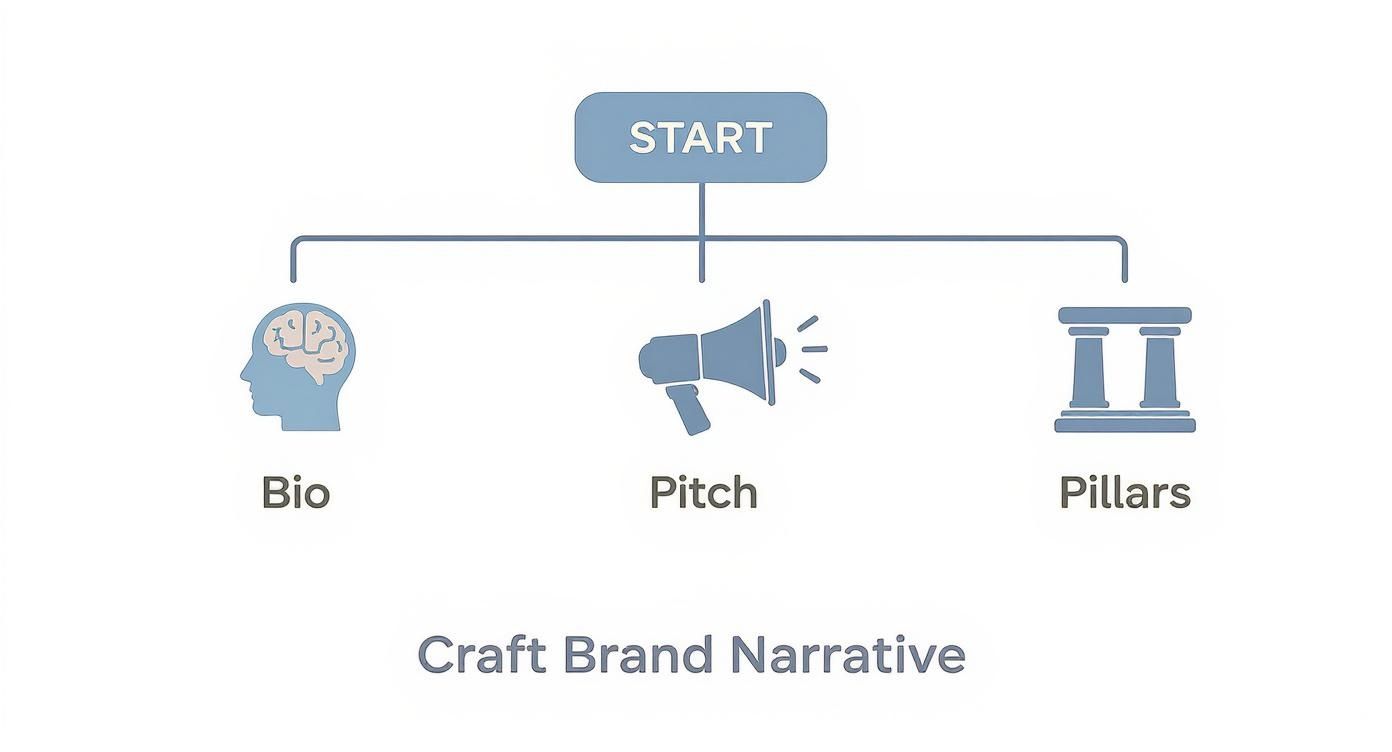
As the visual shows, these three elements—your bio, pitch, and pillars—are the foundation for everything you put out there.
To help you decide where to focus, this table breaks down the key differences between the major players.
Choosing the Right Platform for Your Personal Brand
A comparison of major platforms to help you decide where to focus your personal branding efforts.
| Platform | Best For | Content Format | Audience Mindset |
|---|---|---|---|
| B2B networking, thought leadership, professional credibility | Articles, text posts, professional videos, infographics | Career growth, industry insights, professional development | |
| X (Twitter) | Real-time news, quick insights, community engagement | Short text (tweets), threads, images, short videos | "What's happening now?", news, quick opinions, humor |
| Visual storytelling, lifestyle brands, creative industries | High-quality images, Reels, Stories, Carousels | Inspiration, entertainment, behind-the-scenes, visual appeal | |
| TikTok | Short-form video, trend-based content, reaching a younger demographic | Vertical videos (15-60 seconds), educational "hacks", entertainment | Entertainment, discovery, quick tips, authenticity |
| Personal Blog/Website | In-depth expertise, owning your content, building an email list | Long-form articles, case studies, downloadable resources | Problem-solving, deep learning, seeking expert guidance |
Ultimately, picking 1-2 core platforms to start with is far more effective than trying to master all of them at once. You can always expand later.
Optimizing Your Digital Footprint
Once you’ve chosen your battlegrounds, it’s time to polish your profiles. A half-finished profile screams unprofessionalism and can kill your credibility before you’ve even posted anything.
Your profile picture, banner, and bio need to be consistent across your channels. This consistency acts like a digital uniform, making your brand instantly recognizable and building trust.
Your bio isn't just a boring summary. It's your most valuable piece of marketing real estate. It needs to instantly tell people who you help, what problem you solve for them, and why you're the one to do it.
Juggling all these moving parts can get overwhelming. If you're looking for ways to streamline the process, our guide on managing multiple social media accounts has some great, practical strategies to help you stay consistent without going crazy.
It can also be really eye-opening to look at how others are building digital personas from scratch. Understanding the strategy behind creating AI influencers can offer some surprisingly useful lessons on audience engagement and persona development, even for a very human brand.
At the end of the day, your online presence is the ecosystem where your brand lives. By choosing the right platforms and optimizing them for impact, you build a powerful and cohesive digital footprint that lets your expertise shine through to the right people.
Create Content That Showcases Your Value

You’ve got your brand foundation and your story straight. That’s a fantastic start, but they can't do their job sitting in a document on your computer. Content is the engine that drives your personal brand forward. It’s what turns your expertise from a concept into something tangible people can actually learn from and connect with.
This is how you prove your value, build real trust, and start attracting the right people. Without a steady stream of valuable content, even the most well-defined brand is invisible. The goal here is to stop telling people you're an expert and start showing them through what you create.
The Right Mindset for Creating Content
Before you hit "record" or type a single word, you need to get your head in the right space. Every single piece of content you make should pass a simple test: is it obviously useful or is it emotionally resonant? This filter is your best weapon against creating noise.
- Obviously Useful: This is the practical stuff. The content that gives someone a direct solution, teaches a new skill, or provides a clear takeaway. Think checklists, how-to guides, and tutorials that solve a specific problem.
- Emotionally Resonant: This is content that connects on a human level. It might be a personal story about a failure you learned from, a strong opinion that challenges a common belief, or an inspiring message.
If you stick to these two pillars, your content will always have a purpose. It will serve your audience, which is the whole point of building a personal brand in the first place.
Picking Your Content Formats
Different formats let you flex your expertise in different ways. You don't have to be a master of everything all at once. Just figure out what plays to your strengths and where your ideal audience actually hangs out.
- Long-Form Articles: If you want to establish deep authority on a topic, this is your playground. They’re perfect for detailed tutorials, case studies, and meaty thought leadership. Plus, they’re gold for SEO and can be chopped up into other content later.
- Short-Form Video (TikTok, Reels, Shorts): These are fantastic for quick tips, busting common myths, and letting your personality shine through. For pure reach and getting discovered, especially by younger audiences, these formats are incredibly powerful.
- Newsletters: This is your direct line to your biggest fans. A newsletter allows for a more personal, intimate style of communication. It's the perfect place to share exclusive insights or what’s happening behind the scenes.
Start with what feels natural. If you love to write, launch a blog. If you’re comfortable on camera, fire up Instagram Reels. You can always expand later.
How to Brainstorm and Plan Your Content
Listen, consistency beats perfection every single time. And the only way to stay consistent is to have a system for coming up with ideas and a calendar to keep you accountable. This is how you avoid that dreaded "What on earth do I post today?" feeling.
A content calendar is your strategic roadmap. It turns your branding goals into a series of actionable steps, ensuring you’re not just creating content, but creating the right content at the right time.
Start by brainstorming a long list of topics that fit under your main content pillars. For each pillar, think about common questions people ask, problems they run into, and unique perspectives you can share. This list is your idea bank—you’ll never run out of things to talk about.
Once you have a bunch of ideas, slot them into a simple calendar. Find a pace you can actually stick with. For most people trying to build a personal brand, posting three to four times a week on their main platform is a great, sustainable goal.
Smart Ways to Distribute and Amplify Your Work
Creating amazing content is only half the job. The other half is making sure the right people see it. Your distribution strategy needs just as much thought as your creation process.
- Optimize for Search: Whether you’re on a blog or YouTube, use keywords people are actually searching for in your titles and descriptions. This helps people find you when they need you most.
- Hang Out in Niche Communities: Share your stuff in relevant LinkedIn groups, Slack channels, or on Reddit. But don't just drop a link and run—that’s spammy. Add some context, ask a question, and stick around to chat.
- Encourage People to Share: Don't be shy! If you've created something valuable, end with a clear call-to-action asking people to share it. You'd be surprised how many will.
Repurposing Content with a Little Help from AI
One of the smartest ways to maximize your effort is to repurpose your content. A single great blog post can be spun into a dozen different assets. This is where AI tools can be a game-changer.
For instance, you can take a detailed article and pull out the key takeaways. Those takeaways can instantly become a script for a series of short-form videos. Platforms like ClipCreator.ai can automate this, turning your text into slick, faceless videos complete with AI voiceovers, visuals, and captions.
This approach lets you produce a ton of content without burning out. You do the hard work once by creating one amazing, in-depth piece, and then use automation to spread its core ideas across multiple platforms. Of course, it all starts with a good script. If you're new to this, learning the basics of writing video scripts is a fantastic first step to turn your existing work into compelling visual content.
Got Questions About Personal Branding? You're Not Alone.
Even the best-laid plans run into tricky questions. As you start building your personal brand, it’s completely normal to hit a few snags or just wonder if you’re actually heading in the right direction. Let’s tackle some of the most common questions that pop up, so you can move forward with a bit more clarity.
How Long Does This Actually Take?
Let's be real: building a personal brand is a marathon, not a sprint. You can get your profiles polished and your core message nailed down in a few weeks, sure. But creating a brand that people recognize and that pulls in opportunities? That’s a longer game.
You should be thinking in terms of months, not days. If you’re consistent, you can start seeing real, meaningful traction within 6 to 12 months. At first, "success" might just be more people viewing your profile or a slow and steady climb in connection requests. Later on, it's about inbound leads, invitations to speak, and people seeking you out for your specific expertise. The trick is to focus on small, consistent actions every day and not get discouraged when you don't become an overnight sensation.
I'm an Introvert. Can I Still Do This?
Absolutely. There's a huge myth that personal branding is reserved for loud extroverts who crave the spotlight. The truth is, it's all about communicating your value, and introverts bring some serious (and often underestimated) strengths to the table.
Introverts often knock it out of the park with:
- Deep, Thoughtful Content: They're masters at producing well-researched, insightful content that genuinely helps people.
- Meaningful Connections: They excel at building strong one-on-one relationships through DMs and thoughtful comments, rather than just shouting into the void.
- The Written Word: Platforms that reward good writing—like a personal blog, LinkedIn articles, or X (formerly Twitter)—are a natural fit.
The goal is always authenticity. A quiet, consistent voice that delivers incredible value is often far more powerful and trustworthy than the loudest person in the room. Play to your strengths instead of trying to be someone you aren't.
What are the Biggest Mistakes People Make?
Knowing what not to do is just as important as knowing what to do. While everyone's journey is different, a few classic mistakes tend to trip people up again and again. Steer clear of these, and you'll save yourself a ton of headaches. If you want to dig even deeper, you can explore frequently asked questions related to professional branding for more insights.
Here are the top things to avoid:
- Being Inconsistent: If you're constantly changing your niche, your message, or your visual style, you’re just going to confuse everyone. A cohesive brand is a memorable one.
- Selling, Selling, Selling: Your content needs to give value, not just pitch your services. Stick to the 90/10 rule: 90% of your content should be helpful, educational, or inspiring, leaving just 10% for direct promotion.
- Ignoring Your People: Branding is a conversation. If you don't engage with comments, answer questions, or respond to messages, you’re missing the whole point. You can't build a community by talking at them.
- Playing a Character: People connect with real people, flaws and all. Authenticity is the foundation of trust, and it's what will keep you going long-term. Don't fall for the trap of copying someone else's style—find your own voice and turn up the volume.
The most powerful personal brands aren't built on being perfect. They're built on genuine value, relentless consistency, and authentic connection. Avoid these common traps, and you'll be on your way to building something that lasts.
Ready to stop just thinking about content and actually start creating it? ClipCreator.ai handles the heavy lifting, automatically producing engaging, short-form videos for TikTok, YouTube, and Instagram. You can turn your expertise into a steady stream of great content without ever having to be on camera or edit a single thing. Get started with ClipCreator.ai today and build your brand on autopilot.

Create your first video in under 2 minutes
Pick a niche, and ClipCreator.ai generates and auto-posts faceless videos to your channels every day.
Join ClipCreator.ai