Staring at a blank page is the first horror story every creator faces. The pressure to produce consistent, engaging short-form content for platforms like TikTok and YouTube Shorts is immense. You need ideas that not only tell a scary story but are also engineered to perform well in a 60-second, faceless video format. This guide moves beyond generic horror short story prompts to offer a strategic toolkit for creators aiming to build a dedicated audience.
We've compiled dozens of prompts organized into 8 powerful horror archetypes, each one specifically adaptable for automated and short-form video content. For every concept, we break down exactly how to transform it into a high-retention script, suggest effective voiceover tones, and provide visual cues you can generate with AI tools. You'll learn how to create suspenseful, shareable micro-narratives that captivate viewers from the first second to the last. To keep the terror flowing and ensure your horror concepts resonate, explore these powerful content generation ideas.
By the end of this article, you won't just have a list of ideas; you'll have a repeatable content engine ready to schedule and publish a steady stream of terrifying shorts, one chilling video at a time.
1. The Mysterious Stranger
A cornerstone of the horror genre, this prompt introduces an unknown person into a familiar, safe setting like a home, workplace, or isolated town. The core of this story is the escalating dread as the stranger’s ambiguous purpose, identity, or malevolent intentions are slowly revealed. This is one of the most effective horror short story prompts for building psychological tension, making it perfect for short-form video.
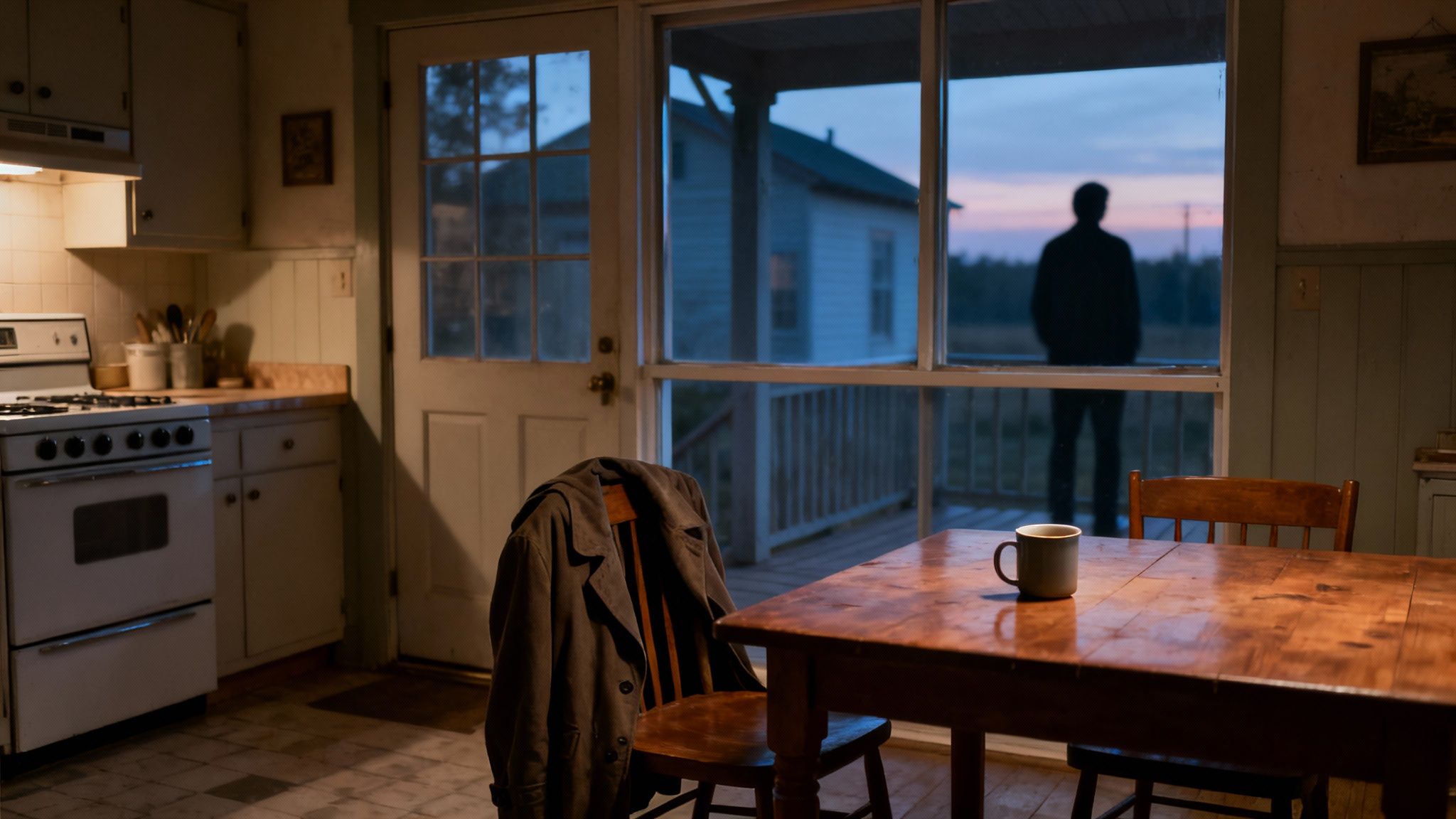
This structure is a classic for a reason. It hooks the audience by disrupting normalcy, a technique seen in Rod Serling’s The Twilight Zone and Stephen King’s work. The "wait for the end" hook, popular on TikTok, perfectly complements this prompt, as the entire narrative builds toward a shocking final-second reveal.
How to Adapt for Faceless Videos
- Pacing: For a 60-90 second video, dedicate the first 45 seconds to building suspense. Use a voiceover with a slow, deliberate pace that quickens slightly as the story climaxes. Subtitles can emphasize a character’s rising panic or key lines of dialogue.
- Visuals: Start with comforting, familiar images (a cozy living room, a quiet office after hours). Use ClipCreator’s AI image generation to introduce subtle, unsettling details as the story progresses. For instance, a shadow in a picture frame that wasn’t there before, or a reflection that doesn't quite match.
- The Reveal: The final 10-15 seconds should deliver the twist. This could be a visual reveal of the stranger's true form (e.g., elongated limbs, inhuman eyes) or a narrative bombshell delivered via voiceover.
- Scheduling: This is a highly adaptable prompt. Create multiple variations by changing the setting (a remote cabin vs. a busy subway) or the stranger's nature (supernatural entity vs. unhinged human) to see which resonates most with your audience.
To master the art of narrative tension required for this prompt, you can explore detailed guides on how to write scary stories. This approach will help you refine your storytelling for maximum impact.
2. The Found Footage/Discovery
This prompt frames a narrative around discovered media like video tapes, journal entries, or old photographs. The horror unfolds as the audience pieces together a fragmented story, creating a highly immersive and participatory experience. This is one of the most engaging horror short story prompts because it turns the viewer into an investigator, slowly uncovering a terrifying truth.

Popularized by films like The Blair Witch Project and web series such as Marble Hornets, this format excels in short-form video. It leverages the "part one" and "story time" trends on platforms like TikTok and YouTube Shorts, where viewers are hooked by clues and return for the next piece of the puzzle. The narrative is revealed, not told.
How to Adapt for Faceless Videos
- Pacing: Structure the script as a sequence of discoveries. Start with a benign finding, then introduce more disturbing elements every 15-20 seconds. The voiceover should sound like someone genuinely reacting to what they’re finding, shifting from curious to unnerved.
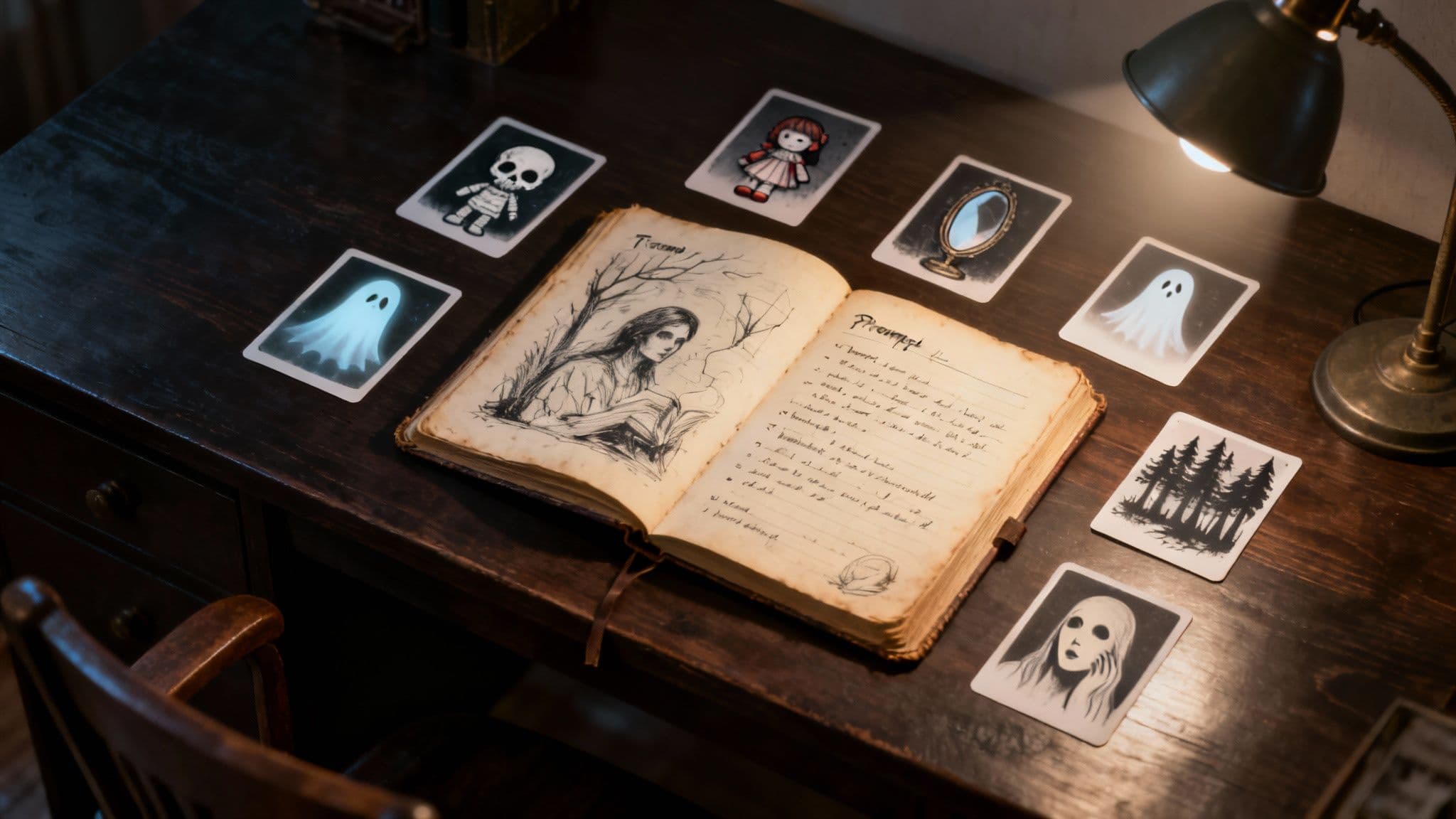
- Visuals: Use ClipCreator’s AI to generate a consistent set of "found" items. For example, a series of grainy, polaroid-style photos with a recurring strange symbol, or aged diary pages with frantic handwriting. Use quick cuts between these visuals to simulate someone sifting through evidence.
- The Reveal: End the video on a cliffhanger. The final piece of found media should reveal a critical, frightening detail but leave a major question unanswered. The voiceover can end with a question like, "but the last photo showed… my own house."
- Scheduling: This prompt is perfect for a multi-part series. Plan 3-5 short videos, each revealing a new clue. This strategy encourages viewers to follow your account to see the story's conclusion, boosting engagement and follower growth.
3. The Gradual Realization
This prompt focuses on a character, or the audience, slowly realizing a horrifying truth about their situation, reality, or identity. The terror comes not from a sudden jump scare but from the dawning, creeping understanding that something is profoundly wrong. These psychological horror short story prompts are exceptionally effective in 60-90 second formats where the viewer experiences the revelation alongside the narrator.

This narrative structure is a favorite of creators like M. Night Shyamalan and is seen in countless r/NoSleep stories that build existential dread. The slow-burn approach cultivates deep audience investment, making the final twist impactful and memorable. For platforms like TikTok and YouTube Shorts, it creates an intense "wait for it" effect that maximizes watch time.
How to Adapt for Faceless Videos
- Pacing: Dedicate the majority of your video to planting subtle clues. The voiceover should start calmly, perhaps even cheerfully, then slowly introduce notes of confusion, doubt, and finally, panic. Use subtitles to highlight the key moments of realization, like "Wait... that's my handwriting."
- Visuals: Begin with normal, mundane scenes. Use ClipCreator’s AI image generation to introduce subtle, progressive "wrongness" to the visuals. A photograph in the background changes expression, a clock's numbers rearrange themselves, or a character's reflection begins to move independently.
- The Reveal: The climax, or the "aha moment," should land in the final 10-15 seconds. This is where the narrator's voiceover confirms the horrifying truth, paired with a definitive, unsettling image.
- Scheduling: This prompt is perfect for creating a series where different characters experience the same disturbing realization, connecting them in a shared universe. You can A/B test different reveal timings with your audience to find the most effective pacing for your channel.
4. The Unreliable Narrator
This prompt places the audience directly into the mind of a narrator who cannot be trusted due to manipulation, delusion, or outright deception. The horror builds from the viewer's growing uncertainty about what is real, creating a powerful sense of cognitive dissonance that lingers long after the video ends. These are among the most engaging horror short story prompts because they invite active participation and speculation.
This narrative device is famously used in psychological thrillers like Gone Girl and Shutter Island. For short-form video, it’s a brilliant strategy to drive comments and re-watches, as viewers will return to piece together clues they missed. The entire story becomes a puzzle box for the audience to solve.
How to Adapt for Faceless Videos
- Pacing: Structure the script with intentional contradictions. Spend the first half establishing the narrator’s version of events and the second half subtly undermining it with conflicting details or emotional outbursts. The pacing should feel increasingly frantic or detached.
- Visuals: Use ClipCreator’s AI to generate images with slight inconsistencies. A character might describe a blue room while the image shows a green one, or a reflection in a mirror might momentarily show a different expression. These visual lies reinforce the narrator's unreliability.
- The Reveal: The final few seconds can reveal a key piece of evidence that shatters the narrator’s story (e.g., a medical record, a contradictory news report shown on a screen). Alternatively, end on an ambiguous note, leaving the truth open to interpretation.
- Scheduling: This prompt is perfect for creating a mini-series. Release follow-up videos offering "alternative truths" or different perspectives on the same event. Pin comments that propose compelling theories to fuel engagement and build a dedicated community around your stories.
To better understand how to structure these complex narratives, you can explore various narrative structure examples for your videos.
5. The Curse/Consequence Loop
This prompt centers on an inescapable choice: a character is bound by a curse or a set of supernatural rules. Following the rules leads to one terrible outcome, while breaking them leads to another, often worse, fate. The horror stems from this no-win scenario, where the protagonist is trapped in a loop of escalating consequences. This is one of the most effective horror short story prompts for creating series-based content.
The structure is a mainstay in horror franchises like The Ring and Final Destination, where the audience understands the rules and waits to see how each new victim will try (and fail) to escape. This format is perfect for TikTok or YouTube Shorts series, as each video can showcase a different person's encounter with the same curse, building a dedicated audience invested in the lore.
How to Adapt for Faceless Videos
- Pacing: Your script must establish the curse's "rules" within the first 15-20 seconds. Spend the middle 30 seconds showing the character grappling with their impossible choice. The final segment should reveal the dreadful consequence of their decision.
- Visuals: Use consistent visual motifs across all videos in the series to signify the curse, like a recurring symbol, a specific color filter, or a repeated sound effect. Use ClipCreator to generate images of the cursed object or location from different angles to maintain visual interest.
- The Reveal: The climax isn't just a jump scare; it's the fulfillment of the curse. Visually depict the consequence. For example, if the rule is "never look in a mirror after midnight," the reveal could be an AI-generated image of a horrifyingly distorted reflection staring back.
- Scheduling: This prompt is built for batch creation. Create 5-10 video variations of the same curse affecting different people. Schedule them across several weeks to build audience anticipation for each new "victim" and create a mythology around your curse.
6. The Body Horror/Transformation
This prompt delves into visceral, biological horror, focusing on a character undergoing a disturbing physical change or discovering something unnatural about their own body. The horror is deeply personal, tapping into primal fears of losing bodily autonomy, disease, and mutation. For short-form video, this is one of the most visually impactful horror short story prompts, as the gradual transformation itself becomes the narrative.
This type of story has been masterfully executed by directors like David Cronenberg (The Fly) and John Carpenter (The Thing), who use practical and visual effects to show the horrifying process. The suspense lies not just in the final reveal but in the psychological terror of the character witnessing their own monstrous change, a perfect fit for a narrative that builds tension second by second.
How to Adapt for Faceless Videos
- Pacing: Dedicate the video to a slow, creeping progression. The voiceover should capture the character’s internal monologue, moving from confusion to panic and finally to monstrous acceptance or despair. Use subtitles to highlight disturbing physical sensations described by the narrator.
- Visuals: Use ClipCreator’s AI image generation to create a sequence showing the transformation. Start with a normal human feature (an eye, a hand) and introduce subtle changes in each subsequent image, like skin discoloration, unnatural textures, or slight changes in shape, building to a final horrifying state.
- The Reveal: The final 10 seconds should show the most dramatic stage of the transformation. This doesn't have to be overly graphic; a silhouette with an inhuman shape or a close-up on a single, horribly changed feature can be more effective and compliant with platform rules.
- Scheduling: Body horror can be intense, so it's wise to post with content warnings in the description or as on-screen text. You can create a series where each video explores a different type of transformation (e.g., insectoid, aquatic, mechanical) to see what themes perform best.
7. The Twist Ending/Revelation
This prompt centers on a meticulously crafted narrative that guides audience expectations in one direction, only to subvert them with a shocking final reveal. The horror stems from the revelation itself or its terrifying implications, recontextualizing the entire story. This is one of the most powerful horror short story prompts for short-form video, as the brief runtime makes the twist exceptionally impactful.
Popularized by filmmakers like M. Night Shyamalan and authors like Agatha Christie, this technique is a viral sensation on TikTok. The "wait for it" format is practically built for this kind of storytelling, encouraging viewers to watch until the very end and share their shocked reactions, maximizing engagement and reach.
How to Adapt for Faceless Videos
- Pacing: The script must be flawless. Build a believable but misleading narrative for the first 80-90% of the video. The voiceover should sound confident and authoritative, reinforcing the false premise you are establishing for the audience.
- Visuals: Use ClipCreator’s AI to plant subtle visual clues that only make sense after the reveal. For example, in a story about a character fearing a monster outside, show a fleeting reflection of them in a window with distorted features. The visuals should subtly support the truth while the narration sells the lie.
- The Reveal: The final 10 seconds are critical. Deliver the twist with a sudden shift in tone, a stark visual change, or a single line of text on screen. This abrupt change is what makes the revelation so jarring and memorable for viewers.
- Scheduling: Post these videos during peak engagement hours to capitalize on the high share potential. Aggressively moderate comments for the first 24 hours to remove spoilers, allowing more viewers to experience the intended shock.
8. The Slow Burn/Atmosphere
This prompt prioritizes creeping dread and atmospheric tension over plot or jump scares. Instead of explicit events, subtle details create an increasingly unsettling mood. The horror is often left ambiguous, making it one of the most effective horror short story prompts for allowing the audience's imagination to fill in the terrifying blanks.
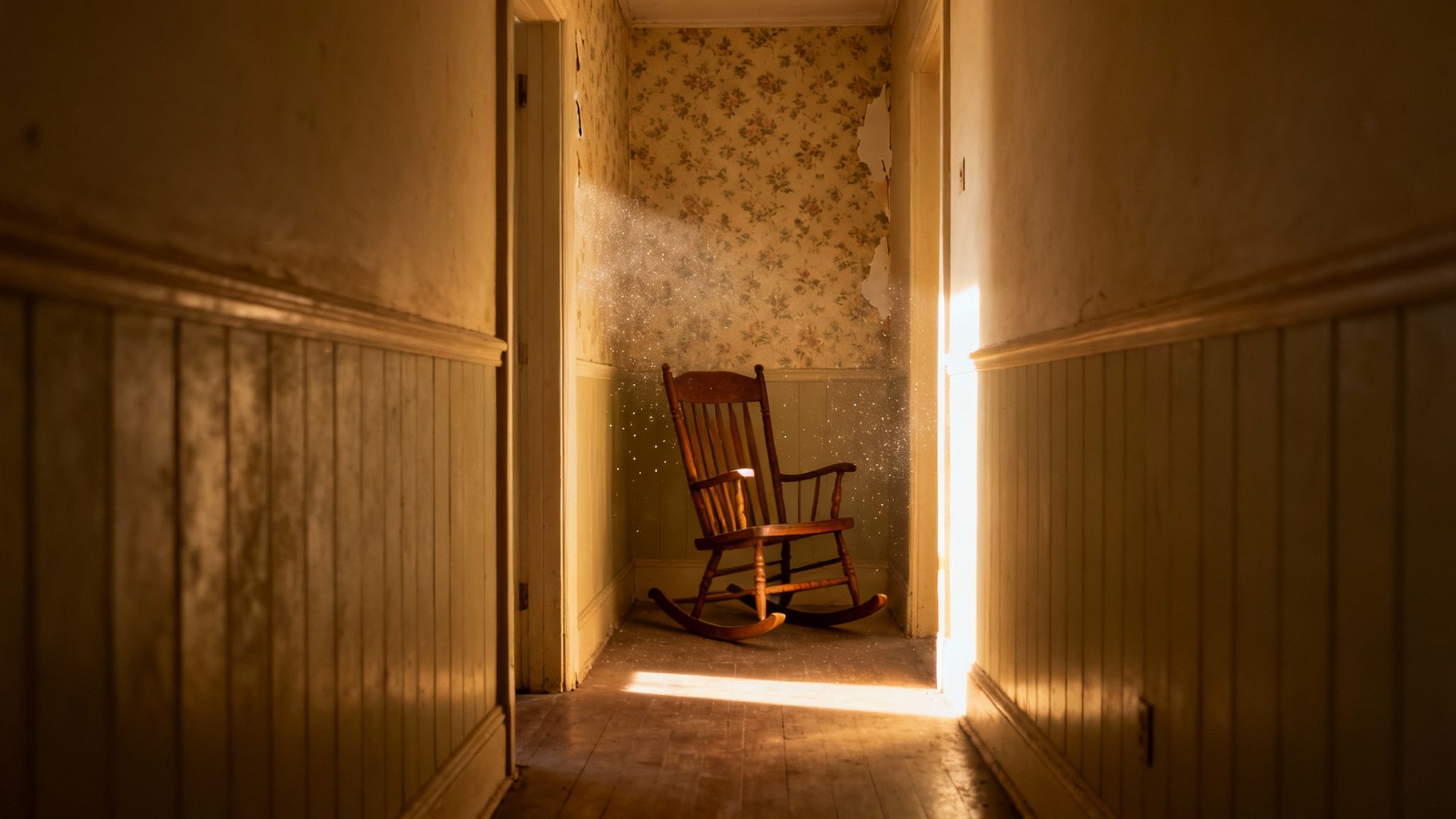
This method, popularized by authors like H.P. Lovecraft and filmmakers like Ari Aster, is perfect for short-form video where every frame and sound choice carries immense weight. The focus isn't on a big reveal but on sustaining an unbearable sense of unease that lingers long after the video ends, making it highly memorable.
How to Adapt for Faceless Videos
- Pacing: Dedicate the entire video to building atmosphere. Use a slow, whisper-like voiceover with long, strategic pauses. Silence can be just as powerful as sound, letting the visuals and ambient noise do the work.
- Visuals: Use ClipCreator’s AI image generator to create scenes with subtly “wrong” details. For example, a painting where the eyes seem to follow the viewer, a room with impossible geometry, or a forest where the trees are just a little too uniform. Maintain a consistent, desaturated color palette to enhance the mood.
- The Reveal: There is often no big reveal. The ending should be quiet and unresolved, leaving the audience with a profound sense of dread. The final line of the voiceover could be a question or an ominous, understated observation.
- Scheduling: Batch-create several slow-burn videos with a similar atmospheric style to establish a specific "mood" for your channel. This encourages viewers to watch them as a playlist, creating a more immersive horror experience.
Mastering this prompt requires a keen eye for detail. For more on creating impactful scenes, review these visual storytelling techniques.
8-Point Horror Prompt Comparison
| Title | 🔄 Implementation complexity | ⚡ Resource requirements | ⭐ Expected outcomes / 📊 Impact | 💡 Ideal use cases | Key advantages |
|---|---|---|---|---|---|
| The Mysterious Stranger | Medium — pacing & reveal sensitive | Low–Medium — minimal cast, strong visual cues | ⭐⭐⭐⭐ — high rewatch value; mystery-driven engagement 📊 | Short-form twist reveals; mystery/horror channels | High rewatchability; scalable variations; faceless-friendly |
| The Found Footage/Discovery | Medium–High — sequencing and coherence required | Low–Medium — many assets, consistent "found" aesthetic | ⭐⭐⭐⭐ — highly shareable; drives comments and speculation 📊 | ARGs, doc-style horror, investigative series | Encourages audience participation; flexible formats; easy multiple endings |
| The Gradual Realization | High — requires tight writing and timing | Low — voiceover-driven, subtle imagery | ⭐⭐⭐⭐ — very high retention; deep engagement and theories 📊 | Psychological thrillers, short introspective horror | Memorable and thought-provoking; low VFX needs |
| The Unreliable Narrator | High — balance clarity vs. ambiguity is critical | Low–Medium — voiceover + visual inconsistencies | ⭐⭐⭐⭐ — sparks debate; rewatchable for clues 📊 | Literary analysis, debate-oriented communities, mystery channels | Generates theories/virality; builds loyal community |
| The Curse/Consequence Loop | Medium — must maintain consistent rule logic | Medium — recurring motifs, batch production ideal | ⭐⭐⭐⭐ — strong bingeability; subscription growth 📊 | Series builders, franchise-focused creators, mythology educators | Excellent for serialization; scalable; clear pitchable premise |
| The Body Horror/Transformation | Medium — careful curation to avoid excess gore | Medium–High — compelling visuals, compliance review | ⭐⭐⭐ — high shock/viral potential but niche; platform risk 📊 | Mature-audience horror, extreme horror niches | Distinct, memorable imagery; strong visceral impact |
| The Twist Ending/Revelation | High — twist quality and timing are critical | Low — writing-heavy; subtle foreshadowing visuals | ⭐⭐⭐⭐⭐ — exceptional virality, rewatch and share value 📊 | Viral short-form content, engagement-maximizing channels | Powerful shareability; immediate social conversation driver |
| The Slow Burn/Atmosphere | High — exacting pacing, sound and image design | Low–Medium — sound design and consistent imagery | ⭐⭐⭐⭐ — lingers with viewers; builds sophisticated audience 📊 | Literary/ambient horror, ASMR-hybrid, atmospheric storytellers | Highly memorable mood; scalable on modest budgets; voiceover-friendly |
Automate Your Fear Factory: Let the Nightmares Begin
You now possess a versatile toolkit of eight powerful horror archetypes, each a proven framework for crafting compelling, bite-sized terror. From the unsettling arrival of a Mysterious Stranger to the shocking finality of a Twist Ending, these prompts are more than just starting points; they are blueprints for suspense, mystery, and dread perfectly suited for the fast-paced world of short-form video. We've explored how to transform these concepts into faceless 30 to 90-second video scripts, complete with specific voiceover tones, visual cues, and even content scheduling strategies for platforms like TikTok and YouTube Shorts.
From Inspiration to Implementation
The true value of these horror short story prompts lies in their adaptability. Remember, the goal isn't just to have one great idea but to build a system for consistent content creation.
- Structure is Your Ally: Each prompt type, whether it's the slow dread of an Atmospheric piece or the visceral shock of Body Horror, provides a reliable narrative structure. This saves you valuable time in the planning phase.
- Engagement Through Archetypes: These frameworks are effective because they tap into universal fears and storytelling expectations. A Found Footage prompt immediately signals a sense of raw, unfiltered reality, while an Unreliable Narrator forces the audience to question everything they see and hear.
- Efficiency is Key: Your audience craves a steady stream of content. Mastering these archetypes allows you to rapidly develop new concepts, ensuring your channel remains active and engaging without burning out your creative energy.
The biggest hurdle for any creator is the gap between a brilliant idea and a finished, uploaded video. To truly "Automate Your Fear Factory," consider leveraging tools that can accelerate this process. For creators who enjoy developing deeper lore or more complex narratives behind their shorts, exploring AI writing software for novelists can be an incredible asset for brainstorming and fleshing out the worlds your micro-horrors inhabit.
Your Next Viral Video is a System, Not a Secret
The secret to a successful horror channel isn't finding a single, elusive viral concept. It's about building an efficient, repeatable workflow that consistently produces high-quality, engaging content. By systemizing your approach with these proven horror short story prompts, you transform yourself from a storyteller into a content machine, a veritable fear factory capable of churning out nightmares on demand. The tools and frameworks are now at your disposal. All that's left is for you to choose a prompt, lean into the darkness, and bring your next terrifying vision to life. The algorithm, and your audience, are waiting.
Ready to turn these prompts into a library of chilling videos without the manual effort? ClipCreator.ai is the automation engine for your fear factory, transforming any story idea into a complete, ready-to-post short video with AI-generated visuals, voiceover, and captions. Stop scripting and start creating by visiting ClipCreator.ai today.

Create your first video in under 2 minutes
Pick a niche, and ClipCreator.ai generates and auto-posts faceless videos to your channels every day.
Join ClipCreator.ai