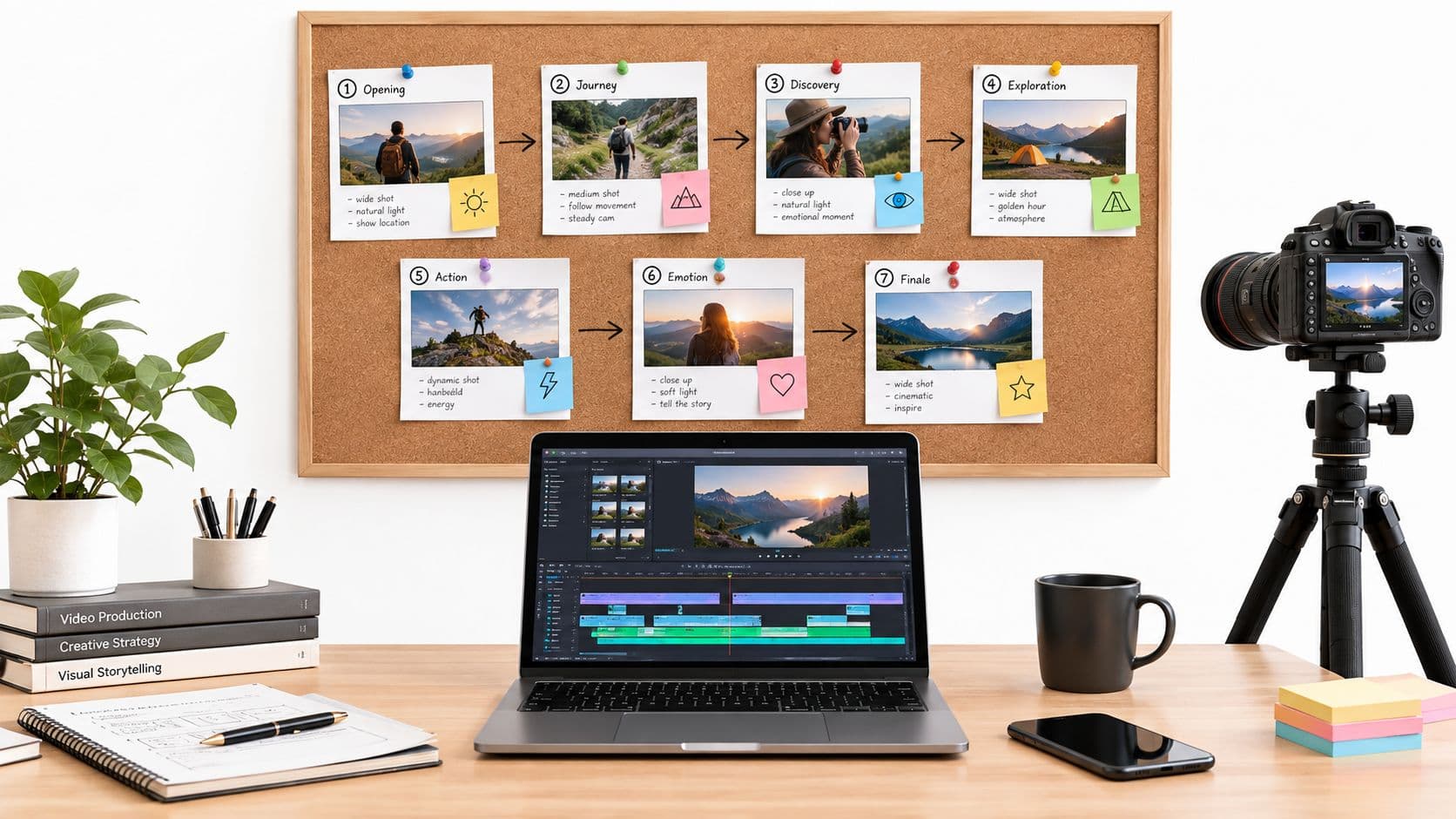
Every compelling documentary begins not with a camera, but with a script. This is the architectural blueprint that transforms raw facts, interviews, and human stories into a captivating narrative that moves audiences. But the structure of that blueprint is far from one-size-fits-all. The format you choose dictates the story's tone, pacing, and ultimate emotional impact, shaping how viewers connect with your subject.
This guide moves beyond theory to provide a deep dive into real-world examples. We will break down 7 essential types of documentary scripts, from the classic expository style to the immersive observational format and the personal essay. For each documentary script example, we will dissect its strategic construction, highlight specific tactics you can replicate, and provide clear, actionable takeaways.
Understanding these distinct frameworks is the key to crafting a powerful film. To further aid in structuring your narrative, explore actionable tips for a robust video script template that can help organize your scenes and dialogue effectively. By analyzing these blueprints, you’ll learn not just how to write a script, but how to select the right framework to bring your unique vision to the screen with precision and purpose. Let’s explore the structures that turn powerful ideas into unforgettable documentaries.
1. The Expository Documentary Script: The Voice of Authority
The expository documentary script is a classic, powerful format that relies on a direct, authoritative voice to guide the audience. This style uses a narrator (often called the "Voice of God") to present a well-researched, logical argument or a clear sequence of factual information. The script is meticulously crafted to support the visual evidence, creating a cohesive and persuasive narrative.

This approach is highly effective for subjects that require clear explanation, such as historical events, scientific concepts, or nature phenomena. Think of Ken Burns' The Civil War or the BBC's Planet Earth series narrated by David Attenborough. The script directly tells the viewer what they are seeing and why it is important, leaving little room for ambiguity.
Strategic Breakdown
The core strategy here is clarity and authority. The script establishes a direct relationship with the viewer, acting as an expert guide. Every line of narration is purposeful, designed to build a case or explain a complex topic step-by-step. The visuals (B-roll, archival footage, animations) serve as proof for the narrator's claims.
Key Tactic: Structure your script with a strong thesis statement or central question early on. The rest of the script should then provide evidence and explanation to support that initial premise, creating a logical and easy-to-follow flow for the audience.
Actionable Takeaways for Creators
For short-form content creators, this format is perfect for educational micro-lessons or explainer videos. A strong, clear narration over B-roll or animated graphics can make complex topics digestible in under 60 seconds.
- Script First, Visuals Second: Write your narration completely before gathering or creating visuals. This ensures your argument is sound and your story is coherent.
- Use Evidentiary Language: Employ phrases like "As evidence shows," "Scientists discovered," or "Historical records indicate" to bolster your authority.
- Pacing is Key: Use short, declarative sentences. Pause in your narration to let important visuals sink in. This gives your words more impact.
This method provides a strong foundation for any filmmaker looking to produce an informative piece. To build on this, a well-structured outline is essential; you can find inspiration in a comprehensive sample script outline on clipcreator.ai to get started. By mastering this documentary script example, you can create compelling, educational content that captures and holds your audience's attention.
2. The Observational/Fly-on-the-Wall Documentary Script: Capturing Reality
The observational documentary script, often called "fly-on-the-wall" or "direct cinema," is a minimalist approach that prioritizes authenticity over narration. This style allows events to unfold naturally, with the filmmaker acting as a silent observer. The "script" is often constructed in post-production, where the narrative is found within hours of raw footage, rather than being written beforehand.

This method lets the audience feel like they are present in the moment, drawing their own conclusions from the subjects' actions and words. Landmark films like Grey Gardens (1975) by the Maysles Brothers or the work of Frederick Wiseman exemplify this style. The power comes from the raw, unfiltered dialogue and interactions, creating an intimate and deeply human portrait of the subject.
Strategic Breakdown
The core strategy here is immersion and authenticity. By removing the guiding hand of a narrator, the script invites the audience to become an active participant in interpreting the events. The story emerges from the sequence of observed moments, conversations, and environmental sounds, which are carefully edited to create a compelling narrative arc. The visuals and natural audio are the storytellers.
Key Tactic: The script is written in the edit. Instead of a pre-written narrative, you will log scenes, transcribe key conversations, and identify powerful, unscripted moments. Your script becomes a blueprint for piecing these authentic fragments together to build themes and tell a story.
Actionable Takeaways for Creators
For short-form content, this style is perfect for "day in the life" videos, behind-the-scenes glimpses, or capturing the candid process of a craft. It builds trust and connection by showing, not telling.
- Observe First, Structure Later: Let your camera roll and capture genuine interactions without intervening. Look for moments of conflict, emotion, or revelation that can serve as narrative anchor points.
- Emphasize Natural Sound: Use the ambient sound of the environment and the natural cadence of dialogue to set the mood. Good audio is more important than ever in this format.
- Edit for Emotion and Theme: Your "scripting" happens when you choose which clips to use and in what order. Juxtapose a quiet, reflective moment with a tense conversation to create emotional impact and highlight your documentary's central theme.
This observational documentary script example is a powerful tool for creators who want to build an authentic connection with their audience. It requires patience during filming and a sharp eye in the editing room, but the result is a deeply engaging and truthful piece of content.
3. The Interview-Based Documentary Script: A Chorus of Voices
The interview-based documentary script builds its narrative foundation on the personal testimonies of its subjects. This format weaves together in-depth interviews with key individuals, experts, and witnesses to create a multi-faceted story told from various perspectives. The script itself is often a hybrid document, outlining interview questions, structuring story arcs, and noting where to place B-roll and archival footage to support the spoken word.
This method thrives on human experience and emotion, making it ideal for true crime, biopics, and social issue films. Think of Ava DuVernay's 13th, where expert interviews construct a powerful historical argument, or The Jinx, which uses a central subject's interviews to drive a suspenseful narrative. The power comes from letting the subjects tell the story in their own words, creating a sense of authenticity and intimacy.
Strategic Breakdown
The core strategy is to construct a narrative through conversation. Instead of a single narrator, the filmmaker uses the "voices" of the interviewees to present facts, opinions, and emotions. The script acts as a blueprint for how these voices will interact, sometimes supporting each other, and other times creating compelling conflict or contrast. The visuals are there to illustrate, contextualize, or provide a break from the "talking head" format.
Key Tactic: Structure your script around narrative "beats" or themes. Group interview clips from different subjects that all speak to the same point. This creates a powerful conversational effect, as if your subjects are collectively telling a single, cohesive story.
Actionable Takeaways for Creators
For short-form content, this model is perfect for "man-on-the-street" interviews, expert Q&As, or testimonial videos. Stitching together multiple quick responses to a single question can create a dynamic and engaging piece of content that feels authentic and community-driven.
- Script the Questions, Not the Answers: Focus on crafting open-ended questions that encourage detailed, emotional responses. Your script is a guide for the conversation, not a set of lines for your subjects to read.
- Layer the Perspectives: In your edit, don't be afraid to cut between different interviewees talking about the same event. This layering technique builds a richer, more nuanced understanding of the topic.
- Use "Illustrative" B-Roll: Your B-roll should do more than just fill time. It should visually represent what the interviewee is talking about, adding depth and keeping the viewer engaged.
This approach transforms interviews from simple information delivery into the primary engine of the story. You can explore how to structure these conversations by looking at a quality video script example to see how dialogue drives a narrative forward. By mastering this documentary script example, you empower your subjects to tell their own stories with profound impact.
4. The Personal/Essay Documentary Script: An Intimate Voice
The personal or essay documentary script is a deeply subjective format where the filmmaker’s own voice, experiences, and reflections drive the narrative. This style functions like a visual essay, blending personal storytelling with a broader thematic exploration. It blurs the line between objective reality and personal interpretation, creating an intimate and often poetic viewing experience.
This approach is powerful for exploring complex emotional truths, memories, or philosophical questions. Think of Chris Marker’s Sans Soleil or the deeply personal works of Agnès Varda. The script doesn’t just present facts; it interrogates them, reflects on them, and invites the audience into the filmmaker's inner world. The narrative is guided by the creator's curiosity and personal journey.
Strategic Breakdown
The core strategy here is subjectivity and connection. The script aims to build a deep, personal bond with the audience by being vulnerable and authentic. The filmmaker is not an invisible authority but a present, thinking, and feeling character within their own story. The visuals often serve as poetic counterpoints or personal archives, reinforcing the essayistic tone.
Key Tactic: Structure your script around a central question or personal quest. Rather than providing definitive answers, the script should document the journey of seeking those answers, allowing the audience to experience the process of discovery alongside you.
Actionable Takeaways for Creators
For short-form creators, this format is ideal for vlogs, personal story videos, or reflective pieces that build a strong community. Sharing a personal perspective on a universal theme can be incredibly engaging on platforms like TikTok or YouTube, where authenticity is highly valued.
- Write in Your True Voice: Don't try to sound like a formal narrator. Write the script as if you were speaking to a close friend, using your natural language and conversational tone.
- Balance the Personal and Universal: Connect your individual story to larger themes that resonate with a wider audience. Ask yourself: "Why would someone who doesn't know me care about this?"
- Embrace Poetic Language: Use metaphors, rhetorical questions, and evocative descriptions to enhance the emotional impact. This is where your unique perspective as a writer truly shines.
This style of documentary script example is a powerful way to craft a story that is both unique to you and relatable to many. To refine this approach, it's helpful to explore various storytelling methods; you can delve deeper into narrative writing techniques on clipcreator.ai to enhance your script. By mastering this form, you can create content that leaves a lasting emotional impact.
5. The Investigative Documentary Script: Uncovering the Truth
The investigative documentary script operates like a journalistic thriller, guiding the audience through a process of discovery to uncover facts, expose wrongdoing, or solve a mystery. This format is driven by a central question or hypothesis, and the narrative unfolds as the filmmaker gathers evidence, interviews key subjects, and pieces together a complex puzzle. The script is the blueprint for this journey, building suspense and revealing information strategically.

This approach is powerful for exploring social injustices, corporate malfeasance, or cold cases, as seen in works by Alex Gibney or Laura Poitras. Documentaries like Stink! (2015) and Kill Chain (2018) follow a clear investigative path, presenting evidence methodically to build a compelling case. The script’s strength lies in its meticulous research and its ability to structure that research into a gripping narrative.
Strategic Breakdown
The core strategy here is narrative tension through revelation. The script is not just presenting facts; it is constructing a mystery. The audience joins the filmmaker on the investigation, experiencing the twists, turns, and breakthroughs as they happen. The structure often mirrors a crime narrative, with rising action, climax, and resolution.
Key Tactic: Structure your script around a series of key questions. Begin with a broad mystery ("Why did this happen?") and then break it down into smaller, sequential questions. Each answered question should lead to the next, propelling the narrative forward and maintaining audience engagement.
Actionable Takeaways for Creators
For short-form content, this model is perfect for "deep dive" or "exposing the truth" videos that are popular on TikTok and YouTube. You can investigate a product, a viral claim, or a piece of local history, presenting your findings in a mini-documentary format.
- State Your Mission: Clearly articulate the central investigative question in the first few seconds of your video to hook the viewer.
- Show, Don't Just Tell: Instead of just narrating findings, show the evidence. Use screen recordings of articles, clips of archival footage, or photos of documents to make your investigation tangible.
- Build to a Climax: Structure your script to save the most impactful piece of evidence or the biggest revelation for the end. This creates a satisfying payoff for the viewer.
This documentary script example is excellent for creators who want to do more than just inform; they want to engage their audience in a quest for truth. Below is an example of an investigative script that deconstructs a complex topic, showcasing how to layer evidence for maximum impact.
6. The Poetic/Experimental Documentary Script: Crafting Visual Moods
The poetic or experimental documentary script abandons traditional narrative in favor of atmosphere, emotion, and aesthetic experience. This format uses visual and sonic poetry to evoke feelings and ideas rather than presenting a linear argument. Language, if present at all, is often lyrical, metaphorical, and suggestive, focusing on sensory impressions to guide the viewer's interpretation.
This approach is best suited for exploring abstract concepts, emotional states, or the relationship between humanity and the environment. Think of Godfrey Reggio's Koyaanisqatsi or Chris Marker's Sans Soleil. The "script" for these films is less about dialogue and more a blueprint for rhythmic editing, powerful musical scores, and symbolic imagery that communicates on a subconscious level.
Strategic Breakdown
The core strategy here is immersion and evocation. Instead of telling the audience what to think, the script creates a space for them to feel and interpret. It prioritizes mood over message and trusts the audience to connect the dots between seemingly disparate images and sounds. The narrative emerges from the collision of sensory details, not from an explanatory voiceover.
Key Tactic: Structure your script around a central theme or feeling, not a plot. Use recurring visual motifs, symbols, and a carefully designed soundscape to build layers of meaning and guide the emotional journey.
Actionable Takeaways for Creators
For short-form content, this style is perfect for creating visually stunning, moody, or thought-provoking videos that stand out. A montage of aesthetic shots set to a powerful piece of music with minimal, poetic text on screen can create a powerful emotional impact in seconds.
- Script Moods, Not Words: Instead of writing dialogue, script out the desired emotional arc. For example: "Scene 1: Serenity. Slow pans of nature. Soft, ambient music. Scene 2: Intrusion. Quick cuts of machinery. Harsh, industrial sounds."
- Prioritize the Soundscape: The audio is just as important as the visuals. Use music, ambient noise, and even strategic silence to build tension, create atmosphere, and evoke emotion.
- Embrace Ambiguity: Don't over-explain your visuals. Allow for open interpretation. This invites the viewer to engage more deeply with your content and find personal meaning in it.
This documentary script example is a powerful tool for creators who want to move beyond literal storytelling. By focusing on sensory and emotional experiences, you can produce work that is not just watched, but felt.
7. The Hybrid/Interactive Documentary Script: Engaging the Audience
The hybrid or interactive documentary script breaks the fourth wall, inviting the audience to become active participants rather than passive viewers. This contemporary format blends multiple styles, combining traditional interviews and narration with animations, data visualizations, and interactive elements designed for digital platforms like the web, VR, or mobile apps. The script is no longer a linear path but a branching map of possibilities.
This approach is perfect for complex, multi-faceted subjects where user exploration can deepen understanding. Examples range from Netflix’s High Score, which uses animations to explain gaming history, to VR experiences like Clouds Over Sidra, which places the viewer directly inside a Syrian refugee camp. The script must anticipate user choices and provide a coherent, yet personalized, narrative journey.
Strategic Breakdown
The core strategy is user-driven narrative exploration. Instead of presenting a single, fixed argument, the script creates a framework for discovery. The narrative structure is often modular, with core story beats connected by interactive decision points. Visuals, graphics, and user interface (UI) elements are not just supplementary; they are integral to the storytelling itself.
Key Tactic: Develop a clear information architecture or "story map" before writing a single line of dialogue. This map should outline all potential user paths, interactive nodes, and content modules, ensuring a cohesive experience no matter which path the audience takes.
Actionable Takeaways for Creators
For short-form creators, this model inspires interactive TikToks or YouTube videos using polls, "choose your own adventure" style edits, or clickable end screens to guide viewers to different content. It's about giving the audience a sense of agency in their consumption.
- Write in Modules: Script your content in self-contained chunks that can be rearranged or accessed in different orders. Each module should make sense on its own while contributing to the larger narrative.
- Prioritize a Clear UI: Your script must consider the user interface. How will viewers navigate? Write clear, concise prompts and instructions directly into your documentary script example.
- Use Graphics for Clarity: Employ motion graphics and animations to explain complex concepts that users might explore at their own pace. This makes dense information engaging and digestible.
This forward-thinking format allows creators to build immersive worlds that engage audiences on a deeper level. To get started with structuring such a complex project, a solid AI script generator can help brainstorm modular scenes and dialogue paths, providing a foundation for your interactive story. By mastering this approach, you can create truly innovative content that stands out in a crowded digital landscape.
7 Documentary Script Styles Comparison
| Documentary Style | Implementation Complexity 🔄 | Resource Requirements ⚡ | Expected Outcomes ⭐📊 | Ideal Use Cases | Key Advantages 💡 |
|---|---|---|---|---|---|
| Expository Documentary Script | Medium — scripted narration, paced edits | Medium — narrator, research, archival/footage | Clear, authoritative education and explanation | Science, history, nature series, broadcast TV | Strong clarity, efficient information delivery, authoritative tone |
| Observational / Fly-on-the-Wall | High — long-term shooting, observational setup | Medium (low equipment, high time) — extended filming & editing | Authentic, intimate moments; less explicit explanation | Social behavior, institutions, vérité portraits | Genuine realism, surprising candid moments, intimate access |
| Interview-Based Documentary Script | Medium — interview planning and sequencing | Medium — subject booking, recording, archival support | Depth from multiple perspectives; credible testimony | True crime, historical accounts, issue-driven films | Balanced viewpoints, emotional engagement, expert credibility |
| Personal / Essay Documentary Script | Low–Medium — writer-driven structure, creative edit | Low–Medium — filmmaker presence, artistic resources | Intimate, subjective narrative with strong voice | Personal stories, thematic essays, art-house projects | Distinctive voice, creative freedom, strong emotional resonance |
| Investigative Documentary Script | High — extensive research, verification, legal review | High — investigators, records access, legal counsel | High-impact revelations; potential for social change | Exposés, corruption, in-depth journalistic investigations | Strong credibility, suspenseful narrative, potential for reform |
| Poetic / Experimental Documentary Script | Medium — non-linear design, experimental craft | Variable — high-quality cinematography & sound common | Powerful sensory/emotional experience; ambiguous messaging | Art festivals, thematic/abstract explorations | Artistic distinction, sensory immersion, interpretive depth |
| Hybrid / Interactive Documentary Script | Very High — multi-format scripting, interaction design | Very High — developers, UX, motion graphics, data viz | Highly engaging, adaptable across platforms; user-driven results | Digital journalism, VR/AR, educational interactive projects | Interactivity, multi-platform reach, clearer data through visualization |
Choosing Your Blueprint: The Final Cut
The journey through each documentary script example has revealed a powerful truth: there is no single "correct" way to write a documentary. Instead, there is a rich tapestry of narrative blueprints, each offering a unique lens through which to view reality. From the authoritative voice of the expository script to the raw intimacy of the observational mode, these structures are not rigid rules but flexible frameworks designed to serve your story.
We've seen how the interview-based script can anchor a narrative in human experience, while the investigative format builds a compelling case, piece by piece. The personal essay invites audiences into a filmmaker's inner world, and the poetic script prioritizes emotional resonance over literal fact. By deconstructing these examples, we've uncovered the strategic choices that make them effective, giving you a replicable set of tools for your own projects.
Synthesizing Your Strategy
The ultimate takeaway is that mastery comes from understanding when to use each approach and, more importantly, when to blend them.
- For Clarity and Impact: An expository structure, like we saw in the scientific documentary breakdown, is your go-to for explaining complex topics. It provides a strong, clear narrative spine.
- For Authentic Emotion: When you want the audience to feel present in the moment, the observational or "fly-on-the-wall" style offers unparalleled authenticity and emotional connection.
- For Compelling Arguments: An investigative script provides the framework for building suspense and presenting evidence, perfect for stories that uncover a hidden truth.
Remember, the most powerful films often borrow elements from multiple styles. An investigative piece can be strengthened by a deeply personal interview, just as a poetic film can use expository text to ground its abstract visuals. Seeing a great documentary script example is not about copying it verbatim; it is about absorbing its strategic DNA and applying those principles to your own unique vision.
Your Next Steps to Scripting Success
Now, the focus shifts from analysis to action. Your task is to select the blueprint that best aligns with your subject, your voice, and the emotional journey you want your audience to take. Start by outlining your core message and key story beats. Then, experiment by drafting a scene in two different styles. How does a scene feel when written as an observational moment versus a scripted voice-over narration?
This process of experimentation is where you will find your unique storytelling voice. The scripts we've analyzed are more than just documents; they are a testament to the power of structured storytelling to inform, persuade, and move audiences. By embracing these frameworks, you equip yourself with the strategic foundation needed to transform a compelling idea into a finished film that leaves a lasting impact.
Ready to turn your documentary script into captivating video content without the complex editing? ClipCreator.ai uses AI to transform your text into engaging, shareable videos in minutes, perfect for creating faceless narrative content for YouTube, TikTok, and more. Stop just writing your story and start showing it by visiting ClipCreator.ai to generate your first video today.

Create your first video in under 2 minutes
Pick a niche, and ClipCreator.ai generates and auto-posts faceless videos to your channels every day.
Join ClipCreator.ai